‘Active weather’ to bring more snow to Sierra Nevada. How much will Tahoe get?
An “active weather” system is expected to move into Northern California, bringing more snow to the Sierra Nevada, according to the National Weather Service.
Snow levels are expected to range around 5,500 feet elevation on Wednesday, Feb. 11.
As of Wednesday, the Sierra Nevada had received an average of 126 inches of snow so far this season, according to the latest data from UC Berkeley Central Sierra Snow Laboratory, a research field station in the Sierra Nevada.
Experts say California’s snowpack and reservoir levels remain below average — raising concerns about the state’s water supply.
“As it stands, northern California is in great shape for overall precipitation at this point in the water year, but snowpack is still lacking a bit. Many of our early season storms were very warm, thus snowfall was low,” Scott Rowe, a senior service hydrologist at National Weather Service’s Sacramento office, previously told The Sacramento Bee.
Here’s how much snow this latest storm could add to California’s snowpack:
How did winter weather impact California snowpack?
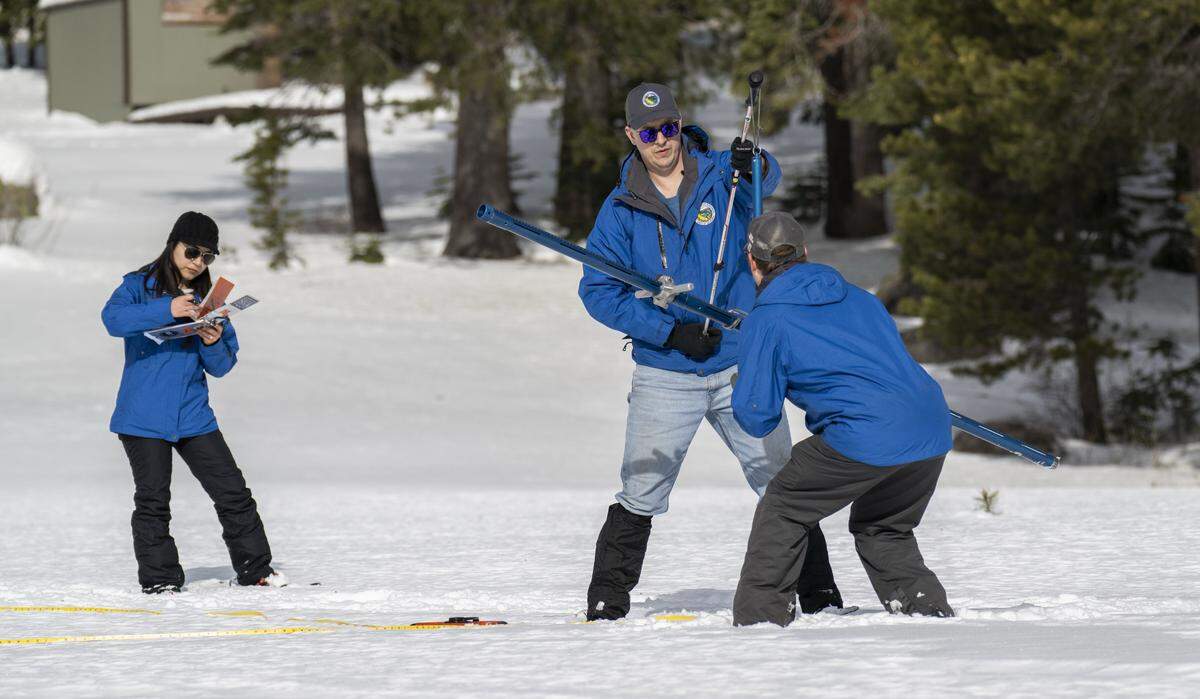
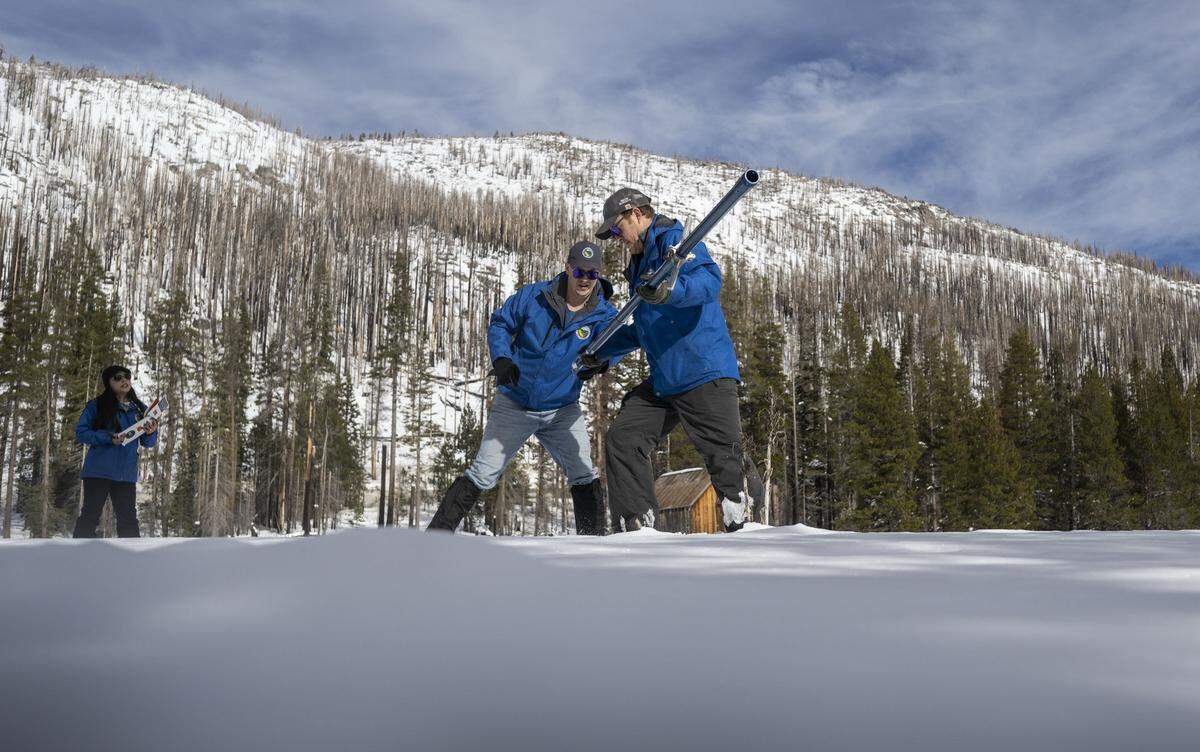
During its most recent snow survey on Jan. 30, the California Department of Water Resources measured 23 inches of snow depth at Phillips Station in Northern California.
The snow water equivalent — which reflects how much water the snow contains — was 8 inches, or just 46% of average for that location, according to the state department.
Statewide, California’s snowpack was 59% of average as of Jan. 30, the department said.
“Three weeks ago, the snowpack was 89% of average after a series of atmospheric rivers provided relief from a slow start to the snowpack,” the California Department of Water Resources said in a Jan. 30 news release.
However, a dry January has “now eroded the gains,” the release said.
January is typically California’s wettest month.
“After the storms at the start of the year gave way to warm, dry conditions, those early gains we saw have flatlined or slightly eroded,” Andy Reising, manager of the Department of Water Resources’ Snow Surveys and Water Supply Forecasting Unit, said in the release. “While there is still time for February and March to deliver additional snow, the farther into the season we get with below average conditions, the harder it will be to catch up.”
As of Wednesday, the statewide snowpack contained about 55% of its typical water supply for this time of year, which is roughly 39% of the full seasonal average, according to the latest state data.
Snow water equivalent is a key measurement because it helps determine how much water will be available when the snow melts in spring and summer, according to the California Department of Water Resources.
How full are California lakes and reservoirs?
According to the California Department of Water Resources, California’s reservoirs were holding about 28 million acre-feet of water as of Wednesday, Feb. 11.
That’s roughly 120% of what they usually hold at this time of year, meaning that storage levels are above average.
These were current water levels in major California lakes and reservoirs as of Wednesday:
- Shasta Lake — 78% of capacity
- Lake Oroville — 80%
- New Bullards Bar Reservoir — 83%
- Folsom Lake — 53%
- Camanche Reservoir — 70%
- New Melones Lake — 74%
- Don Pedro Lake — 83%
- Lake McClure — 67%
- Pine Flat Lake — 53%
- Millerton Lake — 61%
- Castaic Lake — 79%
- Diamond Valley Lake — 94%
- Lake Casitas — 99%
- Lake Cachuma — 101%
- San Luis Reservoir— 79%
- Lake Sonoma — 66%
- Trinity Lake — 84%
What’s in store for Sierra Nevada snowfall?
Several inches of snow could accumulate across the Sierra Nevada as the result of the latest weather system, the National Weather Service said in an area forecast discussion on Tuesday, Feb. 10.
According to the weather service, 3 to 6 inches of snow are forecast to fall Wednesday at elevations above 5,500 feet, while elevations above 6,000 feet will see 8 to 12 inches of snowfall.
Up to 18 inches of fresh snow are possible on the highest peaks on Wednesday, the weather agency said.
What’s in the forecast for Lake Tahoe?
According to the National Weather Service, the latest weather forecast for Lake Tahoe indicates that new snow accumulation is possible.
On Wednesday, there was an 80% chance of snow in the Tahoe area with a high temperature near 38 degrees and a low temperature around 17 degrees, the weather service said.
However, little to no snow accumulation is expected on that day, the weather agency said.
According to the weather service, there is a 20% chance of snow on Thursday, Feb. 12 — mainly after 10 p.m. The high will be around 40 and the low will be around 17.
Skies will be “mostly clear” on Friday, with a high near 44 and a low around 22.
The weather service is predicting a “chance of snow” on Saturday, when the high will near 43 and the low will be around 23.
“A potentially wetter and colder system arrives this weekend through early next week, which could bring periods of moderate to heavy mountain snow, widespread rain and breezy southerly winds,” the National Weather Service said in a Tuesday news release.
This system could add even more snow to the Sierra Nevada while bringing additional rain to parts of California — including Sacramento, Modesto, Merced, Fresno and San Luis Obispo.
How much snow has fallen in Tahoe ski resorts?
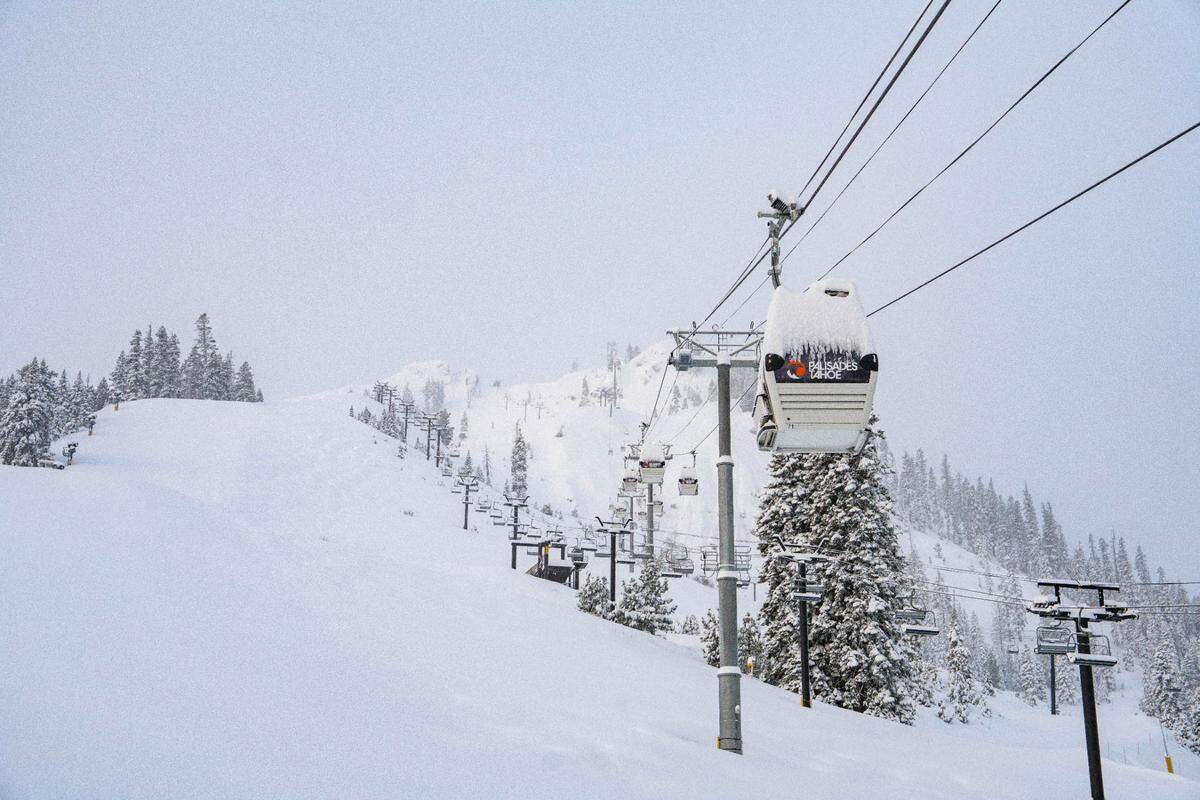
As of Wednesday, Feb. 11, here’s how much snow has fallen so far this season at Tahoe’s ski and snowboarding resorts, according to their websites:
- Sugar Bowl Ski Resort: 173 inches of snowfall
- Kirkwood Mountain Resort: 168 inches
- Heavenly Mountain Resort: 120 inches
- Palisades Tahoe: 160 inches
- Mt. Rose Ski Tahoe: 125 to 157 inches
- Northstar California Resort: 163 inches
This story was originally published February 11, 2026 at 12:24 PM.