California is drought-free after February rains. How are snowpack, lake levels?
Powerful storms have swept through California recently, helping improve drought conditions, in the Golden State.
In January, the U.S. Drought Monitor showed 0% of California was experiencing “abnormally dry” conditions — or worse — for the first time in 25 years.
As of Monday, Feb. 24, the federal Drought Monitor reported that 100% of the state showed no dry conditions. That is an improvement from 99.3% the previous week on Feb. 17, data show.
“Stormy, briefly colder weather in California and elsewhere in the West helped to improve previously meager mountain snowpack,” the U.S. Drought Monitor said in its national drought summary on Feb. 24.
How are snowpack and water levels across California?
Here’s what you need to know:
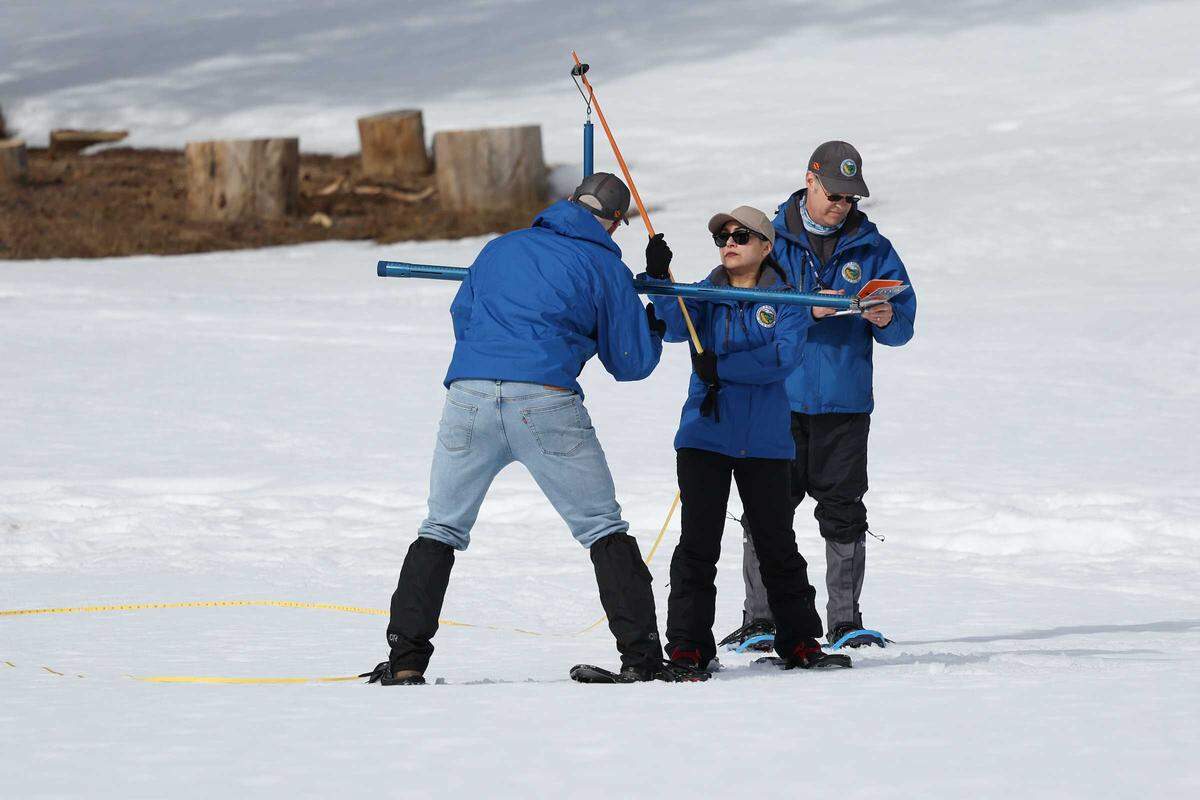
How did recent storms affect California’s snowpack?
As of Monday, March 2, the Sierra Nevada had received an average of 238 inches of snow so far this season, according to the latest data from the UC Berkeley Central Sierra Snow Laboratory, a research field station at Donner Pass.
Despite recent storms, the California Department of Water Resources said, snowpack totals remain below average.
During its most recent survey on Friday, Feb. 27, the state Water Resources Department measured 28 inches of snow depth at Phillips Station in Northern California.
The snow water equivalent — which reflects how much water the snow contains — was 11 inches, or just 47% of average for that location, according to the state department.
Statewide, California’s snowpack was 66% of average as of Feb. 27, the department said.
“Today’s snow survey results show an increase from last month’s measurements following a series of cold, major snow-producing storms that ended a five-week dry period,” the California Department of Water Resources said in a Feb. 27 news release.
However, recent storms weren’t enough to bring the state back to average levels for this time of year.
“Although the storms we saw in mid-February were some of the coldest and best snow-producing storms we have seen since 2023, they were not enough to get us back to average conditions,” Andy Reising, manager of the Department of Water Resources’ Snow Surveys and Water Supply Forecasting Unit, said in the release.
As of Monday, March 2, the statewide snowpack contained about 62% of its typical water supply for this time of year, which is roughly 55% of the full seasonal average, according to the latest state data.
“The snowpack is in better shape than it was one month ago, but we only have a month left of our snow-accumulation season and time is rapidly running out to catch up,” Reising said.
Snow water equivalent is a key measurement because it helps determine how much water will be available when the snow melts in spring and summer, according to the California Department of Water Resources.
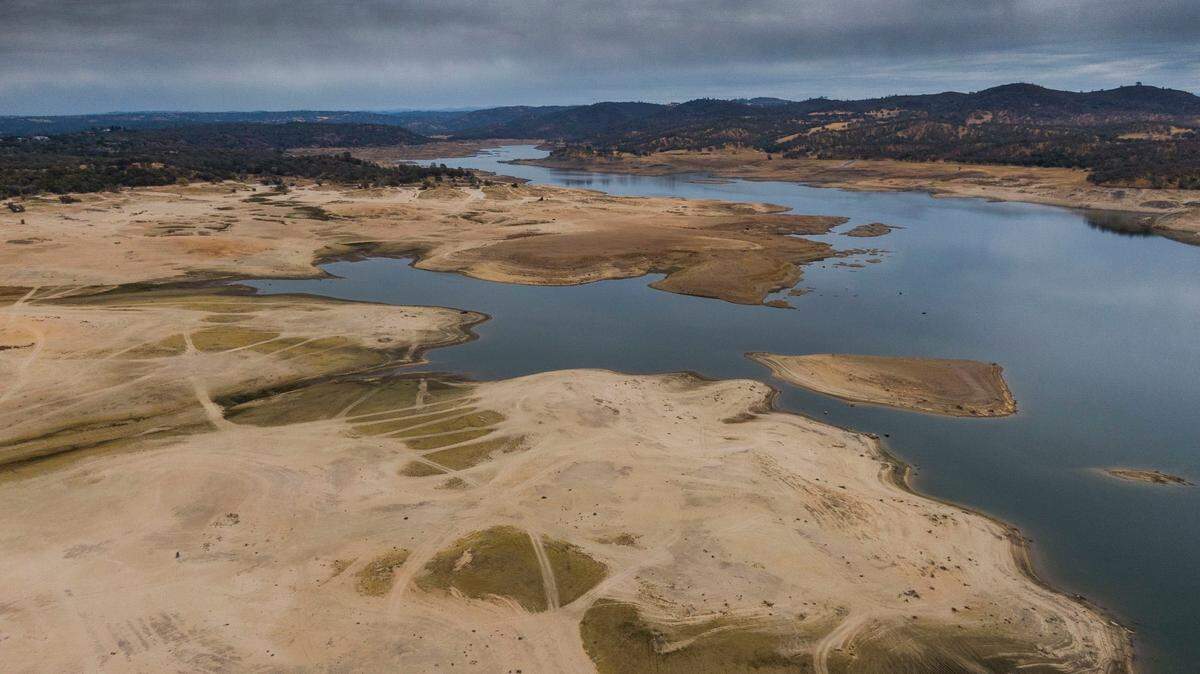
How full are California lakes and reservoirs?
According to the California Department of Water Resources, California’s reservoirs were holding about 30 million acre-feet of water as of Monday, March 2.
That’s roughly 122% of what they usually hold at this time of year, meaning that storage levels are above average.
“Water supply in California increasingly depends on a small number of big storms,” Director Karla Nemeth of the state department said in the Feb. 27 news release. “We face higher drought risk when they don’t arrive and greater urgency to modernize infrastructure to capture water when they do.”
These were current water levels in major California lakes and reservoirs as of Monday:
- Shasta Lake — 85% of capacity
- Lake Oroville — 86%
- New Bullards Bar Reservoir — 84%
- Folsom Lake — 68%
- Camanche Reservoir — 71%
- New Melones Lake — 77%
- Don Pedro Lake — 85%
- Lake McClure — 69%
- Pine Flat Lake — 61%
- Millerton Lake — 71%
- Castaic Lake — 81%
- Diamond Valley Lake — 94%
- Lake Casitas — 100%
- Lake Cachuma — 102%
- San Luis Reservoir— 85%
- Lake Sonoma — 72%
- Trinity Lake — 88%
“The dramatic wet-dry swings this winter remind us again that ever-warmer average temperatures have reshaped the California water cycle,” Nemeth said. “We must adapt.”
What’s next for California weather?
Looking ahead, the U.S. Drought Monitor said, “dry weather will prevail.”
As of Monday, March 2, the National Weather Service’s Climate Prediction Center is forecasting below-average rainfall for early March, along with above-normal temperatures across California.
Sunny skies and warmer conditions are forecast for Sacramento, Modesto, Merced, Fresno and San Luis Obispo through Sunday, March 8.