Why East Coast heat dome is making California comfy — and when it will change
California’s weather forecast this week is fantastically comfortable — but the rest of the country is suffering under oppressive heat. The dichotomy is indeed connected. Here is what is going on.
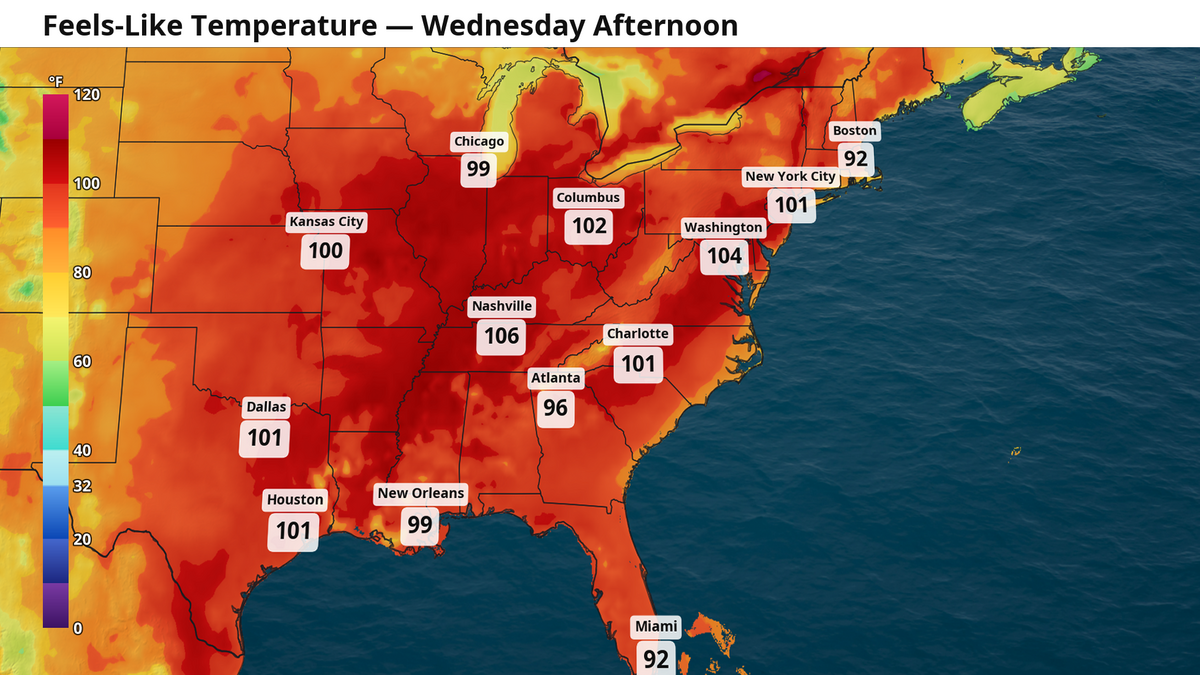
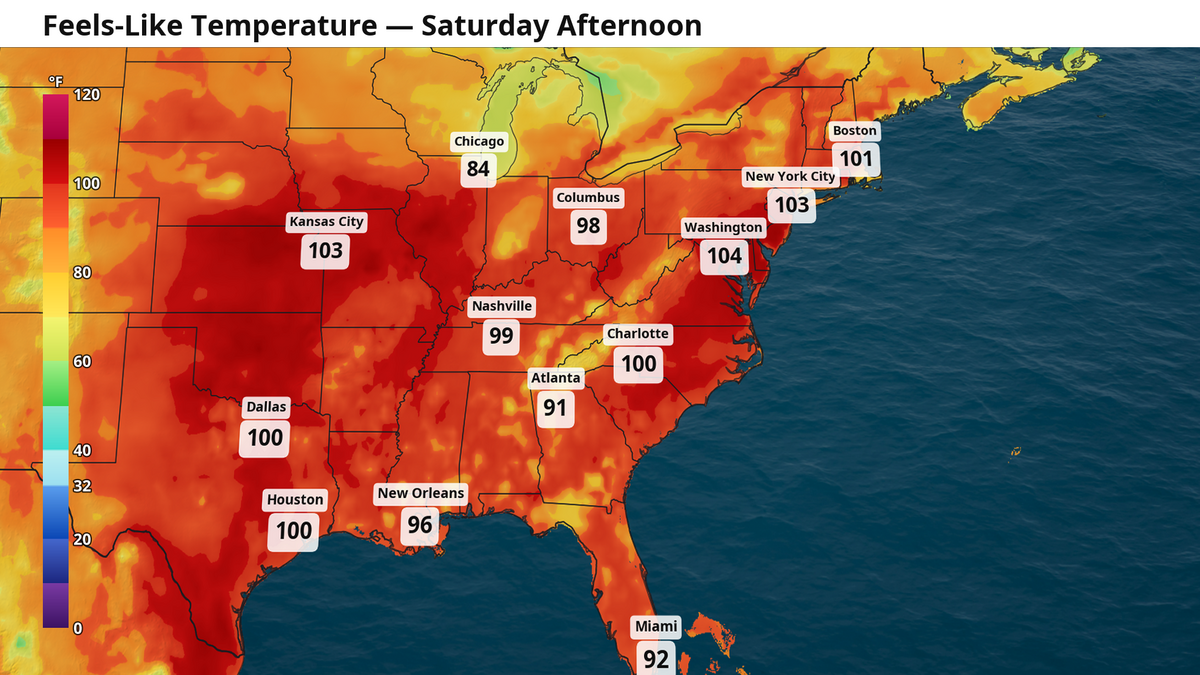
A vast “heat dome” is building across the eastern U.S. that will inundate the Midwest and Southeast with near-record heat between now and the Fourth of July on Saturday. “Feels-like temperatures” — what the temperature feels like to the human body when considering the humidity — will be above 100 degrees for many days straight through the weekend.
All the while, the actual temperatures are likely to peak above 100 degrees. Those temperatures will arrive on Friday, July 3, for most and will challenge records in the process. Some all-time high records that are at risk of being broken in the Northeast include Baltimore (107 degrees) and Washington, D.C. (106). Meanwhile, New York City eyes its first back-to-back 100 degree days since 2011. With overnight lows barely dropping below 80 degrees, the event could challenge more than 300 record-warm lows and 150 daily record highs through Saturday.
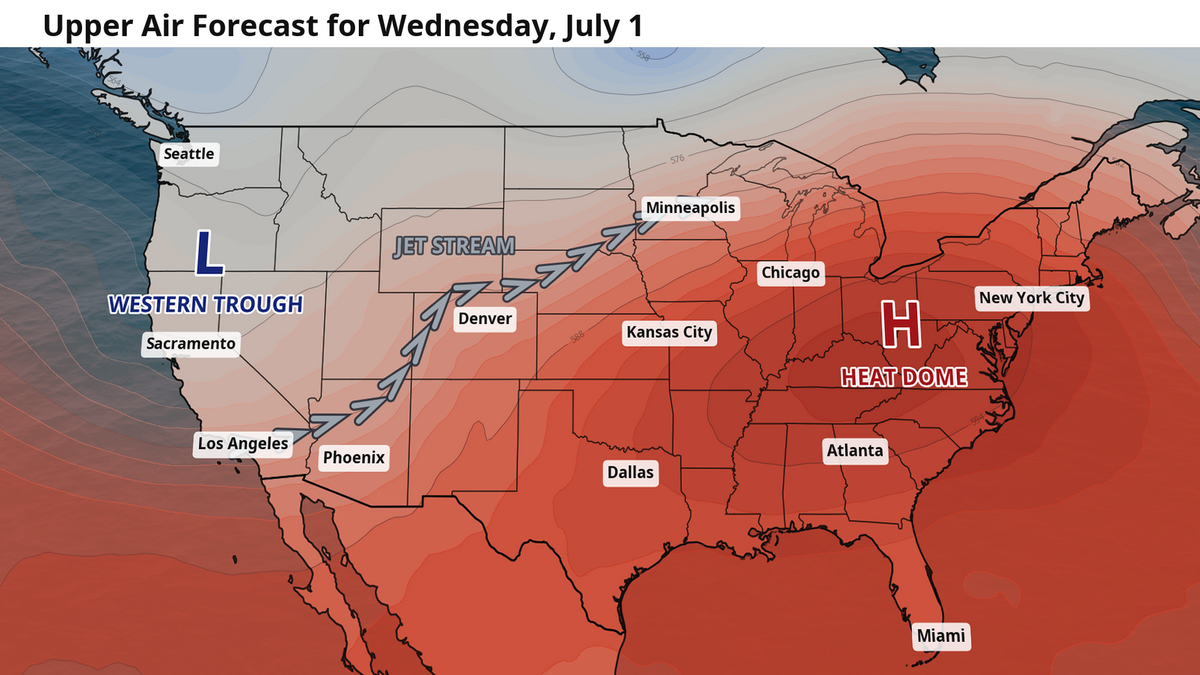
This heat dome is the result of high pressure air gathering together in the upper atmosphere in what is commonly referred to as a ridge in meteorology. What broadly differentiates this heat dome from a normal ridge is that heat domes often come with these heat massive waves as we are seeing now, whereas a ridge is more the common pattern associated with warmer sunnier days for many. On the technical side, heat domes have fully closed off circulations that dominate the skies completely with the wind moving in a clockwise motion over hundreds or thousands of miles. This is not always true of a ridge.
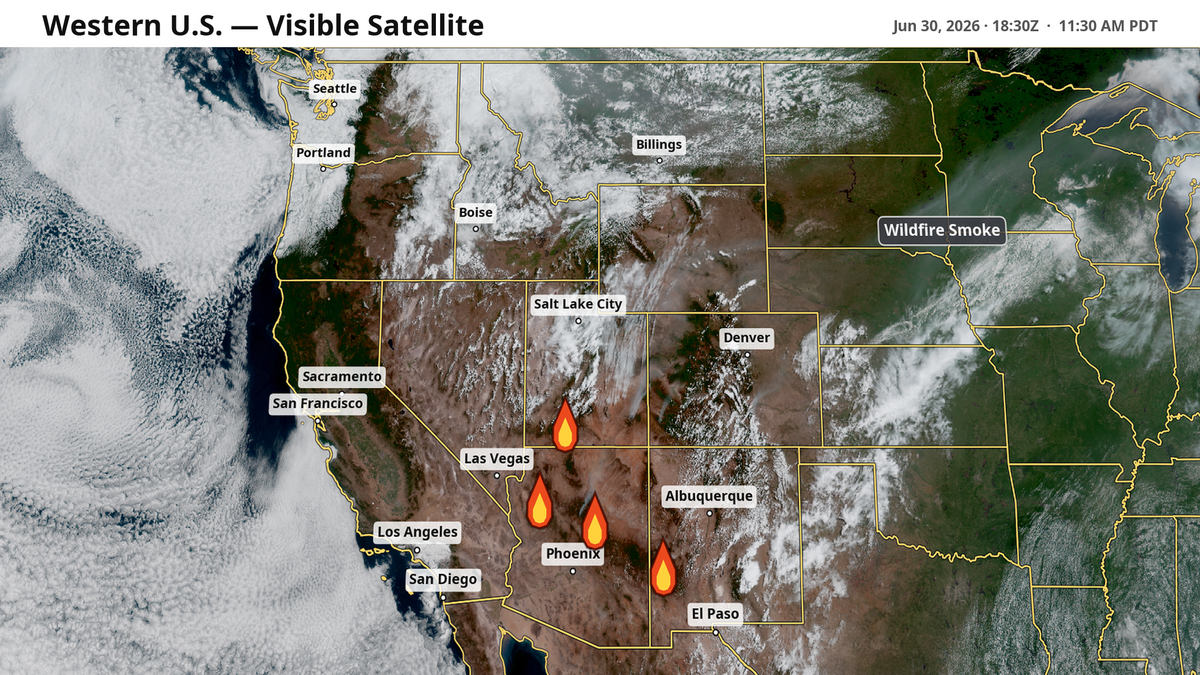
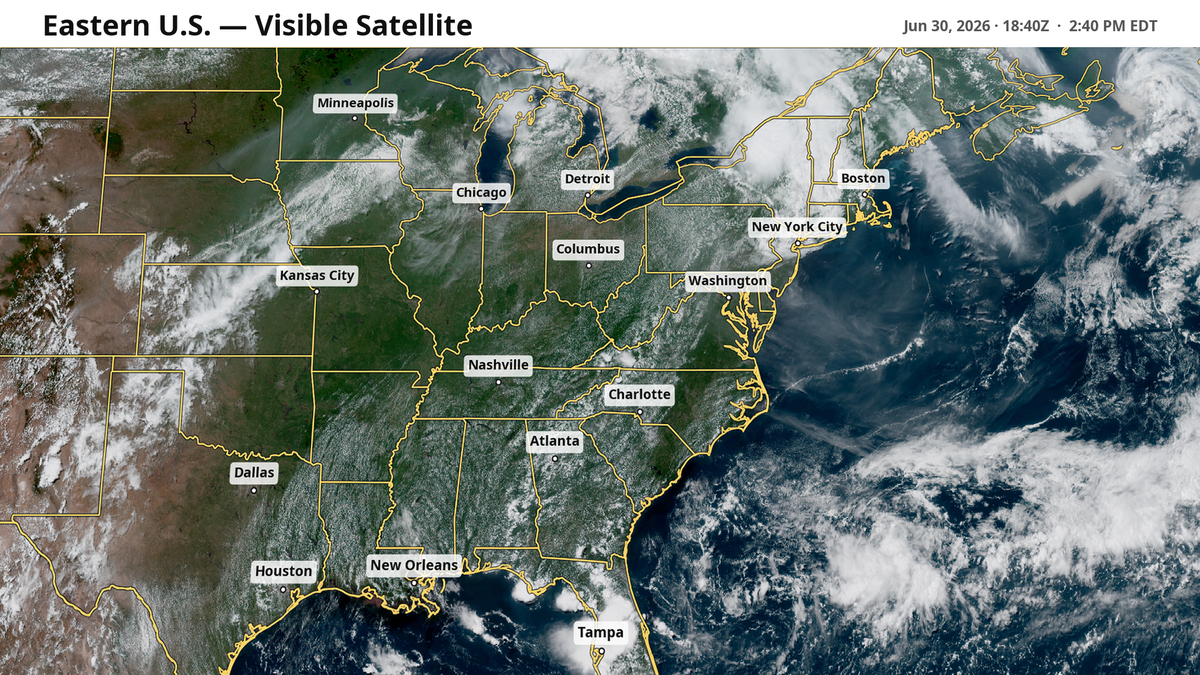
Looking at visible satellite imagery from earlier on Tuesday, you can literally see this pattern taking shape across the country. In the western U.S., some clouds have arrived across the Pacific Northwest. Meanwhile, the jet stream — following the arc around the heat dome — is carrying wildfire smoke up north to Minnesota and the Upper Midwest from raging wildfires in Utah, Arizona and Colorado. Moving east, much of the eastern half of the country is cooking under rather still skies.
For California, this actually translates to our rather mild weather this week. Because the heat dome out east is dominating the skies, everything in the heat dome’s vicinity is at its whim as well. The heat dome enforces that there cannot be any other higher pressure air in every direction. In doing so, it leaves much of the west with lower-pressure air.
Perhaps the best way to think about this — there is literally more atmosphere over the eastern U.S. and less over the western U.S. The atmosphere heats up when there is more atmosphere to go around.
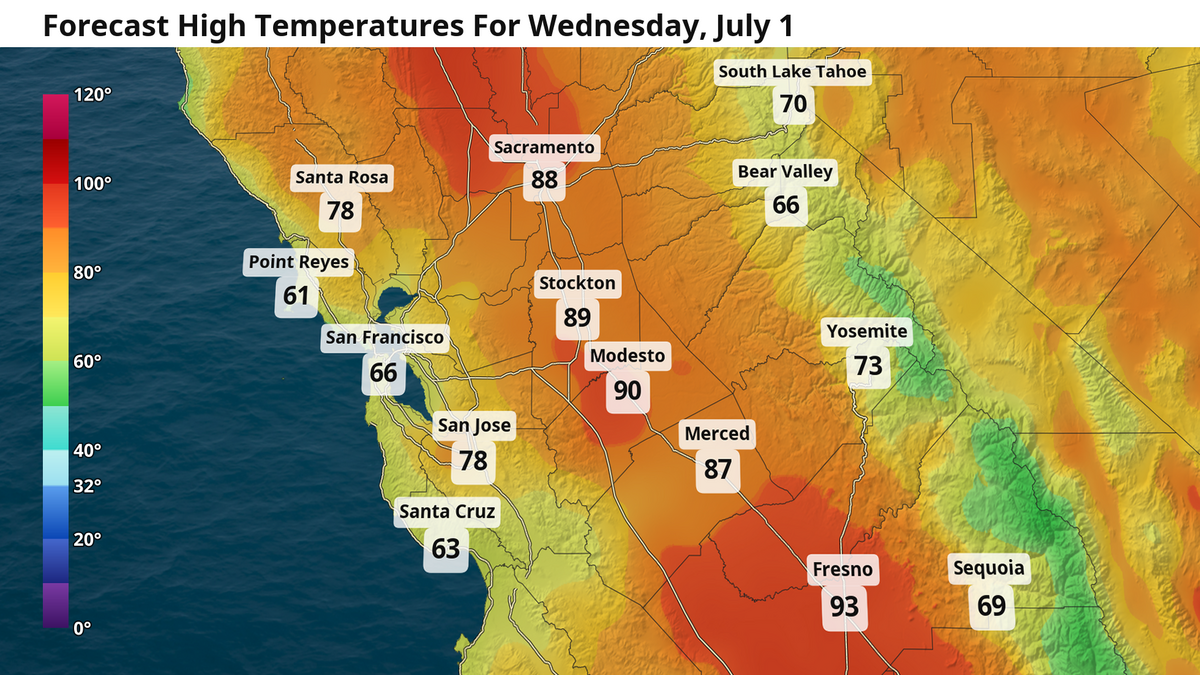
As I said, this is fantastic if you are staying local this weekend. It means temps will stay more modest in inland California and across much of the west. Instead of high temps of 100-plus degrees across the Central Valley, a fairly easy target to hit this time of year, high temps for the rest of the week will moderate. High temps in the mid-80s to mid-90s between Wednesday and the weekend are an opportunity to be seized when we know it could be so much worse.
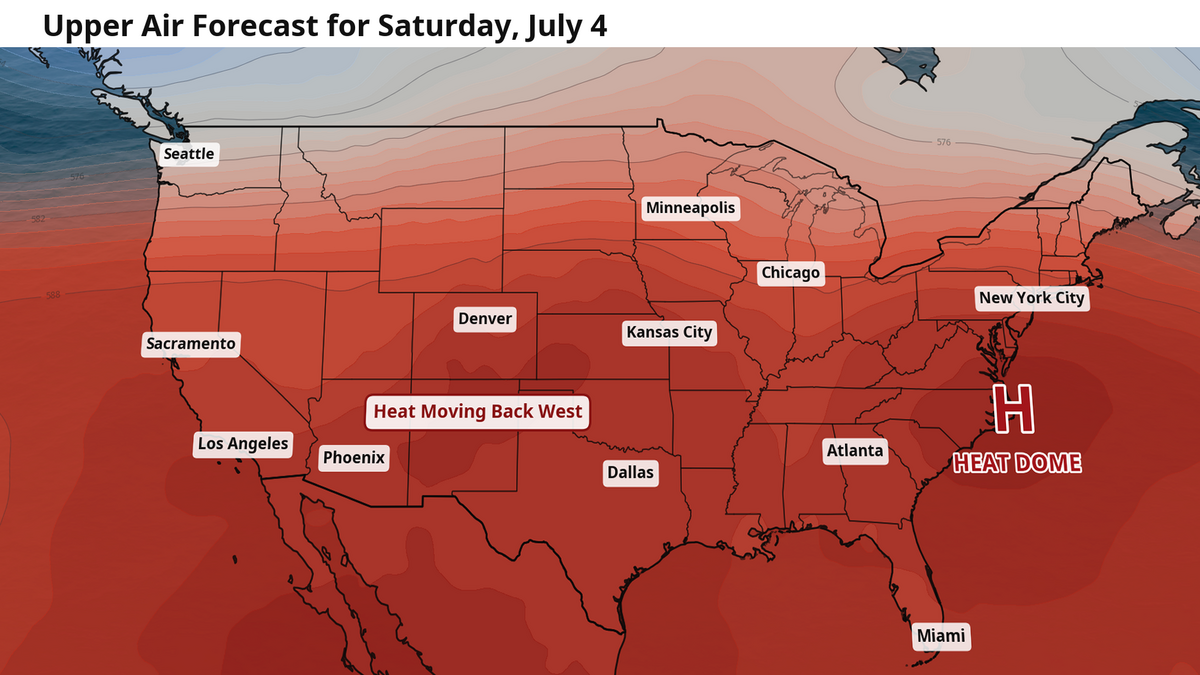
And here is why you should seize this week, because it is likely to get hot again soon. The Climate Prediction Center is expecting above-average temperatures for much of the Pacific states in mid-July. This lines up, as early indications this weekend are that some of this heat locked up in the eastern U.S. will begin to drift back towards us later this weekend and into next week. So don’t be surprised to see 100-plus degree days return to the forecast sooner than later.