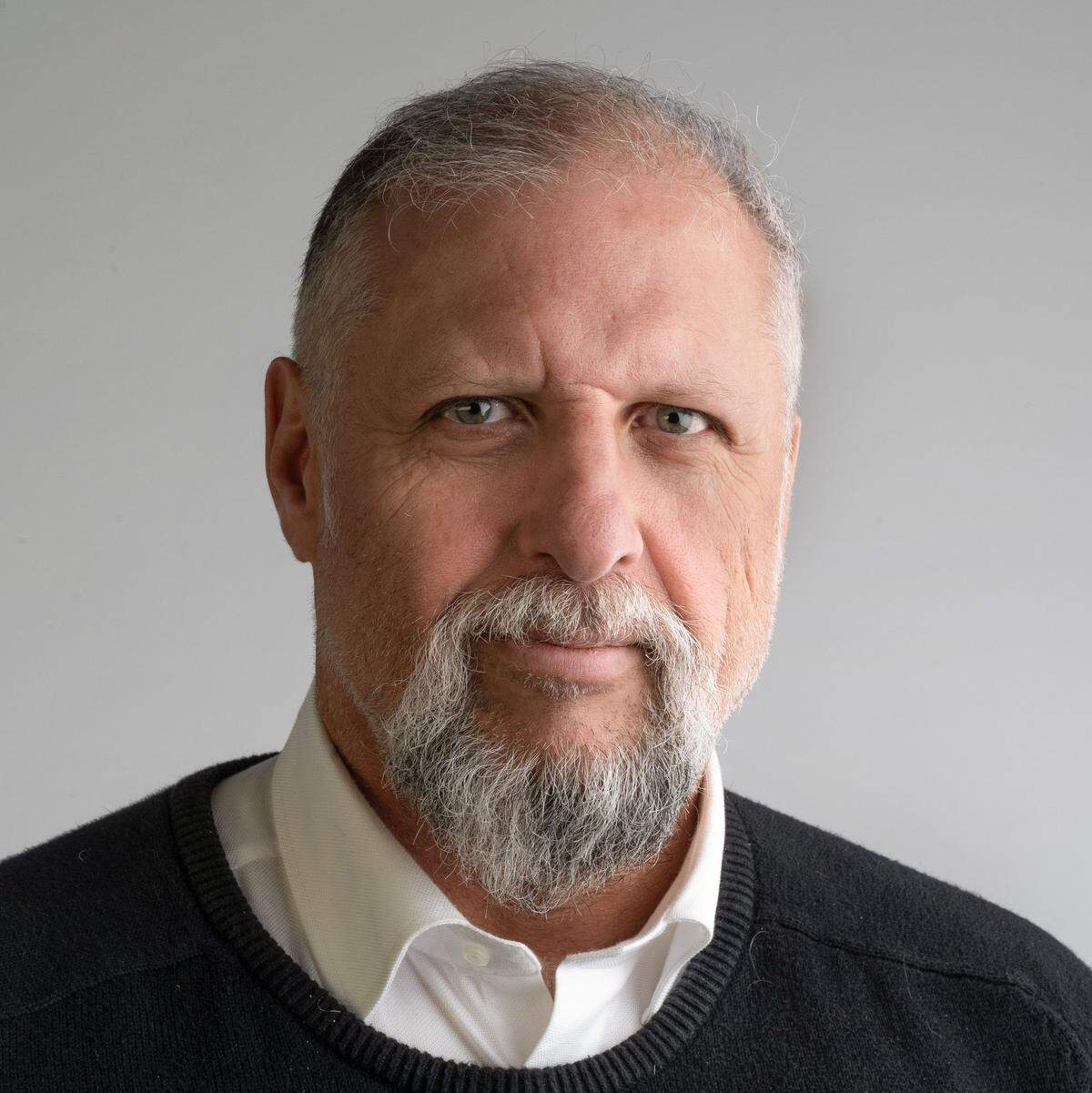
That immigrant we shun could be our next councilman. Ask Eric Guerra, ‘a proud American.’
Some of the most patriotic people I have met were undocumented immigrants when they first came to the Sacramento area.
These citizens loved and embraced America even when America didn’t love or embrace them.
They did this because when they arrived in the 1980s, they could secure legal status and – eventually – citizenship.
But if they were coming to the U.S. now, these patriots wouldn’t have the chance to attain the legal status that made it possible for them to do great things in Sacramento.
They’d either be deported or would be facing deportation like more than 600,000 young people known as “Dreamers,” those were brought to the U.S. as children without documentation. The fragile status of the Dreamers will be decided by a U.S. Supreme Court weighing the legality of the Deferred Action for Childhood Arrivals, or DACA program, which has temporarily delayed deportation for young people brought to the U.S. illegally as young children.
Clearly, there are undocumented people in the United States who are jailed or deported for committing horrible crimes. But many others are leaders in waiting, difference makers, and good neighbors. They are being thrown away by our broken immigration system. They are here because America valued their labor, but not them.
How do I know this? Because of the formerly undocumented patriots we have in our midst today.
Councilman’s journey to citizenship
For example: Nearly a quarter century before he was elected to the Sacramento City Council, Eric Guerra was 4 years old when he was smuggled from Mexico into this country without U.S. government permission. This was an act of desperation by Guerra’s parents, Zeferino and Amparo, who fled the adobe house where Guerra was born in Mexico’s interior state of Michoacan.
Their village of Jerahuaro had no jobs, and no prospects for jobs, or a future for a young family. Hence, the crossing of the U.S.-Mexico border without documentation in 1982.
“It was my brother, my mom and myself,” Guerra said recently from his downtown Sacramento office. “My mother had to run across the border (at Tijuana).”
Guerra and his younger brother had to stay in a van with a “coyote,” an immigrant smuggler. Guerra remembers a van full of others also crossing the border without permission on that trip.
“I remember my brother being held by one of the women (in the van),” he said. “She had her hand over his mouth and she was yelling at him to be quiet. ... The whole experience was full of anxiety.”
Before Guerra would become a star student at Sacramento State, an honors graduate with degrees in electrical and electronic engineering, and a master’s in Public Policy and Administration, he was essentially a child fugitive. More succinctly, Guerra was a refugee. He was economically displaced and politically powerless when his family finally landed in the Yolo County town of Esparto.
Fear of deportation
Without legal status, the Guerra family lived in perpetual fear. Eric was instructed to hide his younger brother in a closet if authorities descended on their humble dwelling. His family never went anywhere, never did anything, except work the fields.
They still got caught. Amparo was in the tomato fields when federal immigration authorities arrived, demanding to see papers.
She had none. Neither did Eric or his younger brother. His father did have papers and a younger sister was born in California. Guerra’s mom was deported, and the whole family returned to Mexico together.
There he was: Eric Guerra, now 41 and a rising political star in Sacramento, deported to Mexico in 1986.
“In our family, you had a citizen, a green card holder, two undocumented kids and an undocumented parent,” he said. “Which is the story of immigration today. We were a mixed status family. The whole binary dialogue of legal and non-legal is a farce. This dialogue has no understanding of history, policy and economics.”
“I remember the fear during that whole era,” Guerra said.
Roughly 30 years before his political ascension, Guerra’s family snuck across the border a second time in a red Ford Ranger with a camper on top. Eric and his brother hid in the camper shell.
“In the economy in Mexico we couldn’t survive anymore,” he said. “The little markets that people had weren’t enough to keep things going, My dad made a choice.”
Guerra said the young people of his village fled, leaving a community of elders and not much else.
Guerra’s family entered the migrant worker stream of Yolo County, which meant constantly being on the move. It meant always being behind in school. It meant being outcasts in their communities.
“I remember people talking negatively of the kids in the migrant camp,” Guerra said. “Everybody spoke negatively of them. Teachers. Students. People in the community. I could feel the tension.”
Opportunity across the border
Guerra’s life didn’t begin turning around until he, his brother and mother gained legal status through the Immigration Reform and Control Act of 1986. That program, signed into law by President Ronald Reagan, expired in the early 1990s. But for Guerra, it was a lifeline.
Once he attained legal status, Guerra could come out of the shadows.
“In 1989, we got our temporary residency card,” he said. “And we were able to go to Mexico City on vacation. Vacation! That was new for us.”
Guerra became a Boy Scout. He ventured into his community. He earned good grades, attended Sacramento State. There, he became student body president after having worked as a janitor to put himself through school.
He became a U.S. citizen in 2002 and a leader in his Tahoe Park neighborhood. He was first elected in 2015 to the Tahoe Park council seat vacated by Kevin McCarty after McCarty was elected to the state legislature. Guerra was the first Latino on the Sacramento City Council in 20 years.
Guerra was re-elected to a full term in 2016. As a councilman, he’s working to bring investment to Stockton Boulevard and to root out human trafficking in the poorer neighborhoods of Sacramento. After the birth of his son, Guerra began working on making day care more accessible to Sacramento residents.
He is now the vice mayor of the city.
Immigrant and proud American
“I’m a proud American,” Guerra said.
“In no other country, including Mexico, can you see someone grow up dirt poor and be given a fair chance to accomplish things,” he said. “The U.S. has a history of generosity but unfortunately, leaders have changed that dialogue and allowed a small segment of people that are racist to use the term nationalism as a cover for their racism.”
In the current political climate, some would say Guerra shouldn’t have been given legal status and, honestly, those people are wrong.
“I’ve met undocumented kids who are geniuses and we’re allowing that talent to waste away,” Guerra said. “When you give people the opportunity to succeed, its amazing to see what they will do.”
Sacramento would be a lesser city without Eric Guerra. His labor and the labor of his family were needed by California employers. Once here, Guerra became the embodiment of the American dream. That’s what we’re losing by losing sight of our immigrant heritage. How many Guerras will be deported if DACA is abolished? How many have already been deported?
We’re shunning the very people who yearn to make our communities better.
This story was originally published November 24, 2019 at 5:30 AM.