
Will Obama let the Democratic Party sink in the quicksand of socialism?
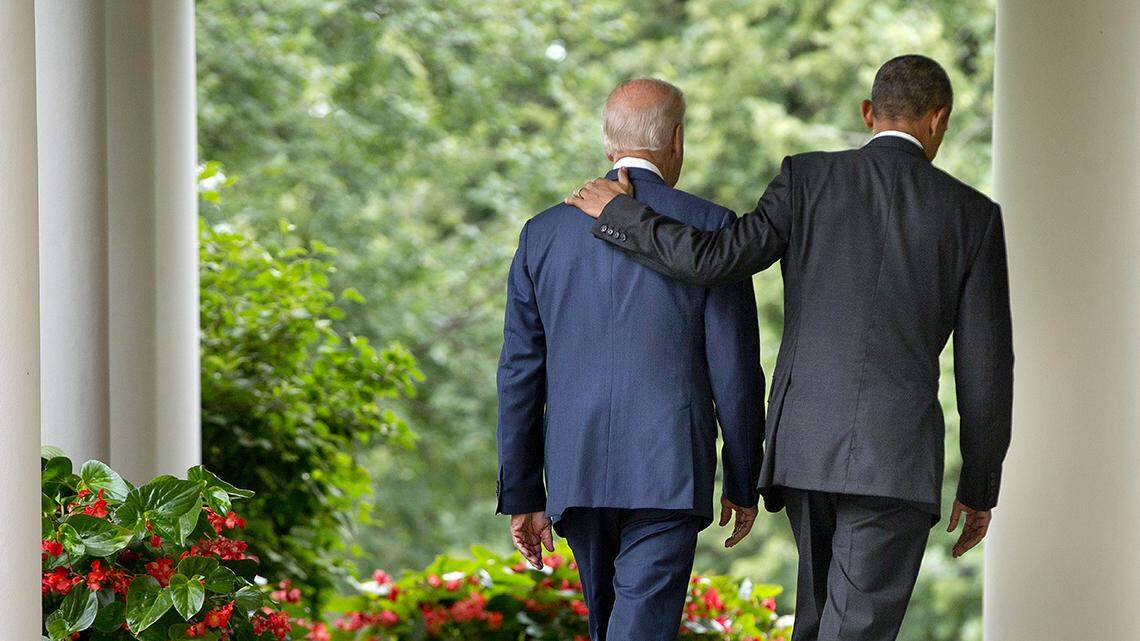
For someone as loquacious as Barack Obama, the current Democratic primary race must be almost painful to endure. The ex-president has said he would refrain from sticking his nose into likely the largest intramural party competition in recent memory, featuring two dozen candidates at one point.
His former vice presidential partner, Joe Biden, was the longtime front-runner who faded and then surged to a resounding and possibly final primary win Saturday in South Carolina. There’s Michael Bloomberg, who wasn’t an Obama confidante but spent millions on ads across the country making the two of them appear to be best buds.
Others such as Pete Buttigieg and Sen. Amy Klobuchar have verbally claimed at least some of the Obama policy mantle, but they’re both out now. Sen. Elizabeth Warren worked as an assistant to President Obama, setting up the Consumer Financial Protection Bureau in 2010.
And then there’s Sen. Bernie Sanders, the field’s top-ranking grump who’s not really a Democrat, so he’s been candid about how far left the Obama administration failed to go during its long eight years.
So, if you were able to hear above the shouting and crosstalk in last week’s debate, you might have heard Obama’s name again cited. A recent Morning Consult poll revealed that 60% of Democrats say that Obama has endorsed a candidate, most likely Bloomberg, they said, or Biden or Sanders. Some even guessed Warren.
The truth is Obama’s been true to his word publicly, at least about not endorsing anyone, although there was one leak that he’d advised Biden not to run. The former president remains popular among Democrats, despite the ongoing political devastation his policies wrought at federal and state levels in the 2010 midterm elections.
At a November fundraiser, Obama did observe that most voters do not share the views of “the activist wing of our party.” He added, “The average American doesn’t think we have to completely tear down the system and remake it.”
That sounds like Sanders and Warren are out, but Biden could be in.
Biden jumped the gun on endorsing gay marriage before his boss. But the veteran senator would seem to make the most sense. Obama has said the pair worked closely together for eight years. Obama gave Biden several major portfolios — driving new gun control legislation after the Sandy Hook shootings, ensuring hundreds of thousands of “shovel-ready jobs” resulted from their 2010 stimulus package and overseeing Obama’s government transparency efforts.
None of them really worked out. And Biden was the sole senior adviser to oppose killing Osama bin Laden. But Obama still bestowed on Biden the Presidential Medal of Freedom, the highest honor he could arrange.
Former governors have been modern voters’ favorite choices for president. Vice presidents not so much. And sitting senators only three times in U.S. history. Think Vice Presidents Al Gore, Walter Mondale, Hubert Humphrey and Richard Nixon in 1960. George H.W. Bush did win in 1988, but that was more of a third Ronald Reagan term, and he lost to a governor four years later.
The biggest remaining question this cycle is: What, if anything, will Obama do to join the party hierarchy, publicly or perhaps behind the scenes, and stall Sanders’ momentum as he tries to assemble the 1,991 delegates necessary for a first ballot victory at the party’s national convention in Milwaukee come mid-July?
Sanders calls himself a “democratic socialist,” but the qualifying nuance is certain to be lost in a campaign against the detested but well-financed Donald Trump. Party leaders’ fear is that a likely resounding thumping on Nov. 3 of the man proposing countless trillions in new taxes and spending would also cost Democrats their House majority and their attempt to erase the GOP’s slim advantage in the Senate.
On the other hand, an obvious bid to push the convention to a second ballot could well alienate the fervent Sanders crowd on the left as yet another perceived rigging of results to deny the independent senator what they view as his hard-earned rightful place atop the national ticket of the party he does not belong to.
On a second ballot, the party’s 775 superdelegates are allowed to vote. They’re now disguised as “automatic delegates.” But as loyalists and former officeholders, this group seems more likely to risk a Sanders revolt than discard their genuine chance to oust an Oval Office usurper like Trump who’s never reached 50% job approval.
In short, clearly there’s not much in store as this election cycle moves through Super Tuesday this week and beyond.
This story was originally published March 3, 2020 at 3:00 AM with the headline "Will Obama let the Democratic Party sink in the quicksand of socialism?."