Our ‘Last Dance’ lesson: Sometimes our sports heroes are not heroic, but jerks who play well
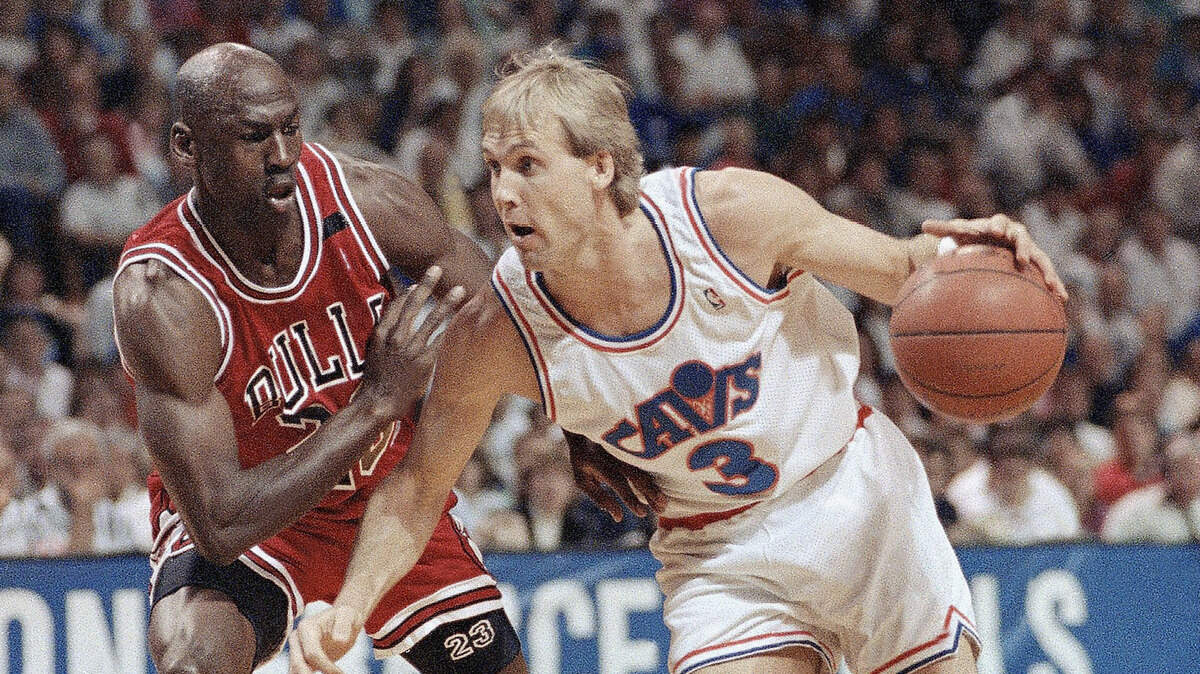
I watched all 10 episodes of “The Last Dance,” the ESPN series about the on-court excellence of Michael Jordan in his prime, and I loved it all even though Jordan came across like an ass and a bully.
Directed by Jason Hehir, “The Last Dance” was a terrific piece of entertainment because it was about the singular focus and ferocious competitive spirit of Jordan, one of the greatest American athletes of any era.
And while everyone is entitled to an opinion, much of the criticism of “The Last Dance” was more about the flawed yearning of fans and scribes for their athletic stars to be “good guys” than it was about flaws in the documentary.
The central failing of Jordan in the eyes of some critics is that he wasn’t a “nice guy.” He was as “bully” to his teammates. He was a maniacal competitor who made up slights and stories of being disrespected by opponents to push himself to not only beat his enemies – but to crush them.
Jordan didn’t care if he hurt people. He didn’t care if his mother wanted him to help out an African American politician in their native North Carolina. He didn’t have a dog. He didn’t have an emotion deeper than wanting to win on the court or on the links or at the casino.
What was most entertaining to me are the critics who call “The Last Dance” a piece of hagiography and then describe their revulsion when Hehir’s cameras showed what drove Jordan. How can it be hagiography and soulless at the same time? Spoiler alert: It can’t.
The truth is that even with a narrator who had creative input, Hehir showed us who Jordan really was, and still is.
Jordan seems OK with this and does Hehir. The problem is ours.
And when I say “we,” I mean most of us who follow and document sports. I don’t share this impulse and will explain why in a moment, but let’s not lose the point.
From the beginning of sports writing to the advent of sports on TV, when ABC of the 1970s took you “Up Close and Personal” into the lives of athletes, the American public and the press that feeds it always have been desperate to make athletes into heroes, even when they were not.
Especially when they were not.
Before Michael Jordan
As I read and heard the criticism of Jordan in Hehir’s “The Last Dance,” I remembered the now-famous account in the New Yorker of Ted Williams’ final at-bat in 1960, a home run, written by none other than John Updike. “Like a feather caught in a vortex, Williams ran around the square of bases at the center of our beseeching screaming. He ran as he always ran out home runs – hurriedly, unsmiling, head down, as if our praise were a storm of rain to get out of. He didn’t tip his cap.”
Updike explained why: “Our noise for some seconds passed beyond excitement into a kind of immense open anguish, a wailing, a cry to be saved. But immortality is non-transferable. The papers said that the other players, and even the umpires on the field, begged him to come out and acknowledge us in some way, but he never had and did not now. Gods do not answer letters.”
As an athletic marvel and a cultural icon, Michael Jordan was every bit the equal of Ted Williams. It’s just that Jordan was born too late but still played while we wanted to worship athletes, even as wall-to-wall media show us sides of them that the scribes used to cover up in Williams’ day.
What do we know about Ted Williams now? He was just as insane a competitor.
Ted Williams was so spiteful that he refused to acknowledge his adoring fans in his last at-bat because he was mad at them for real and perceived slights that were a decade old. Sound familiar?
Who was Mickey Mantle really? An alcoholic, an absent father and a lot worse. Who is Pete Rose? How did Muhammad Ali treat some of the women he married and how did he mistreat Joe Frazier with ugly racial taunts for the sole purpose of promoting their fight? What uncomfortable scenes would make us wince if a 10-part documentary focused intently on the life and Jim Brown?
We learned who Tiger Woods really is, right? But that doesn’t matter. We want them to be “good guys,” too. We need them to be good guys.
‘Is Tim Lincecum a good guy?’
When I was a sports writer, the question I was asked the most by fans was: “Is Tim Lincecum a good guy”? Is Buster Posey a good guy?
After a San Francisco Giants game in 2010, the season they won their first World Series in San Francisco, I was at a restaurant next to Oracle Park. Some fans recognized me and questioned me about their heroes.
The desperation in their eyes that was truly sad to me. I asked, “why do you care?” The response was pure confusion. They didn’t get what I was talking about.
Personally, I’ve never needed to know the athletes in the games I follow. I don’t care what they do when they aren’t playing, who they love, what they do with their money.
Monday was Reggie Jackson’s 74th birthday. He’s my favorite player of all time. In my childhood, when I was most impressionable, I was drawn to his ability to hit electrifying home runs in the biggest moments. He was charismatic even when he struck out.
But as an adult, I learned about his turbulent reputation.
Every time I post something about him on Facebook, the same friend reaches out to me privately to share a Reggie-was-a-jerk story. When I met him in the early 2000s, when I was a sports writer, Reggie big-timed me even though I had written a piece advocating for the Oakland A’s to retire his number.
I didn’t take offense to him blowing me off. I loved him for his performance on the field when I was a kid and nothing more. That’s all I needed. Why would we need any more?
So Jordan allowed Hehir’s camera into his inner sanctum and he told the truth about who he was and what motivated him and that blew his image for some. OK, but he really only did only care about the next game. He really only did care about winning and beating anyone who stood in his way. And his pushed his body and the poor devils who played with him to the point of insanity.
The elite professional athletes have only one currency: their performance. When it’s over, it’s over. Even though he won six NBA titles, the men who ran the Chicago Bulls broke up the team after the 1998 finals – “The Last Dance’ – because they didn’t want to pay the players.
It didn’t matter who Jordan was or what he did, the bosses decided it was over. And in a sense, Jordan has had a big hole in his life ever since that he can’t fill because he can’t go back.
Hehir showed it in all in detail – every petty, belligerent, half-crazed moment that Jordan needed to push himself beyond human reason and beyond anything that any of us could accomplish. We had neither his athletic talent nor his unreasonable drive to exploit it. You know what? We didn’t own him then and we don’t now.
The “Last Dance” was a triumph because it wasn’t hagiography. It revealed the reality that Jordan lived. He really did need an entourage to get him from place to place as hordes of people were grasping at his arm. He really was a prisoner of his hotel room before and after games. He really did belittle and berate his teammates to meet his impossible standards. He really was closest to his father, who was murdered, and his mother, who traveled with him for his biggest games.
More than any other player, he really did lift the NBA to worldwide acclaim.
If you didn’t like the way he did it or if it wasn’t heroic enough for you, then you wanted a myth we’ve been telling about athletes for a century. Thankfully, Hehir gave us something much richer than that.
This story was originally published May 19, 2020 at 1:30 PM.