Sacramento city leaders, listen and pay up: That police money is owed to those who need it
In a liberal city such as Sacramento, you would think police reform would be easy to achieve. But the opposite is true because Sacramento has never been as cool or progressive as many residents have liked to believe.
Here, you have a collection of liberal politicians who won’t consider touching the police budget or diverting money meant for cops to struggling communities as some advocates are proposing.
In March, mostly well-heeled neighborhoods of Sacramento resoundingly rejected a ballot measure that would have invested city money in youth programs for kids in communities that need investment. The promises of Sacramento Mayor Darrell Steinberg to commit large portions of a 2018 sales tax increase to economic development programs for neglected neighborhoods are instead being diverted to police and other city services because COVID-19 has ravaged city revenues.
Get the picture? Oak Park, Del Paso Heights, Strawberry Manor, South Sacramento, Gardenland, Mack Road, Stockton Boulevard, Northgate Boulevard, North Franklin Boulevard and too many other ethnic and economically underfunded communities always get left behind.
And to be even more specific, black, brown and Asian Pacific Islander communities always get left behind.
Yes, people have been massing in the streets in Sacramento since the May 25 killing of George Floyd by Minneapolis Police. But the way this protest is playing out in Sacramento is about far more than George Floyd.
Some Sacramento neighborhoods feel comfortable with police and some neighborhoods fear and distrust police. It’s a city of neighborhoods that don’t lack for anything and some that lack for everything.
The issue of the police department budget and the refusal of local politicians to touch it symbolizes for some how the allegedly progressive values of Sacramento are reflected in budgeting practices that are not progressive at all.
Where is the cop budget scrutiny?
Some of the most cogent voices in Sacramento’s police reform movement are not calling for the Sacramento Police Department to be “defunded” completely. Rather, they are arguing – at the least – that Sac PD should not be financially supported by money that had been promised to Sacramento communities.
They are arguing that Sac PD is financially inefficient and should be held accountable. And, they are arguing that Sacramento communities need more economic opportunities and education and not more police.
“My son was recently murdered in Stockton and I’m not advocating that we need more policing,’ said Ismail Imran, 45, who has worked as a violence intervention specialist in Sacramento. “I’m not advocating for more police. I’m advocating for more community-based programs for young people who have nowhere to go.”
Flojaune Cofer, an epidemiologist and Senior Director of Policy for Public Health Advocates, wants the city’s civilian leaders to enact more aggressive budget controls on its paramilitary police force. Cofer and others lament that funds from a recent sales tax hike, called Measure U, will go to police and other city services instead of communities that have been promised economic investment.
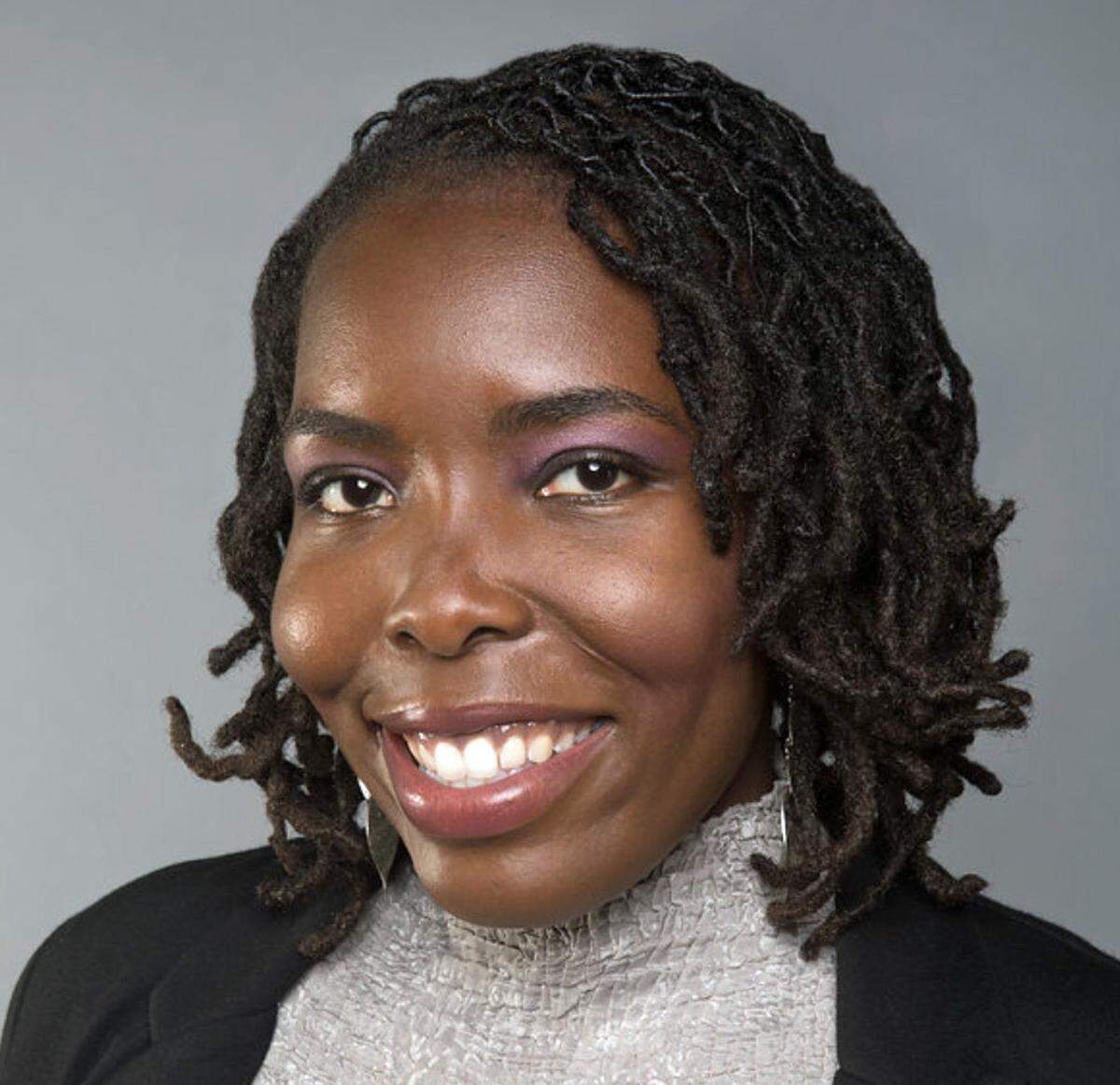
“The City of Sacramento attempted to silence the Measure U Community Advisory Committee by canceling all of its meetings prior to the passage of the budget,” Cofer wrote in a commentary published by The Bee. “As the committee’s chair, I believe this was done to prevent us from criticizing the City Council’s proposed Measure U budget, which allocates 50 percent of the revenue to the police department instead of economic development, as promised.”
She added: “The city’s economic forecast changed dramatically due to COVID-19, including a projected loss of $19 million in Measure U revenue. Yet, in the wake of increased need for financial support to communities, this year’s budget reflects an even smaller allocation to economic development, $4.2 million – while the police allocation grew to $41.7 million.”
Cofer points to city audits that show Sac PD exceeded its overtime budget last year by nearly $7 million. Cofer’s argument is simple and persuasive: Why not insist that Sac Pd and its boss, City Manager Howard Chan, be more efficient? Why not hold Chan and police accountable for their spending?And, to drive the point home about economic inequality in Sacramento, why fund police with $41.7 of Measure U money that was promised to communities that need it?
Recently, Cofer took to Twitter to illustrate the cost of city spending on police without any accountability: “COVID-19 shut down business. 3 state unions are getting a 9.23% pay cut and 2 furlough days. But guess who is getting their YEARLY raises like usual? @SacPolice, Cofer Tweeted on June 23. “And, guess who can renegotiate their contract in an emergency, but won’t do it? @TheCityofSac #giveitback.”
In a June 22 tweet, Cofer took aim at city leaders for a budget showing Sacramento more than $21 million over budget on overtime, with the city fire department leading with the way nearly $13 million over budget.
“This is why we don’t have money for kids, housing or economic development,” Cofer tweeted. “#GiveItBack.”
Chet Hewitt, President and CEO of the Sierra Health Foundation, made a strong point that deserves far more consideration from city leaders.
“The police budget is being asked to do nothing. It’s being given an increase and we don’t think this is equitable,” Hewitt said. “So law enforcement suffers no economic consequence during one of the greatest economic downturns in our history?”
For emphasis, Hewitt said, “We’re not saying zero out the police budget.”
Where are other city leaders?
This is where Steinberg gets the lion share of criticism from advocates, in part because he is the most visible elected official in Sacramento and the only council member elected citywide. Truthfully, other city leaders deserve far more scrutiny than they are getting on the issue of police reform.
Police Chief Daniel Hahn reports to Chan, not Steinberg. It is Chan who prepares the budget and the nearly $22 million in exceeded overtime is on him. Since the start of 2017, Mayor Pro Tem Angelique Ashby has received nearly $9,000 from the Sacramento Police Officers Association and is easily the strongest advocate for the police and fire unions on the council. She even announced her 2016 candidacy for mayor at the firefighters union hall.
SPOA has given almost $6,000 to outgoing Councilman Steve Hansen, $4,000 to Councilman Eric Guerra, nearly $4,000 to Councilman Rick Jennings and $2,000 to Councilman Jeff Harris.
Ashby and Harris have been particularly vocal that Measure U tax proceeds must be spent on city services, such as police and fire, and not in struggling communities as Steinberg has advocated. Ashby and Harris also came out strongly against Measure G, which would have locked up 2.5 percent of unrestricted city for youth-oriented programs, summer programs, mental health resources and other programs for kids.
I was part of The Sacramento Bee Editorial Board that endorsed Measure G for the March primary, but it was sadly defeated with the help of Steinberg. The stated reason: They didn’t want to tie up the city budget. We’re talking 2.5 percent of the budget, not 25 percent. That was 2.5 percent for kids and really, it’s a pathetic investment but even that was too much for Steinberg, Ashby, Harris and others.
And according to an analysis by Measure G proponents, city voters in well-to-do zip codes voted “no” on Measure G while Sacramento’s more modest communities voted “yes.”
Steinberg’s family home has been the site of protests since Floyd’s killing but really, he is one vote on the council. Where is the protest at Chan’s house?
“Nothing Howard Chan does is attached to sunshine laws,” Cofer said “A lot of things don’t add up. You can’t get answers....I do think Howard Chan is getting way too much of a free ride.”
Where is the protest at Harris’ house? He called Steinberg’s proposal to use Measure U funds for struggling communities a “scheme.” On Measure G, in a meeting before The Bee editorial board, Harris was easily the most vehement voice in the room fighting against a budget set aside for kids in struggling communities.
Where is the protest at Ashby’s house? Despite recent pledges to support police reform, Ashby fought hard against Measure U and Measure G. She is an unabashed booster for Sac PD and for Hahn.
Where is the equality?
If anything, Steinberg has tried to address inequality in Sacramento more than any other council member sitting on the dais. He says he won’t reopen budget talks with Sac PD because negotiations with SPOA are subject to binding arbitration. And Steinberg doesn’t do anything if he doesn’t think he can win.
He’s not into “moral victories.” He’s probably the most left-leaning member of the council. The disagreement between him and Cofer is over specifics. Cofer wants Measure U to go to communities. Steinberg doesn’t want to lay off city employees and is pledging to funnel money to communities from other sources.
Does Cofer have a point about police? Yeah. Is the entire council too deferential to Chan and police? Yeah. That’s where this fight needs to happen. The entire council – all of them – need to feel the heat.
Steinberg has spoken about Sacramento’s history of economic injustice.
At his State of the City speech in February of 2019, the year following the shooting death of Stephon Clark by city cops, he spoke of Sacramento’s shameful legacy of racist land use policies.
“Racially restrictive covenants barred non-whites from neighborhoods like Curtis Park and East Sacramento. Instead they went to places like Oak Park, Meadowview and Del Paso Heights, which didn’t have such restrictions,” Steinberg said.
“The late, great Nathaniel Colley, Sacramento’s first African-American lawyer, passed on his experience of what it took for an African American family to buy a home in segregated South Land Park In the 1950’s. His son Nat Jr. told a Bee reporter that white friends of the Colley family agreed to act as the actual ‘purchasers’ for the Colleys since no one would sell to them directly...This is not just Black History, this is our history – our shared history. We must acknowledge the past and learn from it so we can avoid repeating it.”
Where are we?
Measure G was meant expressly to help the kids who fear police in our city, and we voted it down.
Measure U was supposed to funnel $40 million a year for five years into communities that needed economic development. Steinberg points to $70 million million already spent toward this goal, but, as Cofer said, that’s “playing fast and loose with the numbers.” Not all of that $70 million is about “economic development” and it has come from other sources of money.
Bottom line: The police budget is kept whole while the communities get IOU’s. Violent crimes have been spiking in Sacramento’s poorest communities and Cofer, and others, argue that more police and more incarcerations are not the answer. More investment is the answer.
So you have communities that want promises kept and a majority of the council, no matter how liberal, operates under the old rules of law and order policing. And you have Steinberg in the middle, trying to bridge the gap with other pots of money and with independent oversight reforms that will be presented and reviewed at the end of this month.
We’re really not as cool as we think are in Sacramento and, on matters of race and ethnicity, we never have been. Our history is our history.
If we get this wrong now, if we miss the moment of opportunity because our elected officials were afraid of the politics, we will regret it.
“We’re gonna feel about this time the way we feel about people who opposed desegregation,” Cofer said. “We’re going to think about decisions that were made and cringe.”
This story was originally published June 26, 2020 at 5:00 AM.