
A sheriff’s deputy shot me in the back. We must radically rethink policing in the U.S.
I am a white 50-year-old man, a professional and father of two. I am also a victim of police violence.
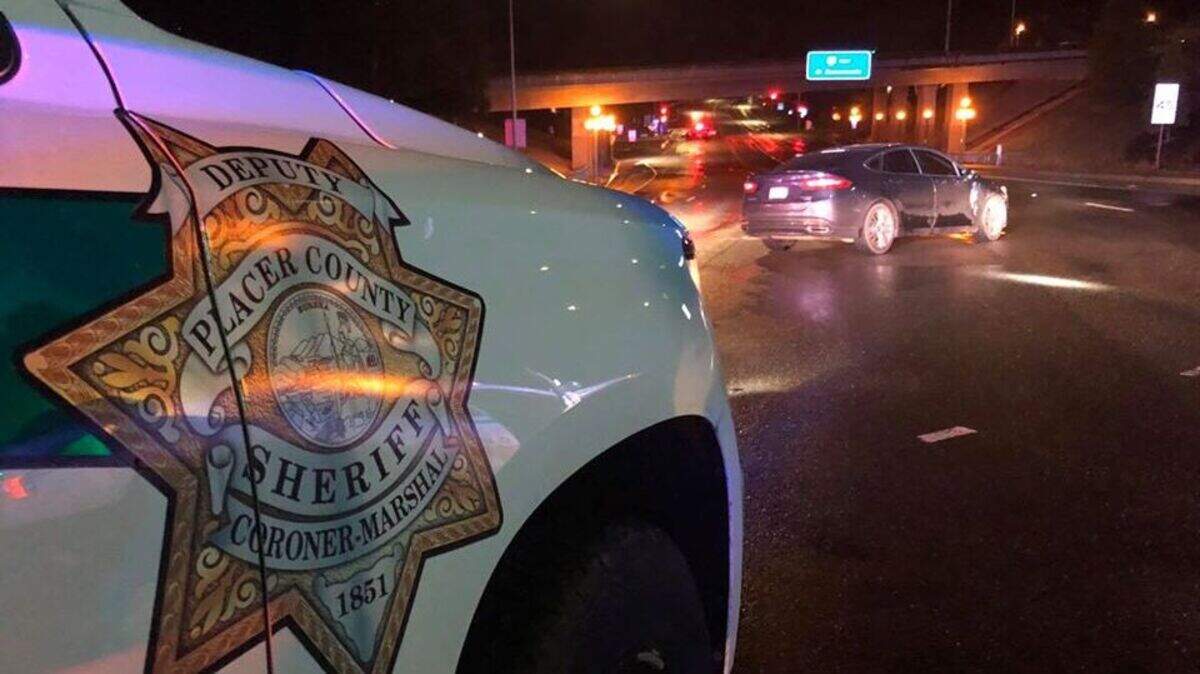
In the early hours of January 14th, 2018 — on a ski trip with my 16-year-old son — I was shot twice by a Placer County Sheriff’s Deputy. One bullet passed through my stomach and exited without damaging any major organs. The other lodged in my spine, shattering my T11 vertebra and rendering me a permanent paraplegic.
I only remember fragments of what happened that night. I woke up around 3 a.m. feeling out of it — disoriented, still in a dream — and wandered upstairs to my son’s room to ask him to call for help.
My son discovered me curled up on the floor of the small cabin we were staying in on the north shore of Lake Tahoe, unable to provide answers to simple questions. He called 911 and relayed that I was in a “dreamlike state” and needed help, and that I might be suffering from an episode of temporal lobe epilepsy, a condition which doctors had diagnosed as a possible cause of prior states of disorientation.
Deputy Curtis Honeycutt, a 20-year veteran law enforcement officer, was first to respond that morning. We met him outside. I was still in my pajamas and had what he described as a “dreamlike stare.” Rather than wait for backup that was to arrive in minutes — or for the paramedics — he ushered us back into the small, dark cabin where I’m told I approached him slowly, holding a carving fork. He then shot me twice, once in the side and once in the back.
The trajectory of the bullets and forensic analysis suggests I was moving away from him at the time. The deputy is about a foot taller than me and outweighed me by almost 100 pounds.
He was wearing a bulletproof vest, was outfitted with a taser that he did not use on me, and was supposedly trained in many non-lethal defensive maneuvers. Deputy Honeycutt claimed that I was coming at him and that he felt justified in the use of deadly force because his life was in danger. He did not retreat onto the deck immediately behind him, he did not verbally warn me and he did not push or punch me, although his reach was more than three feet long. He simply shot me, leaving me paralyzed and leaving my son irrevocably traumatized.
When I appeared for arraignment at the Placer County Superior Court — following multiple surgeries and months of physical therapy — the district attorney’s office charged me with assault with a deadly weapon upon a police officer, a felony. By contrast, Placer County’s internal affairs and its DA’s office cleared Deputy Honeycutt. In order to spare my family the pain of trial and to preserve whatever prospect I had for returning to work, I later pleaded guilty to a single misdemeanor of “brandishing a deadly weapon” — a carving fork.
After two years of civil litigation, Placer County recently agreed to settle my Federal civil rights case. I was able to demonstrate their utter malfeasance and agreed to a settlement of $9.9 million. Deputy Honeycutt has returned to patrol for the sheriff’s department while I use a wheelchair and a colostomy bag. I have constant and chronic pain. My body cannot regulate temperature. I live in perpetual fear of pressure sores, or an infection that will enter my bloodstream and kill me (I have had six urinary tract infections, and almost died of sepsis in the hospital). Statistically speaking, I am now likely to die significantly earlier from some consequence of my disability. The bullet from Deputy Honeycutt’s gun may yet kill me.
I am still coming to terms with what it means to be the victim of gun violence, of police brutality and incompetence, a victim of the broken state of policing in this country. Although I am one of thousands of victims of unjustified use of deadly force by a police officer, I realize that if I were not white I would probably be dead. A recent study showed Black Americans across the United States are, on average, three times more likely to be killed in police encounters than whites. Andres Guardado was shot five times in the back by Los Angeles County Deputies in July and tragically died of his injuries.
That Deputy Honeycutt showed some modicum of restraint in my case, and that he immediately began performing CPR and attempting to save my life, is likely due to the color of my skin and assumptions about my background than anything else.
I survived, albeit in this radically altered state, while so many others — from George Floyd and Breonna Taylor to Tamir Rice and Michael Brown — did not. Despite the horrific frequency of police brutality in this country, myriad attempts to remedy the situation have failed. Police unions continue to undermine even minor reforms, wielding outsize political power across the US.
In California, Senate Bill 731 sought to reform the state’s civil rights statute, the Bane Act, by abolishing the state-level equivalent of qualified immunity for police officers and establishing a statewide system for revoking the license of officers who commit serious misconduct. Unfortunately, it stalled in the Legislature earlier this year. Similar measures aimed at holding police accountable haven’t fared any better.
George Floyd’s murder, and the unprecedented uprisings that followed this summer, have laid bare not only the racial inequalities ingrained in our system of law enforcement but also the glaring deficiencies in the structure of policing itself. The sheer frequency of police violence against civilians is evidence that policing in this country is fundamentally broken. My life has been permanently scarred from my encounter with this corrupt system, and countless others will continue to suffer injury and death due to police incompetence and malice.
We must radically rethink how to keep our society safe while responding effectively to those having medical emergencies and personal crises.