A winner not honored: Will the NFL’s Hall of Fame finally recognize Tom Flores?
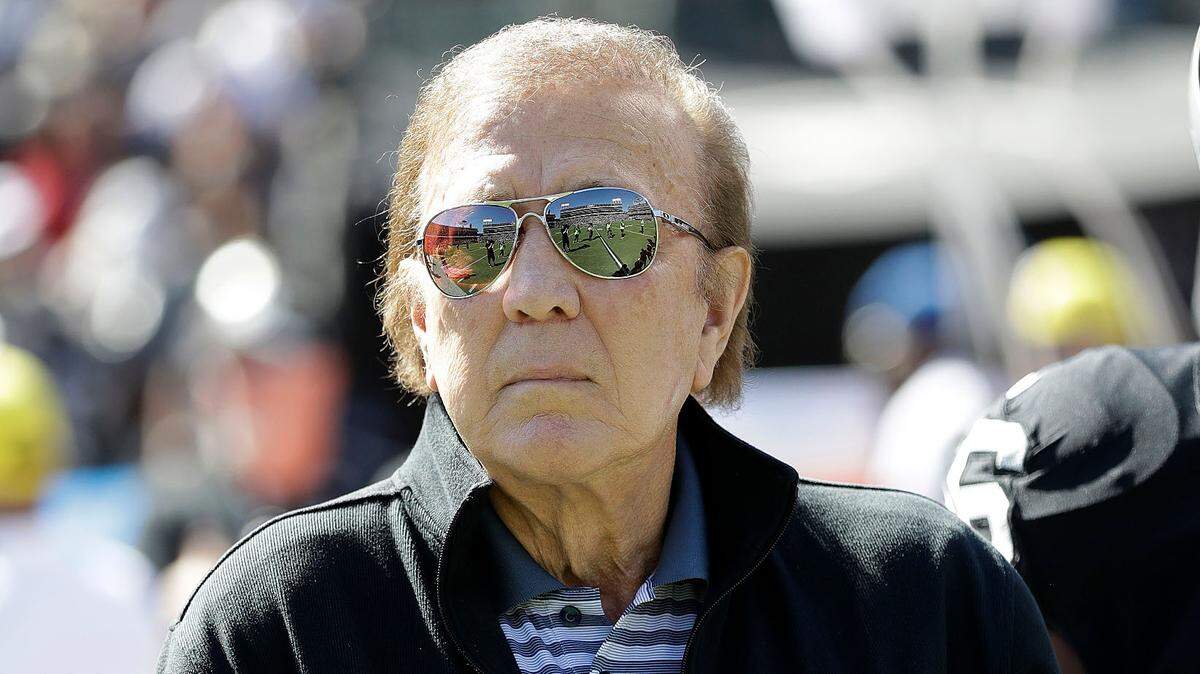
On his birth certificate, the name reads: Tomás Ramon Flores.
But his professional name would be shortened and Anglicized to Tom Flores. That’s how he has been known during his remarkable journey of assimilation from the world of his Mexican parents to his world as a two-time Super Bowl winning NFL coach.
He is, once again, on the brink of enshrinement into the Pro Football Hall of Fame.
The 83-year-old former Raiders head coach, and the first starting quarterback in the storied history of the franchise, dearly hopes his phone will ring on Saturday with the news that his accomplishments as a pioneer in the NFL will finally be immortalized with a bronze bust in Canton, Ohio.
That call would erase the painful memory of two years ago, when Flores and his wife Barbara flew to Atlanta for Super Bowl LIII in anticipation of Flores being selected to join the ranks of NFL elites. He had hoped to feel the affirmation of fans and peers on the field before the game between the New England Patriots and Los Angeles Rams.
But the day before, Flores learned he had been snubbed.
“That let the air out of my balloon faster than I ever imagined,” Flores said. “I told my wife, ’We’re going home.’ We didn’t even stay for the game. We left.”
From Fresno to the Super Bowl
Nothing has ever come easy for Flores. He once lived in a Fresno County dwelling with his family that had an outhouse and no running water. Flores was a farm worker kid who didn’t see a life for himself beyond the fields until just before high school. He realized he could throw a football a long way.
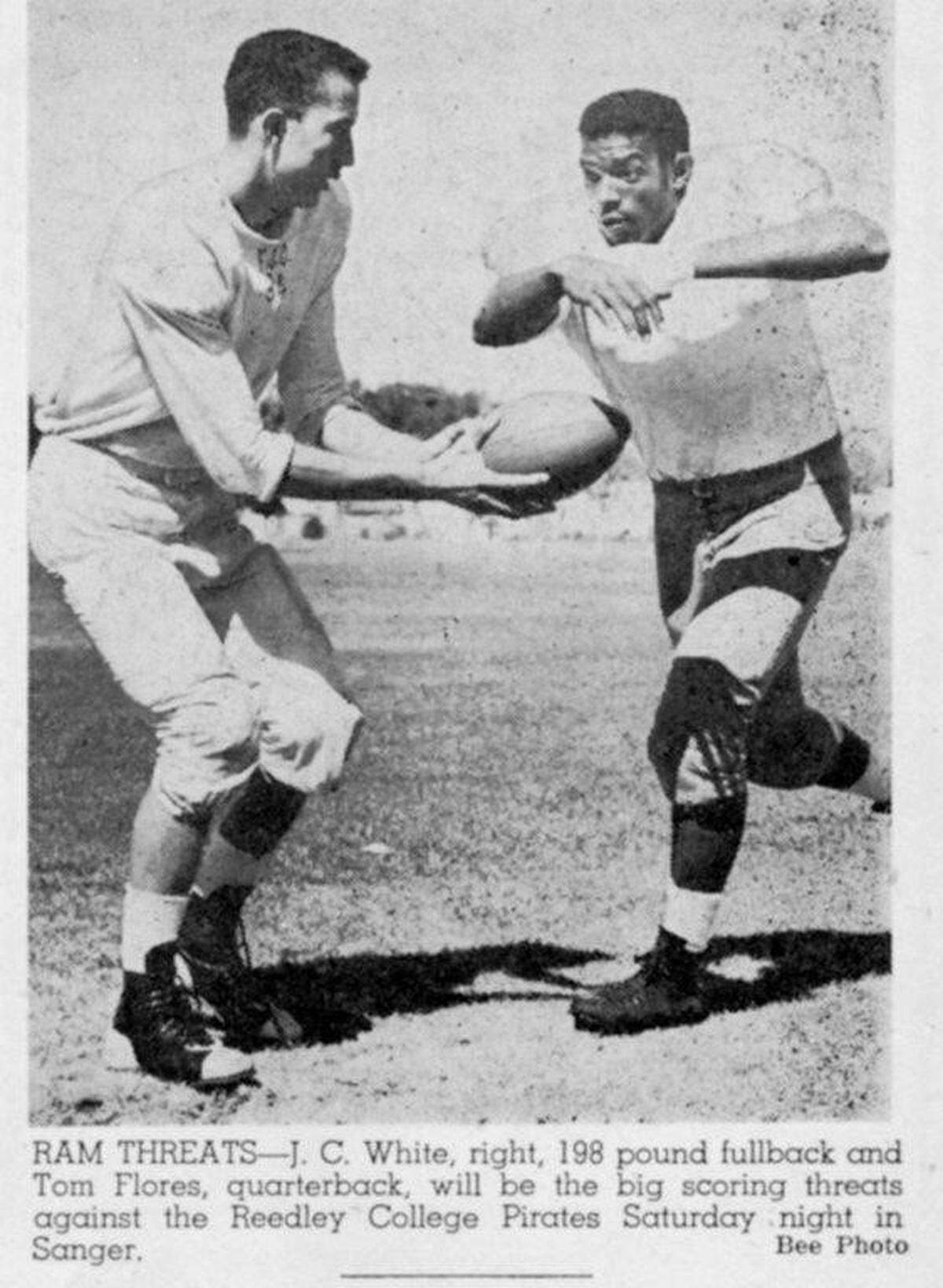
Flores threw that football to great effect for Sanger High School, Fresno City College, the University of Pacific and the Raiders. His passion for the game of football led him to a life in coaching against daunting odds that impede qualified coaches of color to this day.
The most popular American sport has never seen anyone quite like Flores climb up its brutal ranks. He was the league’s first Latino quarterback, coach and general manager. But Flores’ ascension has not been properly understood by a sport still plagued by racial and ethnic blind spots in its hiring practices.
“Tom Flores has no network, no friends, few people who know him outside the Raider family,” said Alvaro Martin, the dean of Spanish-language NFL announcers and a fixture for years with ESPN. “He did great stuff. People should know that. He made something out of nothing.”
Martin is right. Despite the belated attention Flores has been getting lately from the NFL community and the Latino community in California, including a series of proclamations in the state legislature and city councils in Fresno and Los Angeles, the story of Tom Flores isn’t as well known as it should be.
The story of Tomás Ramon Flores is barely known at all.
Tomás Ramon Flores started like so many children of Mexican immigrants in communities like Sanger, Fresno, Los Angeles Sacramento, all over the state. They were products of an immigrant trail from Mexico to California in search of dollars and dignity that are as elusive and hard-earned as the piecemeal wages of harvesting fruit by the basket and tray.
“If I picked 10 trays of fruit a day, I got 30 cents,” said Flores in a telephone interview from his home.
He lives in Indian Wells, near where he recently shot a TV commercial touting his Hall of Fame, sponsored by Coors Light. In the ad, Flores lounges in a poolside recliner while fully dressed in his NFL coaching uniform: gray slacks, sensible black shoes, a black sweater over a white polo shirt and dark-rimmed prescription glasses
Behind him are lush palm trees and a classic Palm Springs style home, a picture of success. It could never be mistaken for the home where Flores’ father Tomás Sr. and his mother Nellie moved their small family in the 1930s. Sanger was nearby, the big town, which even today has barely more than 20,000 residents. The Flores familia technically lived in Del Rey, which today has 1,600 residents.
“Everything was hard,” Flores said.
The family couldn’t afford a real house. The Flores dwelling belonged to a rancher who employed them all: Mama, papa, Tom and his brother Bob.
“During the harvest season we would follow the crops up and down,” Flores said. “But we couldn’t afford our own house then.”
They owed their lives and livelihoods to the rancher, a man Flores remembers as “Mr. Courtney.”
Blocking the doors of Canton
Recognition for the professional accomplishments of Tom Flores is in the hands of men who, unlike “Mr Courtney” are very well known. Chief among them is longtime NFL writer Peter King. He and a select group of NFL writers have already voted on Flores’ candidacy and, at least so far, the NFL guards that secret more capably than the U.S. government would.
If King’s past comments are any judge, and if King proves to be the gatekeeper with the most influence, then Flores could be deeply disappointed again.
In 2011, King tweeted his response to criticism of Flores being left out of Canton by saying his numbers didn’t add up. In a tweet, King wrote: “Y isn’t Tom Flores in HOF...Six winning seasons in 12 years. Averaged 8.1 wins a year as a head coach.”
More recently, King wrote: “I wonder why (former 49ers head coach) George Seifert (124-67 including playoffs, two Super Bowl wins, 11.3 average wins per season) is on the outside looking in at the Pro Football Hall of Fame, while Tom Flores (105-90 including playoffs, two Super Bowl wins, 8.8 average wins per year) has a good shot this year as the Coach nominee. I’m not even a Seifert advocate; I just don’t know why no one talks about Seifert and Coors makes a commercial campaigning for Flores.”
The main flaw in King’s comments is that he seems to presume that Seifert and Flores had equal access to coaching jobs. History has proved, and the NFL has conceded, that this is not the case.
Coaches of color have disproportionately been denied the opportunity to be head coaches and general managers in the NFL. It’s been so dismal the league drafted a rule in 2003 that teams must interview “diverse” candidates for head coaching and front office jobs.
“The Rooney Rule,” named after Pittsburgh Steelers owner Dan Rooney, has been a failure nonetheless.
“There’s still work to be done in this area, no question about it,” Steelers team President Art Rooney told the Associated Press last month. There were only a small handful of NFL coaches of color in the NFL and leading candidates such as Kansas City Chiefs offensive coordinator Eric Bieniemy, who is Black, continue to be routinely passed over despite their on-field success.
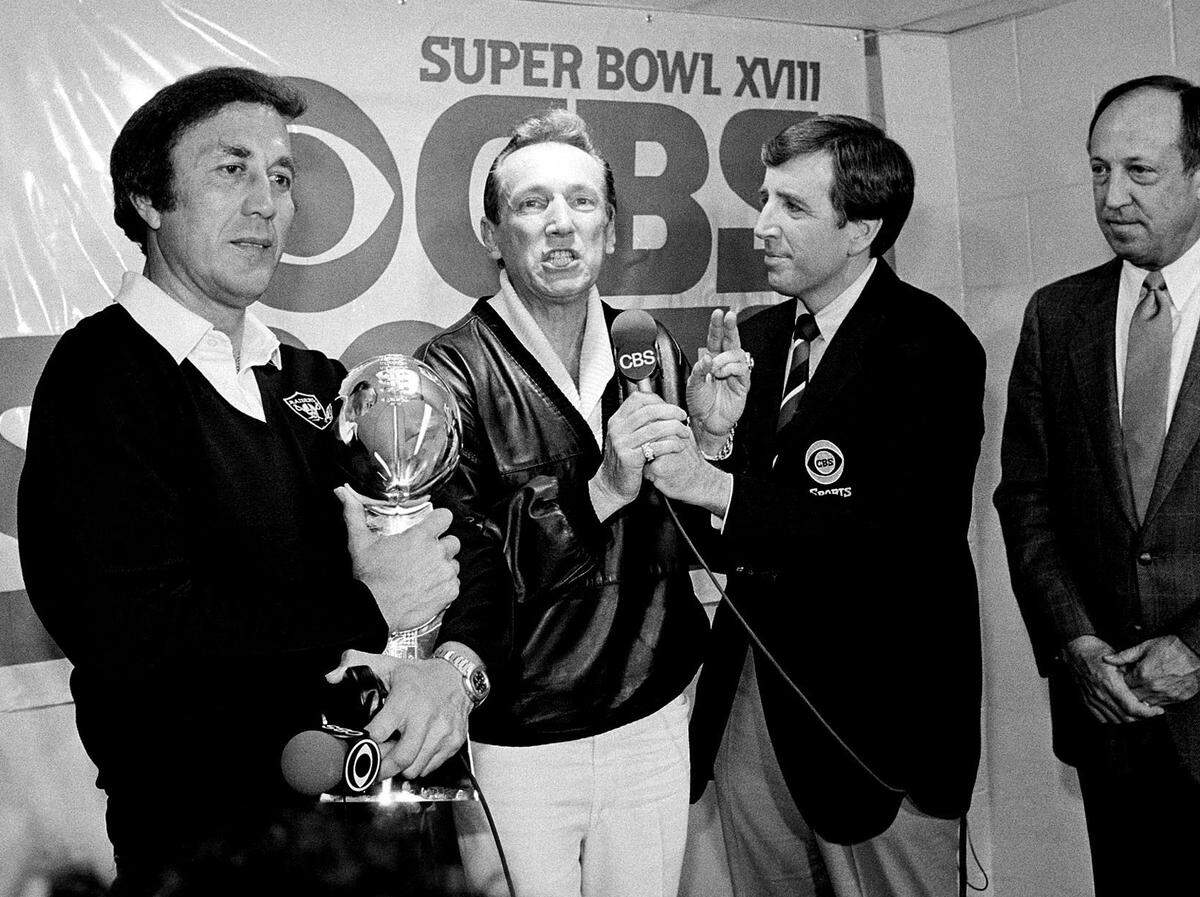
Flores took over an aging Raiders team from legendary coach John Madden. And what did Flores do? He won two Super Bowls to Madden’s one.
Despite winning Super Bowls, the only opportunity that came Flores’ way after he left the Raiders in the late 1980s was to be the coach and general manager of the Seattle Seahawks. Again, Flores made history there as the first Latino GM in the NFL.
But the Seahawks were a mess in those years. His team went 2-14 in his first and 6-10 in the next two and that was it. His time and chances were up. His phone didn’t ring. Meanwhile, the Seahawks kept losing after Flores left and fired Dennis Erickson, his successor. Erickson, by the way, kept getting coaching chances into the early 2000s, and even took over the 49ers, while Flores became a broadcaster for the Raiders.
A stoic Latino football leader
So how come a two-time Super Bowl winner didn’t get more chances to pad his Hall of Fame credentials? That’s a question the NFL can’t answer, a question that makes everyone feel uncomfortable, but it’s still a question that one hopes Hall of Fame voters took into account when weighing the candidacy of Tom Flores.
“Did Flores have a Hall of Fame quarterback when he was with the Raiders? He didn’t,” Martin said. “Did he have a Hall of Fame offensive coordinator? No. He was just a gentle guy without any network who succeeded a legend and before the Rooney rule did great things.”
In 1980, Flores took a team that did not win its division, and that had to replace an injured quarterback with Jim Plunkett, whose career was a reclamation project then, and guided the Raiders to the Super Bowl by winning critical playoff games on the road in which his team were decided underdogs.
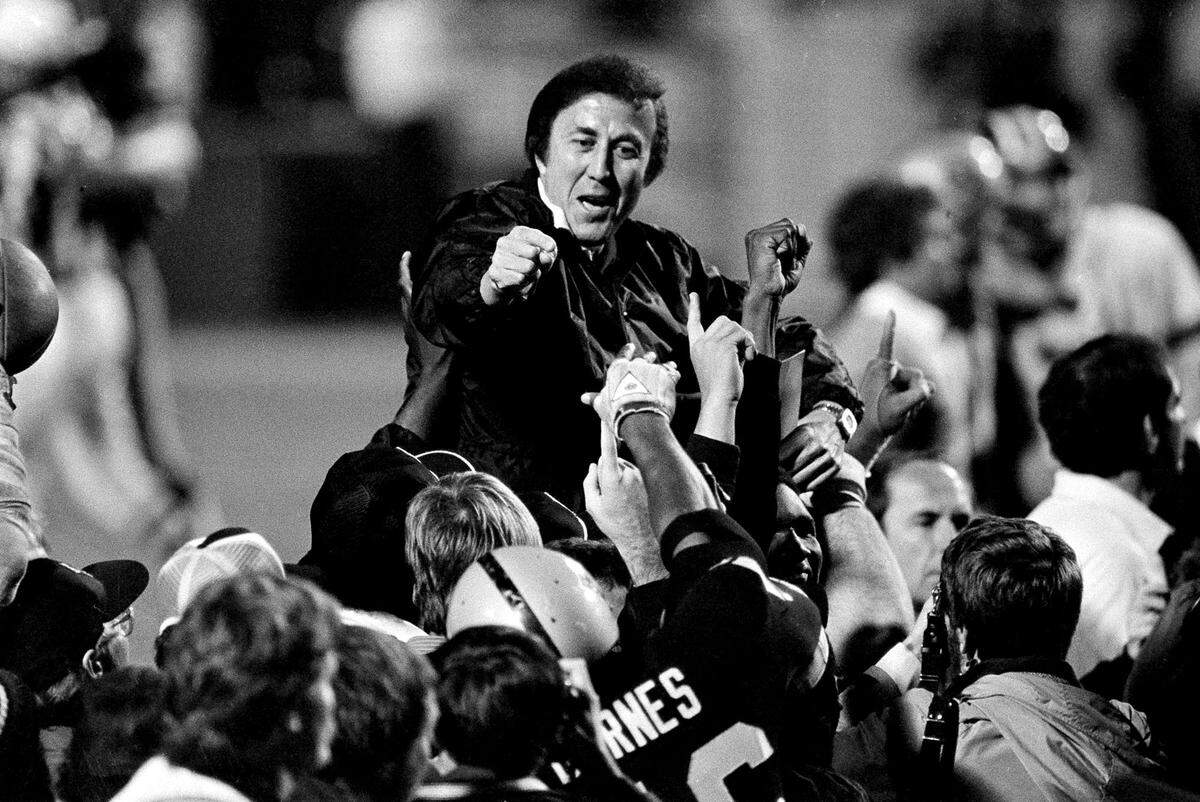
The 1983 Raiders team destroyed the defending champion Washington Redskins so comprehensively, the game was basically over at halftime. As always, the late Raiders owner, Al Davis, was the focal point.
But Flores was the coach. He was the quiet, stoic leader who was not brash and charismatic. The Raiders point out that Flores had a .727 winning percentage in the post season, which is second only to Vince Lombardi, whose name is on the trophy presented to Super Bowl winners.
Flores’ winning percentage regular season games over nine seasons as coach was .610, higher than Bill Walsh, Tom Landry and Chuck Knoll – all of whom are in the Hall of Fame.
When given the opportunity, Flores won. His problem was, after the Raiders, his only other opportunity was with a dysfunctional franchise that lost before him and after him.
Despite all this, he is neither bitter nor hostile. He’s proud of the life he created. In some ways, his life has been miraculous.
For example: What were the circumstances that precipitated his family to move into its first real home?
Japanese forces attacked Pearl Harbor on Dec. 7, 1941. Flores was 4.
Soon after America went to war, the Flores family moved into a house that had been occupied by a Japanese American family. They didn’t leave voluntarily, but were moved into an internment camp for the duration of the war.
Flores cannot recall the name of the Japanese American family, but he does recall that the act of war, and of xenophobia by the U.S. government, made possible for him to learn what indoor plumbing was.
By the end of the war, his family moved to Sanger. What were his goals back then? Did he think he was going to be a farm worker, too?
He did. The only sport Flores played in junior high was softball and no promise of a life in that.
“Then this funny looking ball showed up,” Flores said. Flores found that he could throw a football a long way. He found that tackling other boys full speed appealed to him in a visceral way.
At Sanger High School, he played quarterback his first two years on the junior varsity squad. He made the varsity football team as a junior, but he was second string at QB. He spent most of time hitting people as hard as he could as a defensive back.
He became varsity QB only as a senior at Fresno City College before landing his most prized career facilitator: a scholarship to play football in Stockton, at what is now University of the Pacific.
In 1960, in the inaugural Oakland Raiders season, Tom Flores was their first starting quarterback. He played on some bad teams but made the Pro Bowl as a Raider.
His nickname was the “Iceman” because of his placid exterior, but it’s actually a misnomer. Tom Flores created a life out of nothing with great courage and belief.
“How many Latinos do we know that have Super Bowl rings?” said Kevin de León, the former leader of the state Senate.
He is now a member of a Los Angeles City Council that honored Flores recently. “It’s beyond belief he is not already in the Hall of Fame,” he said.
Said Luis Alejo, a former state legislator who is now a Monterey County Supervisor: “Like many Latino youth in the Central Valley, Flores grew up in a farm worker family and overcame a lot of odds. But he achieved greatness in professional sports and his story continues to be an inspiration to us all.”
All that is left now is a happy phone call on Saturday to cap a remarkable life worthy of a bronze bust.
Sadly, Flores’ brother Bob, Al Davis and Tomás Flores Sr. have long since passed. Because of COVID-19, the stadium at the Super Bowl will not be full to cheer Flores should he get the call. He will celebrate by Zoom with his wife of nearly 60 years, his three kids, five grand kids and countless friends.
But the call should come.
“It’s kind of overwhelming. So many people have been calling,” Flores said. “When I look back on my life, I sometimes say, ‘Wow.’ “
This story was originally published February 5, 2021 at 5:00 AM.