
Racists are increasingly targeting Asians in Sacramento. It’s time to talk about it
Kelly Shum worked hard to expand the customer base of her family’s Chinese American butcher shop, Mad Butcher Meat Company, and ramp up its online presence to survive the pandemic.
On Monday, she reached a breaking point after a man left a mutilated cat in an open box outside the southeast Sacramento shop off Florin Perkins Road. Sacramento Police Officer Karl Chan said it’s being investigated as a potential hate crime.
Shum believes the dead cat was intended as a racist message. Mad Butcher Meat has been repeatedly targeted since her family took over the business in 1989, she said. The shop sells raw pet food to people who prefer to feed their animals real meat. That’s led to a racist prank calls about dead pets and “bat soup.” Shum said the calls have intensified over the past year because of increased xenophobic rhetoric used to blame Asians for COVID-19.
In most cases, Shum said she tries to shrug off the racism — even when it makes her cry.
But Shum refuses to stay silent after Monday. She has posted security camera footage on social media, done national TV interviews and offered a cash reward for help identifying the culprit. Shum wants justice, especially in light of highly publicized incidents of violence and alleged hate crimes against Asians.
Sacramento is clearly not immune to the trend.
“This is my every single day (reality), and I feel like I have to apologize for being a race I just am,” Shum said. “I’m tired of this.”
Hate and bias-motivated crimes surged in Sacramento last year, as did incidents targeting Asian Americans. The Sacramento Police Department documented the horrors that victims experienced in an annual violent crime report released last week. They reported being spat on, having their property damaged, receiving death threats and, in some cases, suffering assault.
At least 11 incidents involved Asians, representing a dramatic increase from a four-year high of four in 2017, the report showed. Overall, Sacramentans reported 57 bias-related incidents in 2020, up from 23 total just four years ago.
What’s causing the uptick? Some blame former President Donald Trump’s anti-Chinese xenophobia, which prompted President Joe Biden to sign a mostly symbolic executive order last month condemning anti-Asian sentiments.
Timothy Fong, an ethnic studies professor at Sacramento State University, said it’s not that simple.
“Trump was the fuel,” he said. “He has given people the permission to act and say and do things that, at different times, were not as overt. But this is always there.”
Recent violence in the Bay Area — including an 84-year-old Thai man murdered in San Francisco and a 91-year-old man shoved onto an Oakland sidewalk — made that clear.
Trump unleashed an underlying bigotry that has existed in the U.S. since Chinese laborers first arrived in the mid-1800s. It typically resurfaces when America is confronted by disease, war or even tense trade dealings, Fong said.
“There is a long historical context for this,” he said.
Confronting anti-Asian bias is difficult because it doesn’t fit into a tidy narrative of white supremacy. One of the suspects in the deadly assault in San Francisco was Black. Fong said stereotypes about Asian American prosperity are used to diminish other groups and perpetuate conflict and racism between minority communities.
“We have to have the courageous conversation — all of us — about racism among and between different groups,” Fong said.
Over a 9-month span last year, research group Stop AAPI Hate received more than 2,800 reports of anti-Asian incidents nationwide. About 44% of the incidents took place in California, home to the largest Asian American and Pacific Islander population in the U.S.
Researchers say those numbers don’t tell the full story. Sacramento native Christina Ong, a University of Pittsburgh graduate student and a AAPI COVID-19 Project manager, said Asian Americans and immigrants often don’t recognize hate incidents unless they include violence. Some avoid reporting altogether because of cultural norms around pride and masculinity. Others simply mistrust authorities.
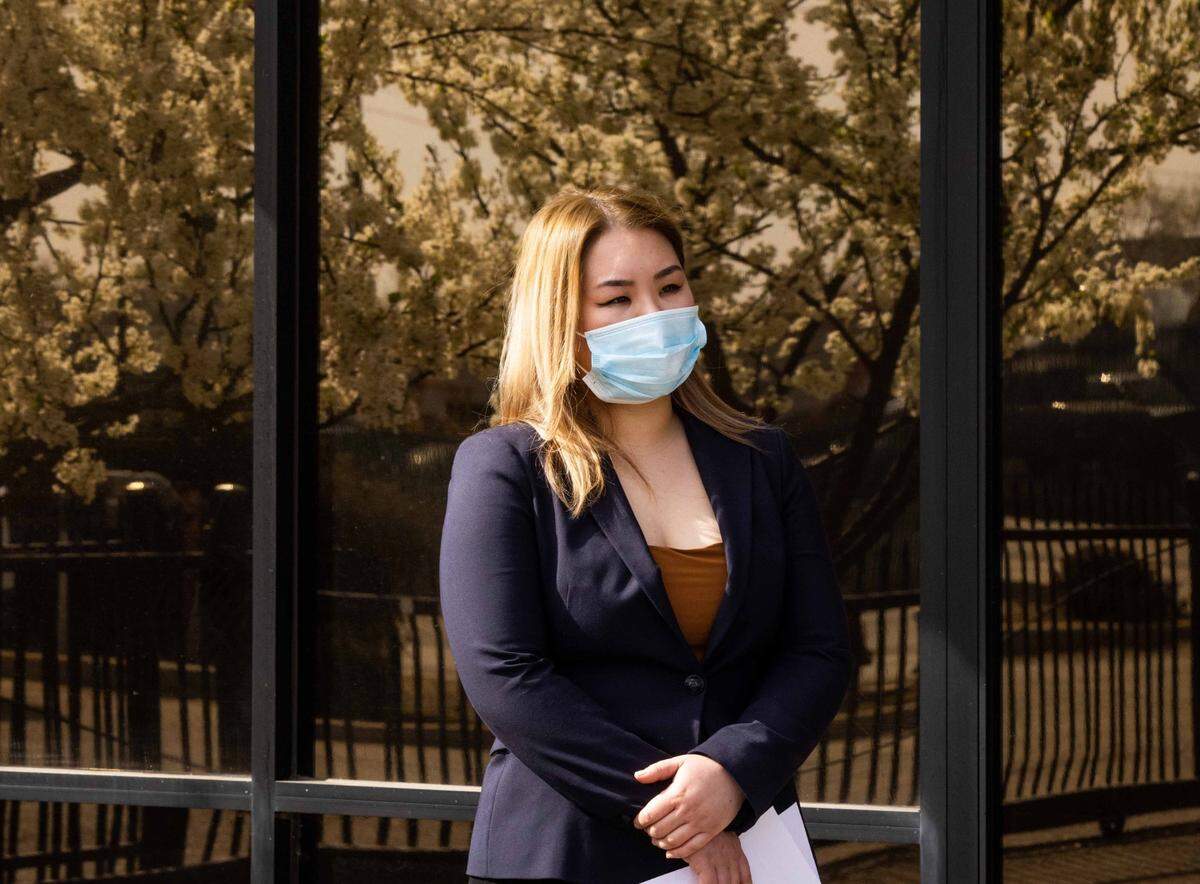
Shum said “it’s a generational thing.” She debated whether to call the police because incidents like this are rarely resolved. That’s why she took the extra step this time to use social media and talk to the press.
“I still subscribe to that old-school train of thought,” she said. “It was really us trying to get justice. We felt the only way we could do that was post this video footage of him.”
Ong said understanding cultural stigmas around reporting incidents is an important piece of the Harvard University-led AAPI COVID-19 Project, which is examining how a prolonged disaster like the pandemic will affect Asian Americans and Pacific Islanders in the U.S.
“We recognize that the aftermath of the pandemic is going to take decades to recover economically but also psychologically in terms of how we feel safe in this country and what that will look like for years to come,” she said. “We know when we report numbers and the numbers increase, there’s more government attention and there’s more funding for certain policies to be put in place.”
This week that rang true as California officials authorized $1.4 million to support Stop AAPI Hate. State legislators also introduced a bill, Assembly Bill 557, which would establish a toll-free hotline to report such crimes to the California Department of Justice.
Sacramento police declined interview requests but said in an email that many of the hate incidents in the 2020 report are still open investigations. The department encourages victims to come forward.
Biden’s order is expected to increase the federal focus on domestic hate crimes against Asian Americans and Pacific Islanders. So will AB 557, if it becomes law.
Until then, other victims might ask the public for help like Shum did. She said that decision yielded one lead that she has shared with the police.
Shum felt like she was on an island until this week, she said. An outpouring of support has helped her realize how much the community values her family’s shop. It also sent a clear message to the culprit.
“Now I’m crying in my office for different reasons,” Shum said.
This story was originally published February 26, 2021 at 10:07 AM.