This vaccine clinic was a godsend for Del Paso Heights. Why is Sacramento shutting it down?
The one COVID-19 vaccination site in Sacramento that is actually in a low-income neighborhood and has been giving priority access to Black, brown and Asian patients, the communities which statistically have been most ravaged by the coronavirus, is getting shut down by Sacramento County.
UPDATE: SUPERVISOR SAYS COVID-19 CLINIC IN DEL PASO HEIGHTS TO STAY OPEN
Its supply of first doses of the Pfizer vaccine has been cut off, say the organizers of the vaccination clinic in Del Paso Heights.
That means more than 2,500 people who hoped they would be vaccinated in the parking lot at Grant Union High School will now must look elsewhere. The implications of this are enormous. According to the latest statewide COVID-19 numbers, Latinos make up 55.3% of positive cases and 46.3% of the deaths. Asians are 11.6% of deaths; Blacks, 6.2%.
State statistics show that, for example, only about 15% of the vaccines have gone to Latinos, who make up about 40% of the population. The state has vowed to increase its efforts in serving this population.
The plight of under-served communities is exemplified in the people being served at the Del Paso Heights clinic on Saturdays and Thursdays since Feb. 4:
- They are hampered by a lack of technology, of education, of transportation.
- People in low income neighborhoods often work jobs they can’t do from home.
- They live in multi-generational households where very young people live with very old people, greatly increasing the chances of transmission.
- They don’t have the time, resources or connections to shop around for COVID-19 shots.
So poor Black and brown people get sick and don’t get the vaccine.
A vaccine for all people
That’s why Dr. Kawanaa Carter, a neurosurgeon who is recovering from breast cancer, pushed to open a vaccination clinic in Del Paso Heights in the first place. She was on the board of Trustees at Jesuit High School and she saw how powerful it was earlier this year when Jesuit opened its clinic and methodically began vaccinating people with precision. People pre-registered, drove up in their cars, were checked in, got their shots, drove home.
“People in (low-income communities) don’t have cars. They don’t have smart phones,” Carter said Thursday. “What people in affluent communities do is they get on their smart phone and they refresh, refresh, refresh until they get it. These people here (in Del Paso Heights) don’t have the capacity to do that.”
She said the clinic helps assist people in the process, say, in filling out a two-page form.
The other barrier to overcome is realizing how they qualify. “A lot of the people in low income communities have underlying health conditions they don’t even know about because they have no access to primary care,” she said.
The Del Paso vaccination clinic has been a godsend. It’s the kind of clinic that should be serving people of color in Del Paso Heights, Oak Park, south Sacramento, Lemon Hill and Meadowview.
And yet Nancy Bui-Thompson, president of the SMUD board and a volunteer at the clinic, said late Thursday that officials with the Sacramento County Department of Health Services said their supply of first doses of the Pfizer vaccines were being cut off.
The issue, as described by Bui-Thompson, is that the Del Paso Heights clinic had not properly reported all of its doses of vaccines.
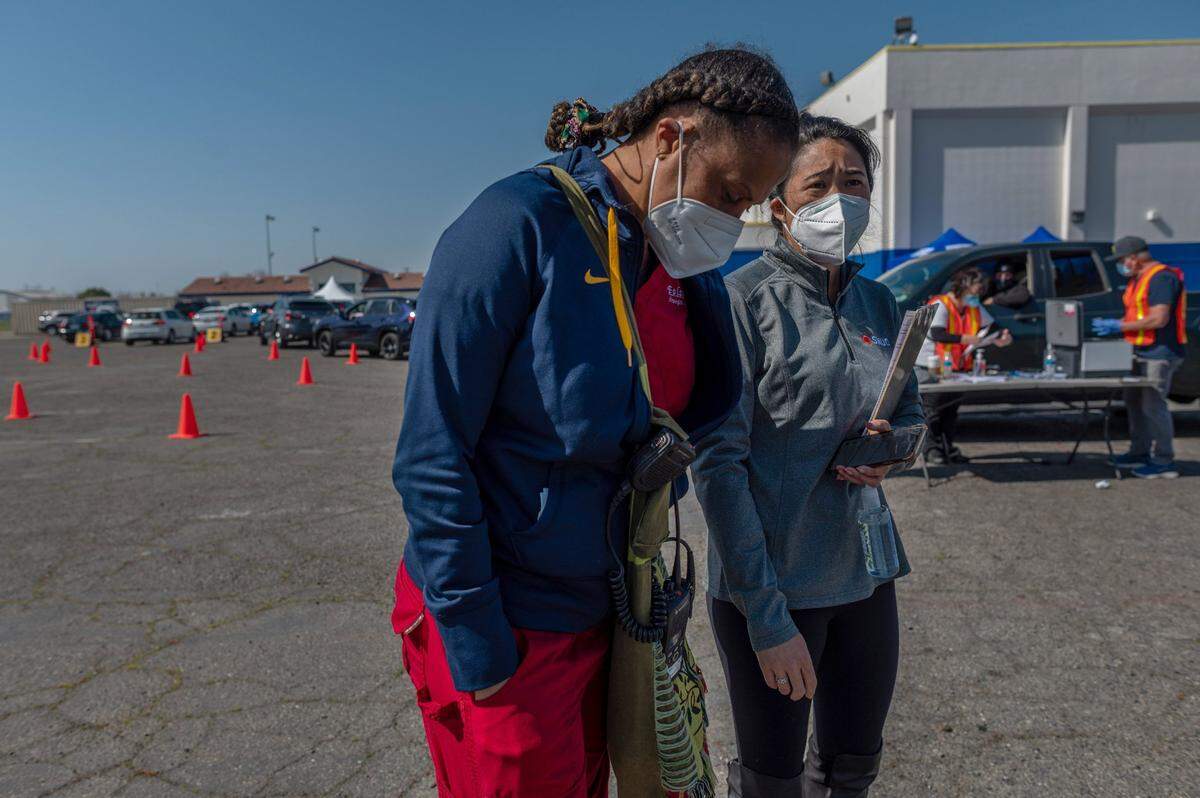
Bui-Thompson and Carter said they were getting doses from Dr. Rusty Oshita, owner and medical director of Urgent Care Now who organized the vaccination clinics at Jesuit High School and Natomas High School. They said they reported the doses they were using to Oshita. Bui-Thompson said Dr. Olivia Kasirye, Sacramento County’s public health officer, was invited to a meeting discussing the issue, but did not attend.
Kasirye said Friday she had concerns about the clinic’s vaccine documentation, storage and available medical personnel. She doesn’t want to shut it down.
“We don’t want to take this away from Dr. Carter,” she said. “She’s very enthusiastic and I’m hopeful we’ll be able to work out all the issues...I feel pretty sure we will work it out.”
On Thursday, the Del Paso Heights clinic was only able to give second doses to already vaccinated patients and had begun to turn away thousands of people who wanted to be vaccinated. It also has been vaccinating teachers from the Twin Rivers School District.
According to Carter, the Del Paso vaccination clinic had already administered 2,500 vaccinations. It had received more than 3,000 requests for vaccinations, many from under-served communities. It had been vaccinating teachers from the Twin Rivers School District.
Carter and her team of volunteers had launched outreach into the neighborhoods surrounding Grant High School, deploying phone banks so people in economically struggling communities were educated about the vaccine and why it was important to get it.
“If you don’t even know what your pre-existing conditions are, you are going to be sicker and likely die a whole lot sooner than someone who is completely healthy,” Carter said. “You have to talk to people, you have to convince them and then you have to get them here.”
Carter said at this point, her clinic will finish administering the remainder of second doses on March 20.
“Unless somebody else comes in and says they want to vaccinate this community they are going to have to wait for their health care provider,” she said.
A woman’s mission to help
Carter, 51, became a vaccination advocate by accident. She is a neurosurgeon (with a practice in Folsom) and was diagnosed with breast cancer. She was recovering and on the board of trustees of Jesuit High School. She was inspired by the vaccination clinics held at what is one of Sacramento’s most prominent private schools.
But it was not hard to notice that the people getting shots at Jesuit were largely white, Carter said. So she said she lobbied Oshita and Kasirye to open a clinic in Del Paso Heights.
“I felt the need here. We know the numbers,” Carter said. “It made more sense to be here. I had breast cancer. I was just ramping up to go back to work and I volunteered for the clinic at Jesuit and I thought, OK. I have to do something about this right now. I put all my energy into this.”
Carter enlisted a group of volunteers. Bui-Thompson said after taking her mother to be vaccinated at Carter’s Del Paso Heights clinic, she offered to help. “I told her, ‘I work in tech and I’m not working. I would love to set it all up for you, do you have any help?’ In 48 hours I had an intake form to take patient data. I had an appointment scheduler, a calendar and a volunteer organization. This clinic is specifically for under-served minority community. There is no other clinic that is a consistent clinic from week to week, except ours.”
“This community is afraid of vaccines and we spend time with each individual patient to tell them it’s safe, to explain the process,” she said. “And I manually sign up each and every one of these patients.”
So here is what needs to happen: This clinic needs to stay open. Kasirye has vowed to make that happen. All need to realize what it’s going to look like, what is going to happen, if this vital clinic is shut down.
The numbers show COVID-19 is devastating communities of color. Kasirye is a compassionate health professional who has been doing an impossible job since the pandemic began. It seems hard to believe that she would not do the right thing here by keeping the Del Paso Heights clinic open.
Everyone in Sacramento talks a great game about equity and racial justice, particularly in the context of the COVID-19 pandemic. Well, here is a clinic serving the people who are most at risk and who most lack the resources to shop around for a COVID-19 vaccination.
There is still time to fix this. Is Sacramento really going to let this clinic shut down? Let’s hope Kasirye and the rest can find a solution.
This column was updated at 12:25 p.m. Friday, March 5, to include Dr. Olivia Kasirye’s response.
This story was originally published March 5, 2021 at 10:11 AM.