Healing downtown: Can’t the city care about the businesses that have suffered, too?
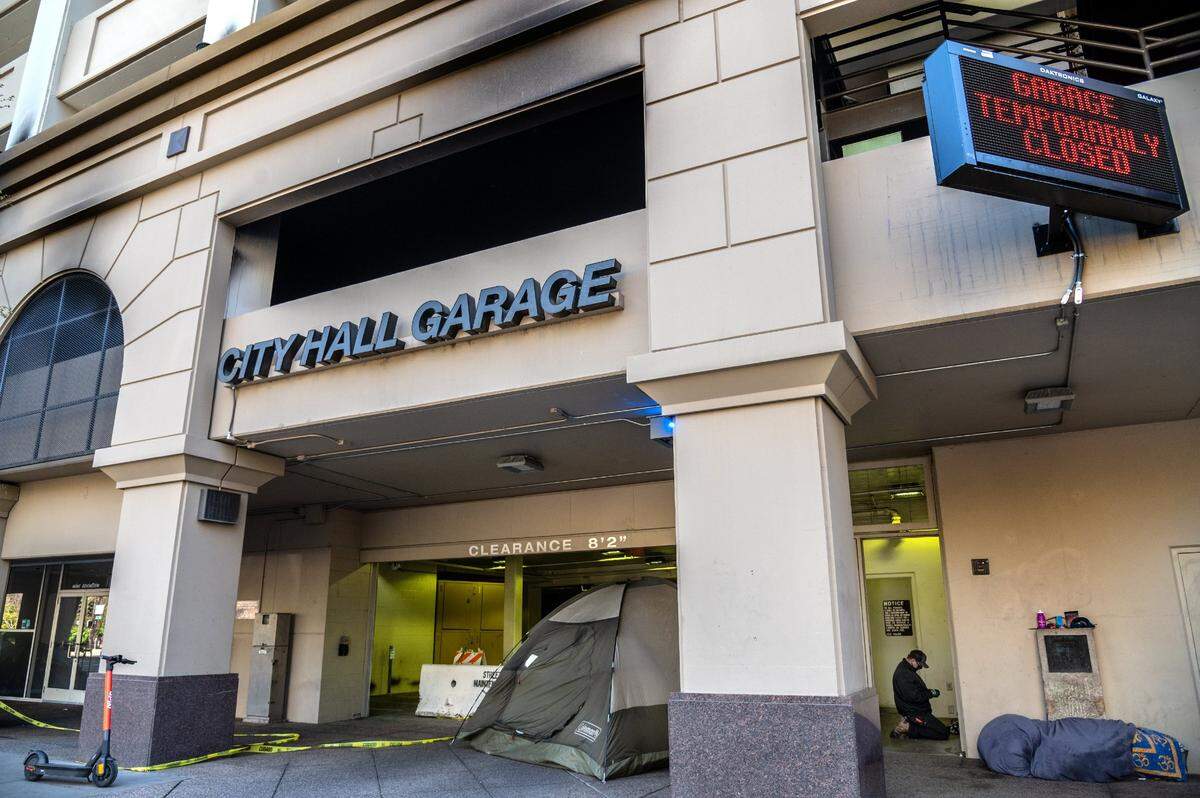
One burning example of how complex and daunting it is to provide shelter for homeless people is the city-owned garage at 10th and I streets that is now closed indefinitely after a car fire badly damaged the eight-story structure and made it unsafe to use.
City fire officials say a homeless man told them he parked his Chevrolet Express Mark III van in the garage and it caught fire in the early hours of March 20 as he warmed a can of beans with a candle. The intensity of the flames may have compromised the structural integrity of the entire building.
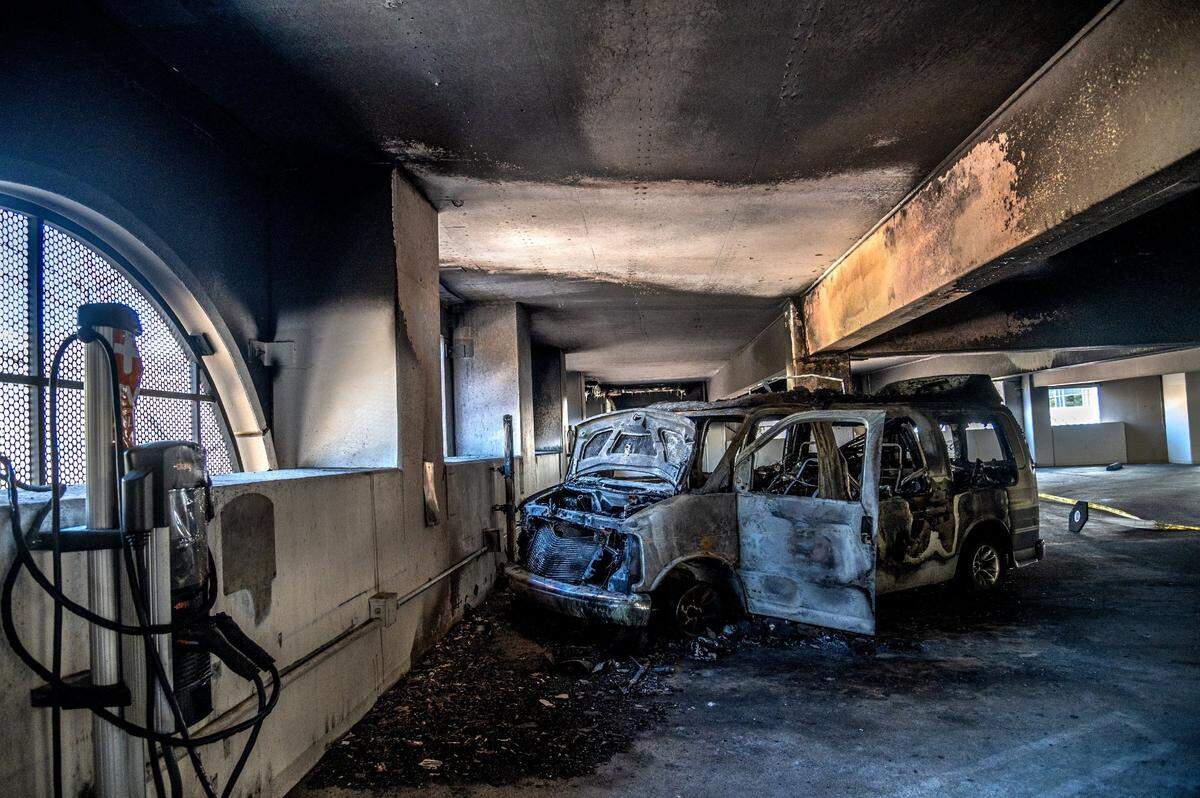
Opening the garage, known as the City Hall Garage, for overnight parking to people living in their vehicles was one of a series of humanitarian efforts approved by the city. The idea came amid a public outcry after homeless communities were hit hard by a violent rain and wind storm on Jan. 26.
Despite weather reports of how bad the storm would be, city warming centers had not been opened to the homeless for a variety of reasons. These included concerns of triggering a COVID-19 outbreak by putting too many people in one indoor space, a fear that was later realized in mid-February when the city opened its warming center at the Library Galleria and a COVID-19 outbreak occurred.
The garage is a valuable city asset, raking in $344,000 per month (that’s $4.1 million per year in parking revenue), according to city officials. And the fire is altogether different from the COVID outbreak because the blaze involves other people who now have become casualties of city efforts to house the homeless.
“Every day I think it’s going to get better and it doesn’t,” said Alma Perez, 60, owner of Michael Z Salon, which is on the ground floor of the city garage. “This is business is my retirement. I have nothing else. As a business woman I have tried my whole life to make something successful. This was successful until now.”
Suffering spread among all
Perez had hoped to open her salon again soon. It has been closed since March 15, 2020, when the vast majority of the downtown shut down as the COVID-19 epidemic engulfed Sacramento and the rest of the world. In the year since, her place was ransacked and robbed in May and, again, in September amid protests downtown.
Now, because of smoke damage from the fire and potential structural damage to the garage, Perez doesn’t know when she can open again.
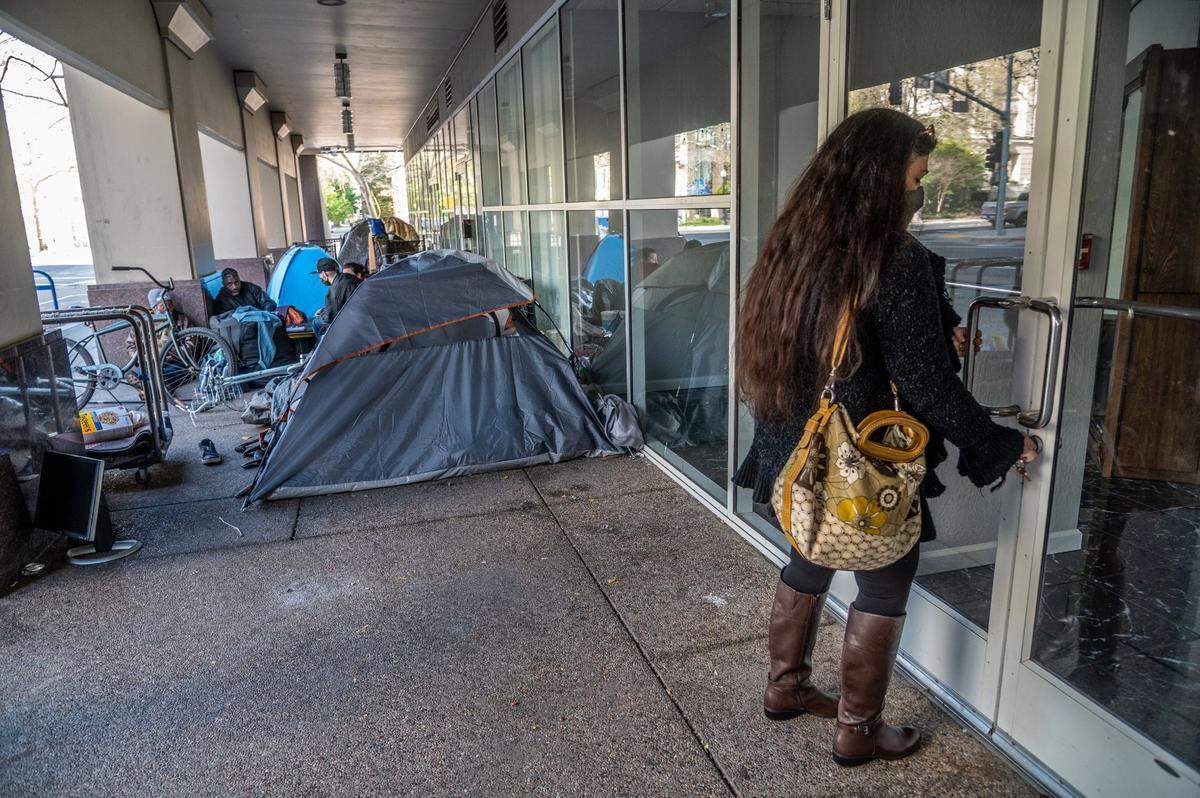
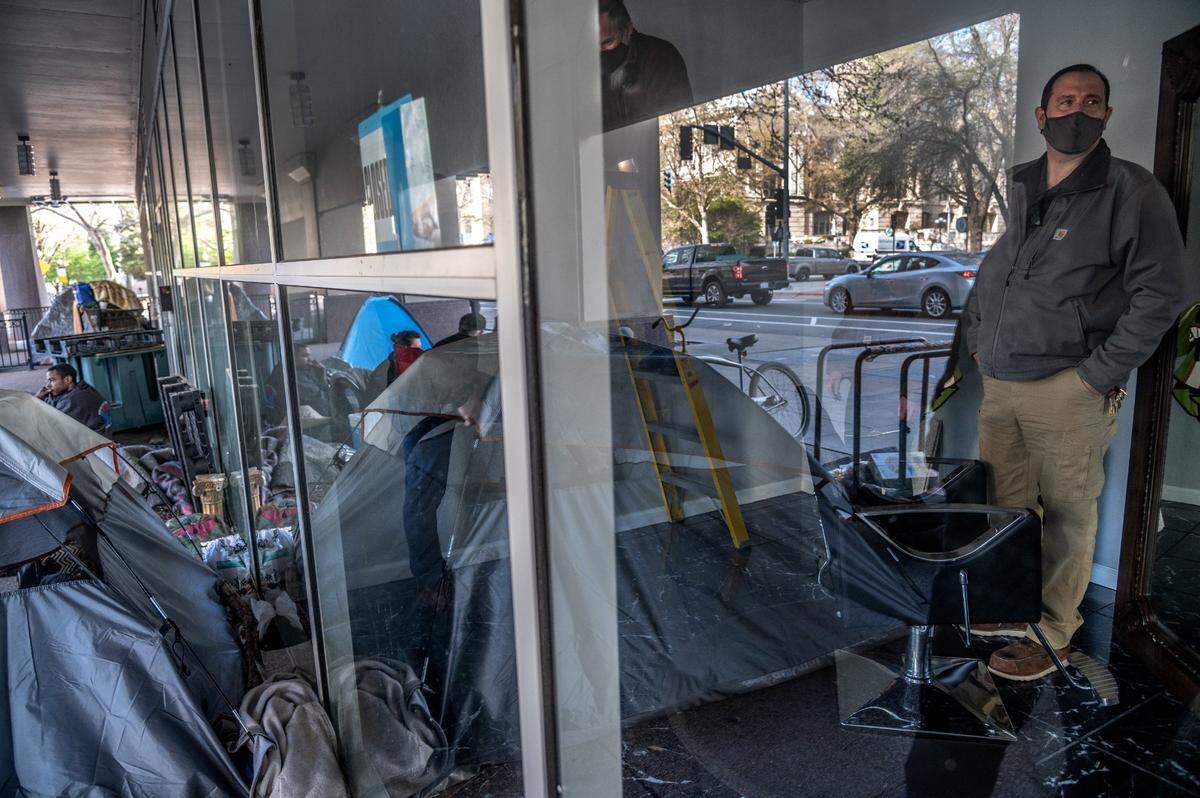
As she contemplated her next steps last week, she stood in front of a group of homeless men who camped out in front of her business after being allowed to do so by the city. As Perez spoke through her gray face mask, one homeless man splashed water in our direction and Perez jumped backward. A security guard stood close by. Whether the man had splashed the water on purpose or accidentally was unclear.
Perez, whose long black hair with touches of gray flows down beyond her shoulders, began to cry as she thought about the past and her uncertain future. Tears dampened her face mask.
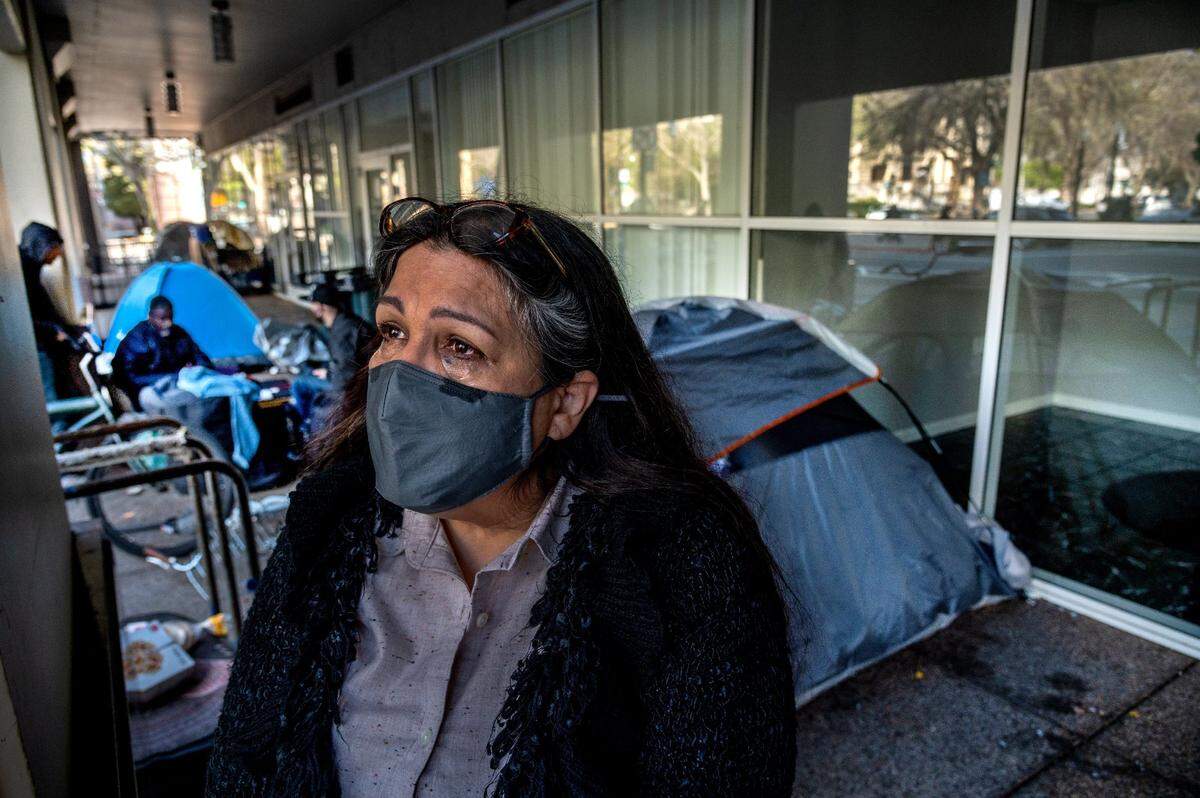
Her story is one the City of Sacramento cannot disregard. In its zeal to champion the cause of the homeless, some advocates paint this crisis as a class struggle, simplistically characterizing it: privileged people stand idly by as the least fortunate suffer on the streets.
Perez proves that this cliché needs to be dispelled. The reality is far more complex because Perez is nobody’s definition of privilege.
A business dream shattered
She is the daughter of Mexican immigrants who grew up in a working class family in San Jose. She said she has been working to earn money for her family since she was 15. She managed salons for other people for most of her adult life, squirreling away her money a little at a time to achieve her dream of owning her own place.
Perez bought the Michael Z salon in 2017. It was a life’s dream come true. She chose to relocate to Sacramento from San Jose because she fell in love with the beauty of the city. It was smaller and more affordable than San Jose. It was friendlier and more welcoming than San Jose. And for a brief interlude, she was making good on that dream.
COVID-19 forced the widespread closure of downtown Sacramento. Then, during the George Floyd protests last May, people smashed her front window, entered her business and ransacked it. She said the people who broke into her business urinated and defecated on her floors.
She took pictures of a three letter acronym – FTP – spray painted on her walls.
“I was told it meant f--- the police,” she said.
In the worst year of her life her back-rent piled up to nearly $18,000.
A terrible storm hit on Jan. 26, homeless people suffered in the gale force winds, and public outcry forced the city to begin letting homeless people camp out in front of her building and park in the overhead garage overnight.
Sometimes homeless men would not move to allow her to get into her building. She said drug use was common and out in the open.
On the morning of March 20, she got a call that there had been a fire. There is no denying it: The opening of the garage to the homeless has resulted in Perez being uncertain about her financial future.
An investigation of the fire is continuing and the city probably won’t get the final verdict on the state of the garage for weeks. But the fear is that the heat from the fire has badly compromised the building. The cost to repair a valuable city asset could be astronomical. Perez is looking at having to pay her back-rent while not knowing when and if she can ever open.
“God has taught me to be very patient,” Perez said. “I feel for (the homeless people downtown) but there has to be a limit, too.”
She continued: “I don’t know who to turn to anymore. I can’t even relocate. I don’t have the funds to relocate.”
Elusive homeless solutions
City officials said the homeless man who owned the car involved in the fire is likely at a different city shelter. The idea of trying to cook a can of beans with a candle stretches credulity, fire officials said.
“Investigators can’t rule out that the occupant of the vehicle wasn’t trying to illegally gain power from an electric vehicle charger,” said Captain Keith Wade of the Sacramento Fire Department.
Councilwoman Katie Valenzuela is the council representative of the downtown and its biggest champion for housing the homeless.
“This is the nature of the work,” she said. “A lot of this is new for the city. This is the first time we’ve done a long-term safe parking program like this. I’m glad no one was hurt. “
She said the people affected were placed in hotel rooms, and the city learned how to improve how it handles the parking.
“I think we’ve learned we need to be a little more hands-on with safe parking, rather than just letting folks go upstairs,” she said. “Maybe have staff close by to monitor things and maybe have more food for people so they don’t feel they have to cook in their vehicles.”
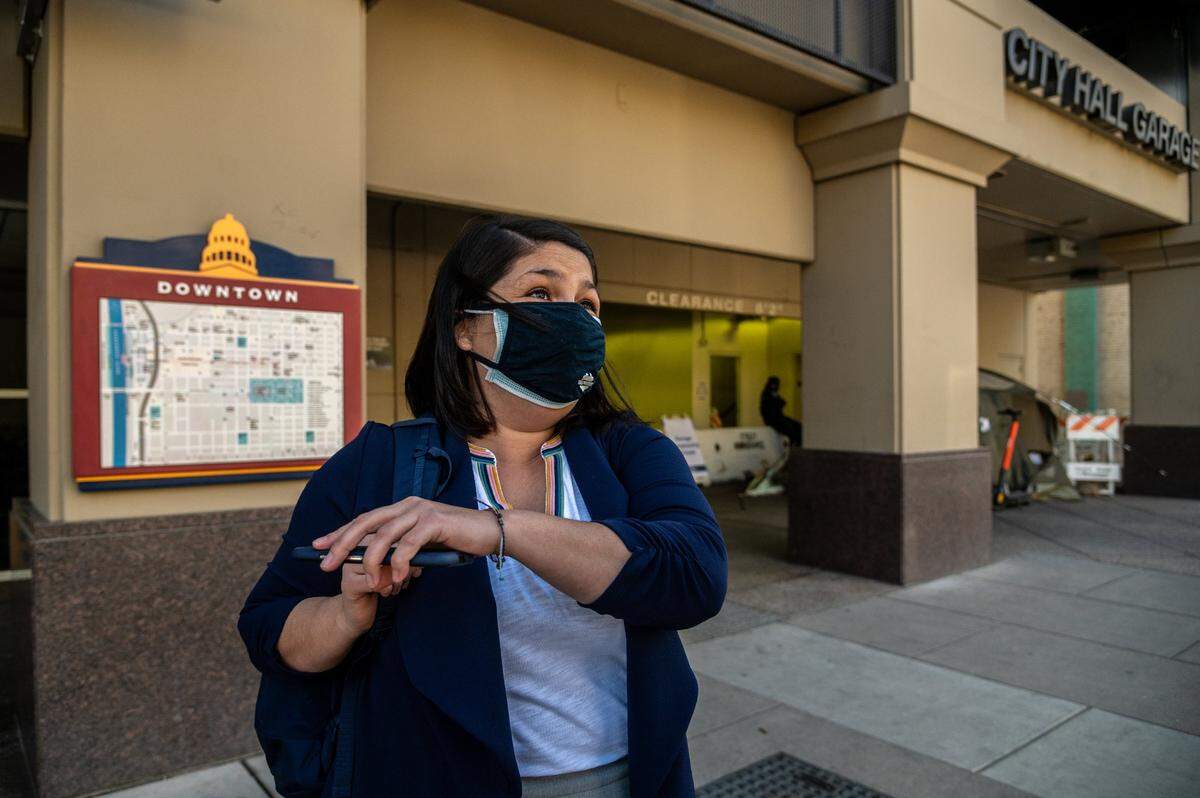
Valenzuela said the conditions that Perez had been experiencing before the fire – homeless camped in front of her building – are “pretty ubiquitous downtown” but, because Perez is a city tenant, the city is looking into getting her some relief in helping her with her back-rent.
City leaders, including Valenzuela, believe that the best way now for the city is to open as many safe campgrounds as possible to move the homeless out of store fronts like Perez’s business. How many campgrounds are needed?
“That’s a great question,” she said. “Dozens. Maybe a hundred.”
The city and county need to do more to house the homeless. But the garage fire also shows that the solution is not as simple as throwing open doors for the homeless. The city did that and now an open question is whether a garage needed by people who work downtown – a garage that generates city revenues – is permanently damaged because a homeless man was heating beans with a candle or trying to get electricity.
Those who would say property is not as important as people, remember Perez.
“I moved to Sacramento because I thought it was a beautiful city,” Perez said. “It felt safe. But unfortunately, I don’t feel safe anymore.”
Now, the structure is surrounded by a chain link fence. The city moved the homeless away from Perez’s doorway because the building isn’t considered safe. They moved the man who started the fire to a safe place. But what is the city going to do for her?
This story was originally published April 1, 2021 at 5:00 AM.