An ‘egregious, racist act’ still haunts a St. Francis student. Her parents speak out
We often say that race in America requires hard conversations. Well, a couple of parents stung by racism are stepping up to one.
They are talking about Sacramento’s odd contribution to the troubled lore of blackface controversies. It started last year.
To recap:
A white girl who is a high school sophomore thought creating a picture of herself in blackface and sharing it with some friends on Snapchat, the multimedia messaging app, would be funny.
The image she created had a specific target in mind: A biracial girl who is also a sophomore and was a friend and fellow student at St. Francis High School, Sacramento’s prestigious all-girls Catholic institution on Elvas Avenue.
The white girl labeled the blackface image an “impersonation” of the biracial girl. The white girl did not share the image with the biracial girl, but she did with at least one other girl. Eventually, in mid-December of last year, the biracial girl became aware that she was the target of a form of graphic racism steeped in the worst chapters of American history.
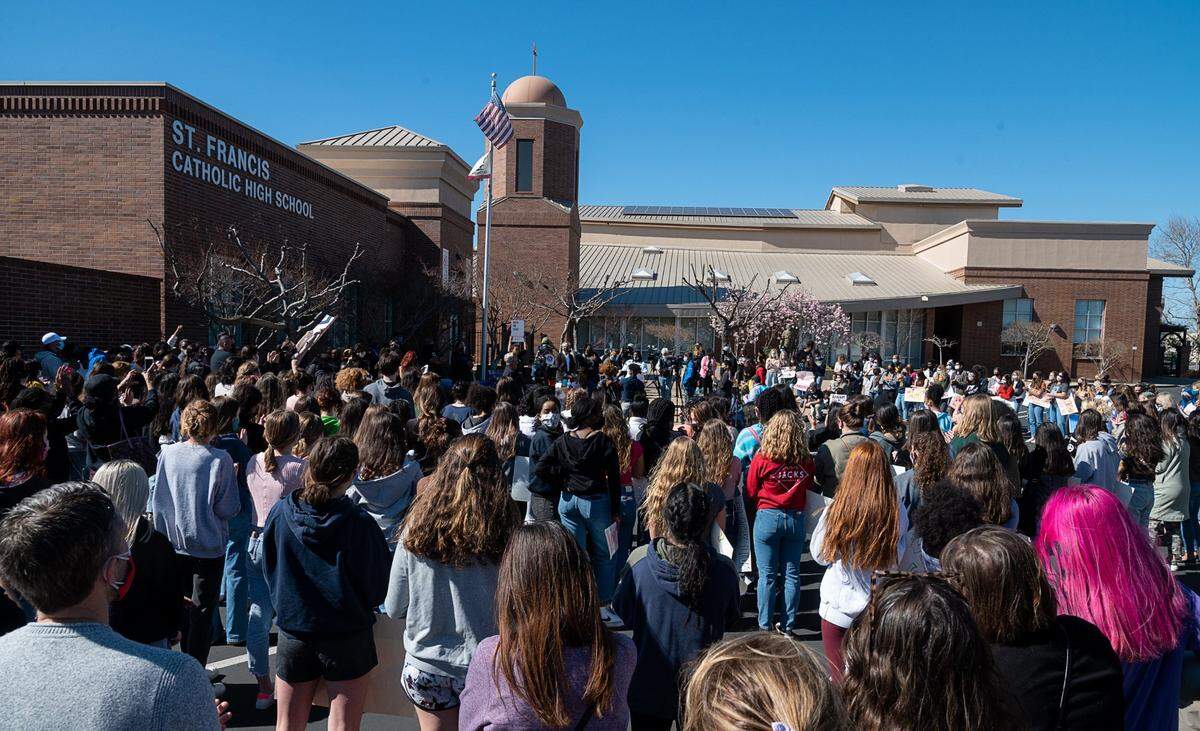
By early February, the existence of the blackface image became publicly known within the St. Francis community. It inspired protests and dredged up painful memories for Black and biracial St. Francis graduates who said that the offending image was nothing new. They said white students directing the N-word at Black students in the St. Francis community was nothing new. Some families of white students at St. Francis agreed completely.
Jeff Harris, a Sacramento City councilman who is white, described the cultural mocking of Black hair by white students at the school. “My daughter has seen white students grab Black students by the hair and say, ‘What is this?”’ he said. “There is a lot of bullying by rich girls with no tolerance.”
This brings us to now. This account of the blackface incident is the result of interviews with officials who would comment publicly and with people directly or indirectly affected by the actions of the white girl and their destructive aftermath. I’m not including the names of the girls.
The parents of the biracial girl are both very well known within Sacramento’s Catholic community. They are the Palkos, and they are telling their story publicly for the first time.
A devout Catholic family
Peter Palko, who is white, is deeply involved in the Catholic community and the Catholic education of his three children. Samara Palko, who is Black, is the only Black principal of a Catholic school within the Catholic Diocese of Sacramento.
They don’t want to bring down their church or the high school they chose for their daughters or anyone at the high school. They are telling their story because they say they want to do right by their kids and kids of color at St Francis. They are speaking out because it is their church and their school and they are not running away from either despite the pain they have endured.
Because she works at the Catholic Diocese of Sacramento, Samara Palko chose not to speak about the institutional response by St. Francis about the racist incident. But she did talk about how the incident has harmed her daughter and about her Catholic faith.
“We are Franciscan,” Samara Palko said. “We chose St. Francis because of the mission, because of the inclusivity. Because of St. Francis and St. Clare’s message of loving all of God’s creation. That means having human dignity for everyone.”
In truth, the blackface incident has been a journey devoid of dignity for all.
Heartbreaking treatment of Black and biracial students
The emotional and institutional damage caused by the one act of a teenage girl, and how that act typifies the treatment of Black and biracial students, is still being reckoned within the St. Francis community.
This situation is heartbreaking, but not simply because the white girl did something racist.
It’s heartbreaking because the response by St. Francis administrators has seemed only to make a bad situation even worse. From refusing to publicly call it a racist act, to refusing to apply a “zero tolerance” policy, to creating institutional responses that were long on seminar-speak and short on accountability, to being perceived as condescending by Black, biracial and other parents of color, to being secretive when they didn’t have to be.
The St. Francis actions have been a study in how not to respond to a racial incident.
“They discount how we feel,” said Margo Scott, president of the St. Francis Black Parent Group. “They don’t take us seriously. This opened up a lot of wounds and St. Francis held listening sessions. They thought, ’Let’s listen and try to move past this.’ They kept saying, ‘How can we move past this?’”
Scott’s comments are significant because they emphasize what white grownups at St. Francis got wrong after a white child did something racist.
The Palkos began seeking answers from the parents of the white girl, and later from St. Francis administrators. They found subtle and overt attempts to minimize accountability. What the white folks at St. Francis seemed to want most was to move straight to forgiveness without fully acknowledging the harm done.
Time and again, the issue might have been resolved with sincere expressions of grace and contrition, and with clearly defined measures of accountability.
It might have been resolved if the very credo of St. Francis High School had been followed: “An inclusive community in the spirit and path of St. Francis and St. Clare of Assisi, we respect the dignity of all persons and support the journey of each person.”
The words are lovely, but they have not been met at St. Francis. Not even close.
The damage of blackface
On Dec. 15 last year, the Palkos’ daughter learned that someone she thought was her friend had created the blackface image with her as the target. Blackface is still, sadly, somewhat common. Students at an Idaho high school wore blackface at an event in late April. Two students in the Bay Area have claimed their acne masks were improperly interpreted as blackface and have sued their school. for $20 million. Even elected officials have had bad brushes with blackface, including the prime minister of Canada.
“Blackface is a product of a long history of whiteness and its attempt to make sense of itself through both the consumption and the negation of black humanity,” wrote Emory University Professor George Yancy in the New York Times in 2019. “Blackface also echoes the pain and suffering felt by Black people whose bodies and identities underwent transmogrification, where they were rendered grotesque and bizarre, defined by ugly white myths.”
Palko’s daughter felt the blackface image profoundly. At first, she kept it secret from her parents. She reached out to the white girl via text. The white girl, according to the Palkos, responded by text that she was “sorry this happened,” and that she knew it would “take time to regain (the) trust” of her friend.
The Palkos’ daughter forgave the white girl even though what was offered to her was less a sincere apology and more of an awkward recitation of excuses. Regardless, their daughter told the white girl “not to beat herself up.”
Her response was inspired by the Franciscan teachings of respect and love for all that are preached at St. Francis.
But being lampooned in blackface caused her to beat herself up over time.
Her parents didn’t realize until later that she bought skincare products for her face because, suddenly, she didn’t like it. She didn’t like the way she looked and wanted to change it, alter it.
She carried her private burden through the holiday season in the middle of a pandemic. She kept her secret past New Year’s Day. On Jan. 30, she told her older sister what happened to her. Her older sister, the Palkos said, did not hesitate: “You have to tell mom and dad right now.”
The messages and apologies
She did. It saddened and angered them.
“There was basically a picture of a young lady on the computer with the use of black paint from the computer. And it said, ‘My impression of (Palko’s daughter) written on her forehead,” Samara Palko said.
“I said, ‘I need to call the young lady’s parents... Her husband answered. I said,’I need to bring to your attention this egregious, racist act.’”
Samara Palko said the father was, “kind of dismissive.” She said: “I didn’t hear, ‘Oh this awful. Or I’m so sorry.’ I didn’t hear any of that.
“I was kind of appalled and I kept saying, ‘You need to look through my lens and see how egregious this is and how detrimental it can be to a young person,’’’ she said.
Samara Palko described the response as deflection. “He said, ‘The girls worked it out,’” she said. “I didn’t hear the empathy or the acknowledgment of fault that I thought I should hear.”
When I reached the father of the girl, he said she was only 14 when she created the image. He said at her age, she did not understand the history or the legacy of blackface in American culture.
He added that this was a Snapchat sent to another girl. It was not meant to be seen by anyone else. He said there was no racial intent. He said apologized sincerely to the Palkos for the incident both by phone and in person.
Peter Palko said, though, his daughter is never going to be the same person again. “That is a scar that is always going to be there,” he said.
He said the mother of the girl texted as well and repeated the words of her daughter: “I’m so sorry all this has happened.”
Said Samara Palko: “If it was me, I would drive to your house right now and knock on your door, dragging my kid. I’d say, ‘I’m so sorry.’’’
School’s inadequate response
After the Palko’s brought the situation to the attention of St. Francis officials, they said the urgency of the other parents increased dramatically. But again, it was out of concern – the Palkos said they were told – that their daughter was “hysterical” because word of her actions had begun to spread within their school community.
“Our first reaction was to reach out and when we did, our hands got slapped away,” Peter Palko said.
The Palkos met with St. Francis administrators. They found the responses more disappointing. Peter Palko said he was troubled that the girl who directed racism at their daughter was not initially removed from campus. He said he wasn’t looking for an expulsion or even a suspension.
He said he hoped the school would simply shift her to distance learning so that her presence on campus would not harm her daughter, whose emotions were still raw. But she was allowed to remain on campus initially and continue to participate in cross-country track.
“I had trust,” Peter Palko said. “I said,’we’re going to give this to the school. They have very strict policies. They have rules about hazing and bullying.’ I had trust that they were going to handle this appropriately and that trust was misplaced.”
What happened next deeply upset the Palkos and other parents of color. Peter Palko said that Jason Javier-Watson, the St. Francis vice principal, had the girl who created the blackface join the school’s racial reconciliation club. This is a group of kids of color at St. Francis whose purpose is to help create a more just campus for all kids.
But, Peter Palko and other parents, said that Javier-Watson did not tell the kids of color in the club that the girl who created the blackface would be sitting in. They realized it when they saw her name on their video screen. The reaction was visceral.
“Our daughter was sobbing,” said Olivia Silva.
Silva is Latina and her daughter participated in the meeting. “When that happened, she felt ambushed,” she said. “I was angry. We’ve had so many meetings together with Jason and he made us feel that we were working together. I felt let down.”
Though he declined to comment on the record for this story, Javier-Watson was quoted at length in an April 13 Bee story about race at the school by Marcus D. Smith and Sawsan Morrar. The story described him as a former post-doctoral fellow who researched racial empowerment at the University of Pennsylvania. Javier-Watson said this about his work in general: ”Racism is this country’s original sin. It needs to be addressed and corrected, and that’s not an indictment of who we are as a school or a country. We are dealing with what everyone is dealing with. I haven’t seen any other plans at any other school.”
In this particular situation, Peter Palko and many other parents say that Watson and his superiors at St. Francis fell far short of actually addressing an honest-to-goodness racist act on campus. Olivia Silva said that when the St Francis response wasn’t working, she felt that Javier-Watson spent more time trying to recruit her to his side than solving a problem.
“It’s like he was trying to groom me,” she said.
A racist incident unresolved
The Palkos’ daughter did not receive a sincere apology. What the school did to deal with the racist act or even to call it that was never clear. Harris made an interesting observation.
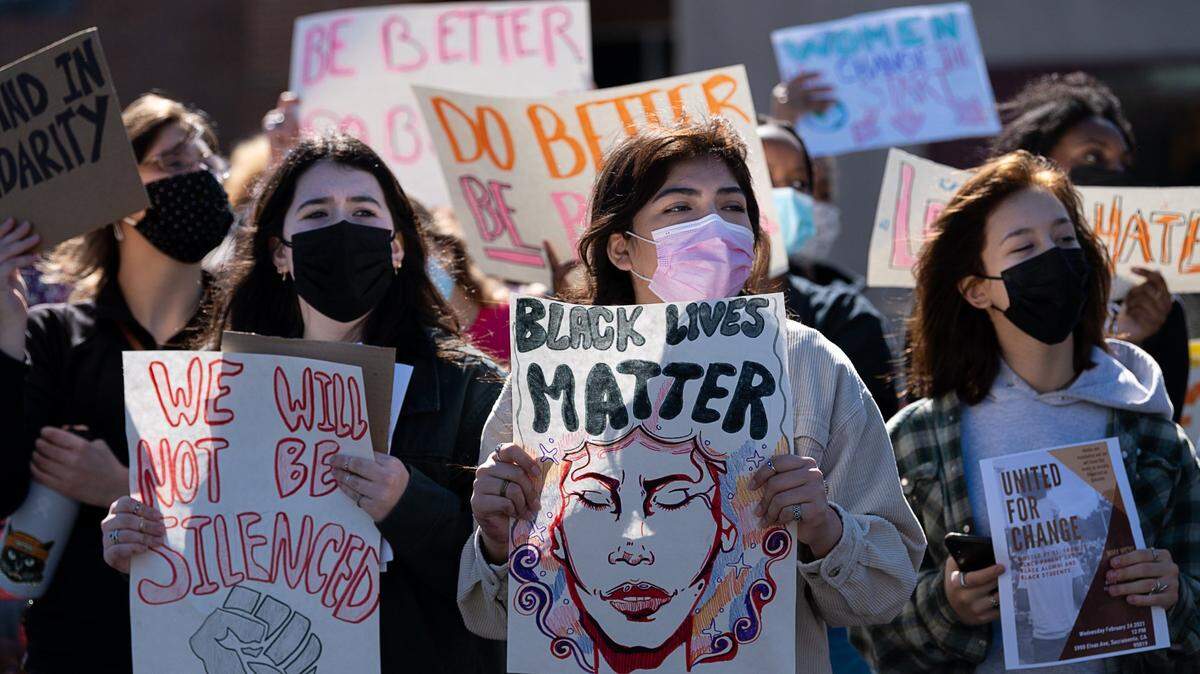
He said he thought St. Francis officials “froze” when faced with a racist incident and Black parents and students who wanted answers. Harris said he was inspired when he attended student protests after the blackface incident. He said though St. Francis kids of color were clearly hurting, their messages of protest were positive.
“They said, ‘Do better. Be better,’” he said.
Harris said that during the protest, he called St. Francis President Theresa Rogers on her cell phone and implored her to speak to the students. “Come talk to your girls,” Harris said. “She refused.”
He said that moment was emblematic of the St. Francis response. The administration has talked at Black, biracial and other kids of color but not talked with them. My requests to talk with school officials publicly about these actions were rejected.
Peter Palko said that the only person in the diocese who apologized unequivocally to them was Bishop Jaime Soto.
Several people interviewed said that eventually, the girl who caused the crisis was pulled from campus voluntarily by her parents. There was no reconciliation. No one feels good about what happened, nothing was solved to anyone’s satisfaction.
Through it all, a Black woman whose daughter was wounded and who had to do right by her continued to work within the diocese that employs her.
“When we moved to Sacramento (more than a decade ago) we made this our community,” Samara Palko said. “And after being here in this community and this church and seeing kids in uniform, we realized something missing for our kids (in public school). What was missing was faith.
“The church became our family...I listened to that call and the church and the school became an extended family to me.”
The Palkos say they are not leaving their church family. Why? Because it’s their school and their church, too.
This story was originally published May 16, 2021 at 5:00 AM.