Roseville’s best-known work of public art has a lesson for a growing, changing city
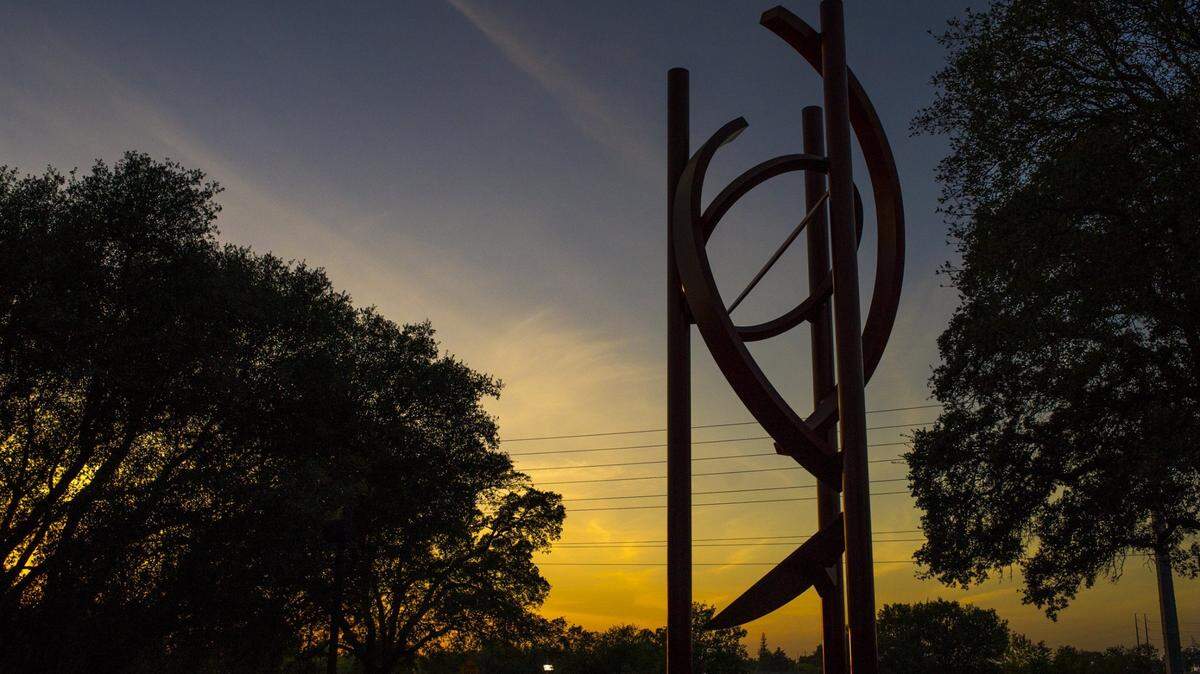
Roseville’s most beloved piece of art is best viewed not in a museum or a gallery but from I-80.
Despite debate over what, exactly, “Cosmos” is supposed to represent, Rosevillians have largely embraced the interpretation that the 80-foot, bright red piece in Olympus Pointe Sculpture Park is an abstract rose, a nod to the city’s name.
Notably, the city’s symbol wasn’t commissioned by local or state government. Dedicated to the people of Roseville, it was a gift from multimillionaire real estate developer Angelo Tsakopoulos, father of Lt. Gov. Eleni Kounalakis.
Roseville, like many cities, allocates an extremely small fraction of its budget to arts and culture. The $1.2 million set aside for Roseville’s 2021-22 general fund arts and culture budget represents just 0.24% of the city’s $495 million budget. The city does make the most of this money, funding concerts and outdoor movies; the preservation of the Maidu Museum and Historic Site; and arts programming for students, among other things.
Yet the city’s art projects and programs largely depend on outside grants and donations. And public art can be a particular challenge to fund this way.
Public art is typically taxpayer-funded, but funding from private-public partnerships and outside donors is increasingly sought out as governments cut arts funding.
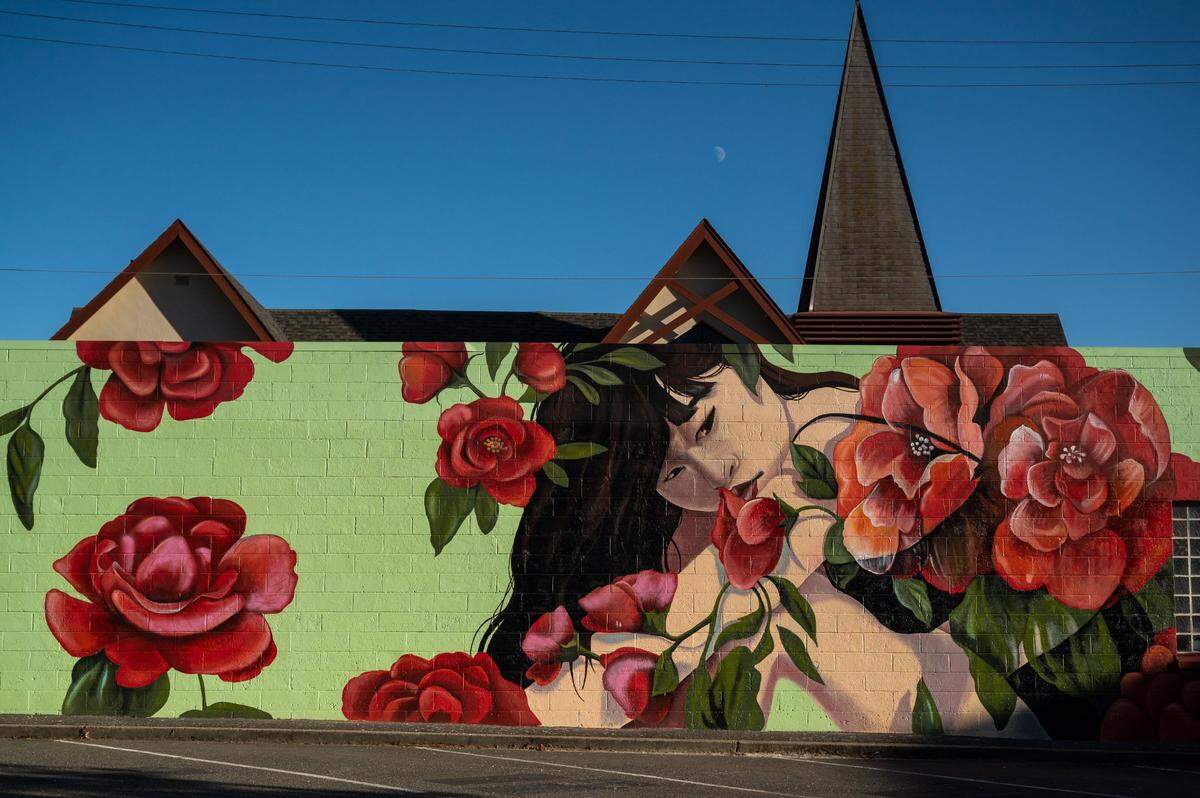
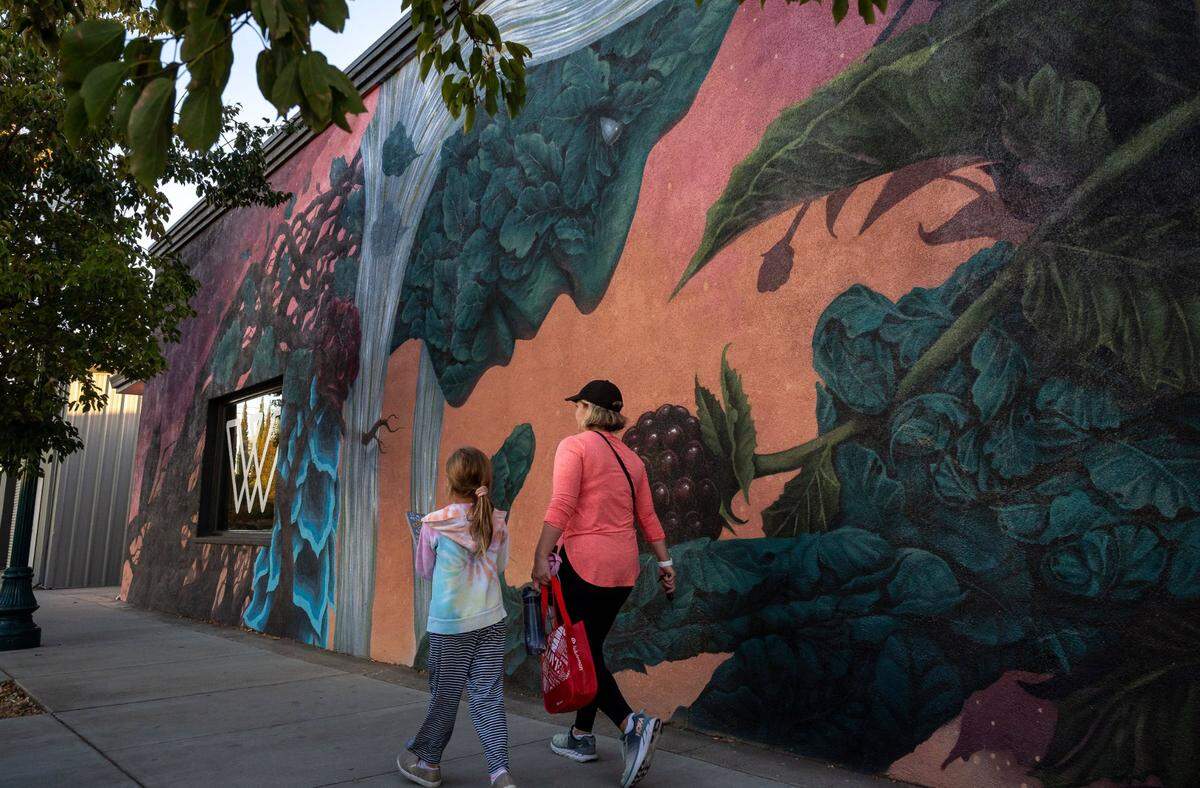
Take, for example, Roseville’s Mural Project. Like Sacramento’s annual Wide Open Walls mural festival, Roseville’s project, which took place along Vernon Street in 2019 and 2020, successfully transformed drab walls into colorful works of art. Also like Wide Open Walls, it’s largely dependent on generous local sponsors.
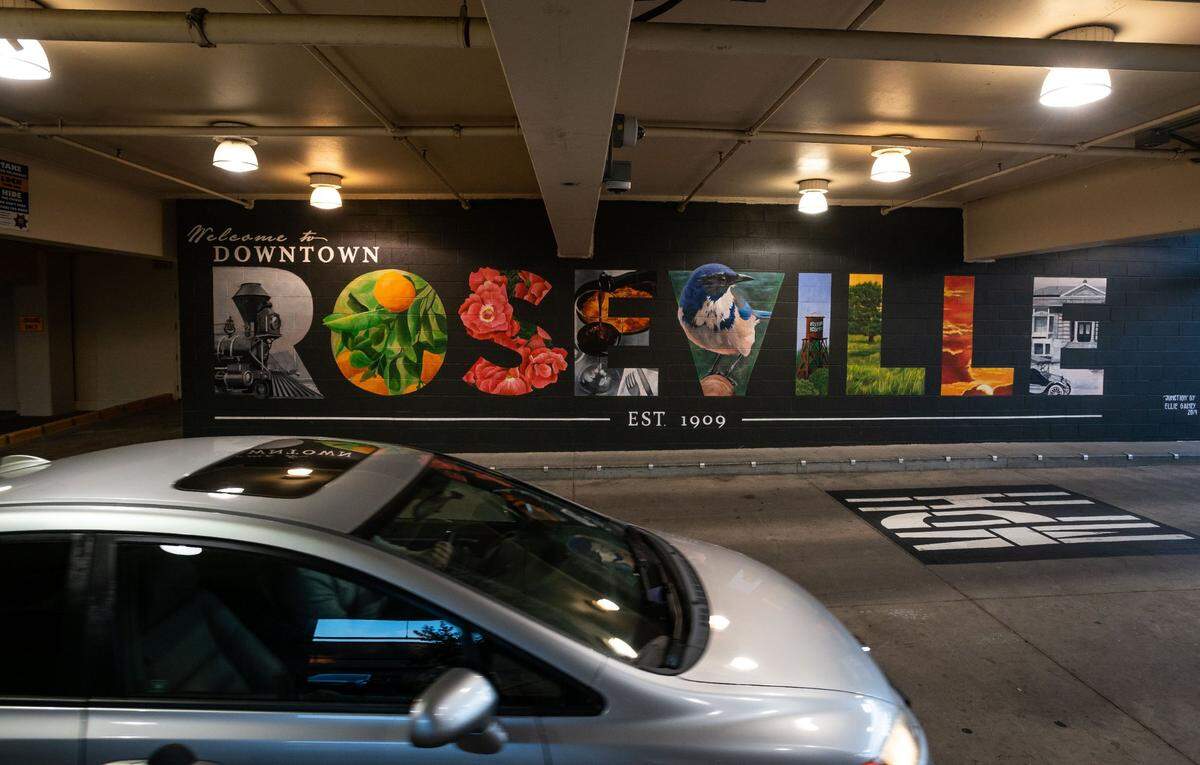
One of those sponsors is the Downtown Roseville Partnership, a collaboration between the city, redevelopment organizations and business owners. The aim is to brand and beautify the city and increase economic activity.
A once quiet Vernon Street is now home to new restaurants and stores, and the murals have had a significant impact in making downtown Roseville a more popular place.
But a city’s collection of public art — or lack thereof — plays a role beyond beautification. Unlike a museum or gallery, public art is truly democratic — widely accessible at all hours free of charge. And while art requires an upfront investment, the returns are incredible: An Americans for the Arts report professes a 7-to-1 return on investment.
To Brooke Abrames, co-director of Roseville’s Blue Line Arts, a nonprofit arts center and gallery in downtown Roseville, a lack of art resources in Roseville means a loss of outside revenue.
“If we don’t have arts resources here, we’re losing quite a lot of tourism dollars and local activity to neighboring regions,” she said. “Local arts resources bring folks to our city and keep money local.”
Roseville has established itself as a proponent for the arts by supporting Blue Line. The city owns the Vernon Street building that houses the group and charges only $1 a year for rent, according to city spokesman Brian Jacobson. Roseville also covers the cost of the gallery’s maintenance and janitorial services, and the city was also able to increase the city’s annual cultural arts budget for 2021-22 to nearly $58,000 over about $54,500 the previous year.
Despite this, Placer County is unable to meet community demand for arts funding. The Arts Council of Placer County funded 54 of 80 applications submitted to the community arts program since 2017, according to the council’s executive director, Jim Crosthwaite. And the approved projects got about half the money they requested.
“If we were trying to fill a need, we were able to fill about half of that need,” Crosthwaite said. “All of us always want to get more funding, and we’re continuing to try to grow that fund.”
The arts council receives money from the county and federal and state grants to fund local art projects. It’s expecting more money from the state budget thanks to funds earmarked for arts recovery and is seeking additional resources through the National Endowment for the Arts.
But Placer County needs community-wide support for our arts to truly thrive. It’s not just about beautifying our cities or bringing in tourist dollars; public art improves our quality of life.
As Roseville’s population grows, its public art collection must grow, too. That means greater investments in arts by the city and the county. That means identifying more private donors. And that means public support for art projects, programming and education.
During the pandemic, the arts were the first to be cut. Now reinvestment is critical.
“Coming out of 2020, the funding landscape for a lot of arts projects has changed,” said Blue Line Arts’ Abrames. “We have, like most arts organizations, had to be conservative with what we’re willing to take on.”
Blue Line recently organized a temporary mini-mural project at the Fountains, Roseville’s outdoor mall. The colorful art pieces were a wonderful surprise that got me thinking about the city’s future. A colorful, brighter, more inspiring Roseville, dotted with murals and sculptures, hosting events like festivals, pop-ups and performances aimed at bringing the community together — that’s the direction our city needs to go as we emerge from this pandemic and expand.
“Cosmos” is a Roseville gem because it gives the city a sense of identity. We’re the city with the giant water park and the giant mall, yes. But we’re also the city with the giant red sculpture off the freeway — you can’t miss it.