
New year, new garbage: Why California is counting on you to clean up another mess
Nothing literally brings home the tragedy of the commons like the great American recycling bin. The typical specimen contains recyclables collected in non-recyclable bags; nominal recyclables with no hope of being recycled; unrecyclables whose green-seeming hieroglyphics falsely suggest recyclability; and plain old garbage that never made a claim to recyclability except in the fevered imaginations of the people who for some reason put it in a blue barrel — reportedly including surprising numbers of used needles and diapers. The cost of re-sorting our hardly sorted and unsortable recycling is one of several factors conspiring to undermine the whole noble enterprise.
California’s government has considered this complicated mess and decided that what it could use is more messiness and complexity. For most of the state’s residents, the new year is supposed to usher in a whole new category of garbage to grasp or, as likely, ignore.
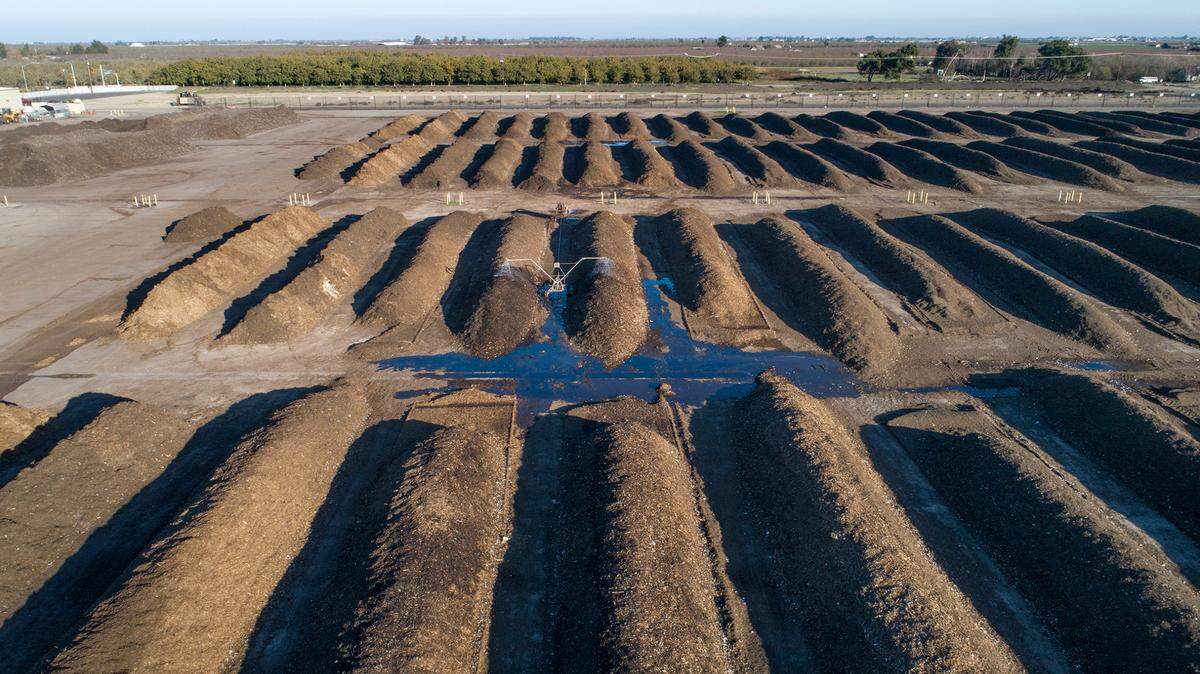
That category is composting, but not in the quaint sense of cute little backyard piles of organic banana peels and free-range eggshells. This is state-sponsored composting, gathering conglomerations of heterogeneous organic waste into ever greater and more redolent piles for processing into soil and fuel at a commercial composting center or, more forebodingly, something called an “anaerobic digestion facility” — one not-so-minor caveat being that much of that infrastructure has yet to exist.
The timing and particulars of composting will vary by locality, but the practice is already established in select jurisdictions. According to Recology’s handy “What Goes Where” guide for San Francisco, which has been composting for over a decade, it’s quite simple: Compost food waste, including “cooked meat,” but not cooking oil; “greasy pizza boxes” and other soiled paper and cardboard containers, but not clean paper or milk and juice containers (recycling) or plastic-backed containers (trash); wooden chopsticks, stirrers and toothpicks, but not treated, painted or large pieces of wood; corks, but not plastic corks; bags labeled “compostable,” but not those labeled “biodegradable”; and of course, as the company takes care to note, not diapers.
Got it? More to the point, will your neighbors get it — even though they can’t or won’t get the recycling rules some three decades in?
To be clear, composting, like recycling, is a great idea. Food and other organic waste makes up about half of landfill-bound trash, where its decomposition produces methane, a greenhouse gas that degrades faster but traps heat more effectively than carbon dioxide. California composting is being ramped up under a 2016 law to reduce such relatively short-lived but powerful planet-warming emissions from multiple sources. Cattle, whose copious methane emissions dwarf those of the state’s landfills, are also being regulated, albeit with noticeably less urgency.
Despite the elaborate sorting guidelines, composting has been a success for San Francisco. The city may not be famous for tidiness, but it does divert about as much waste from landfills through composting as it does through recycling. But it laid the groundwork with institutional and individual incentives, from encouraging businesses to use compostable materials to giving less wasteful residents a break on collection fees. That’s in marked contrast to the statewide strategy, which will likely raise fees across the board regardless of any household’s careful or careless habits.
We should root for the rest of California to be half as successful at keeping climate-changing and often edible food out of the dumps. But the state’s strategy already echoes the weaknesses of curbside recycling, particularly its reliance on regular Californians’ goodwill and largely theoretical attention to the details of waste management.
Just as policymakers in Sacramento keep failing to force companies to stop producing unrecyclable plastics even as recycling collapses around them, they have hesitated to go beyond asking citizens to solve the next big garbage problem. Most businesses aren’t being asked or forced to do anything to reduce outsize contributions to the food waste stream for years, let alone eschew materials that make proper composting and recycling difficult or impossible. California thereby conforms to a rich American tradition of telling the public to clean up a mess we didn’t really make.