Joe Biden’s free COVID tests are late in coming and exclusionary to the most needful
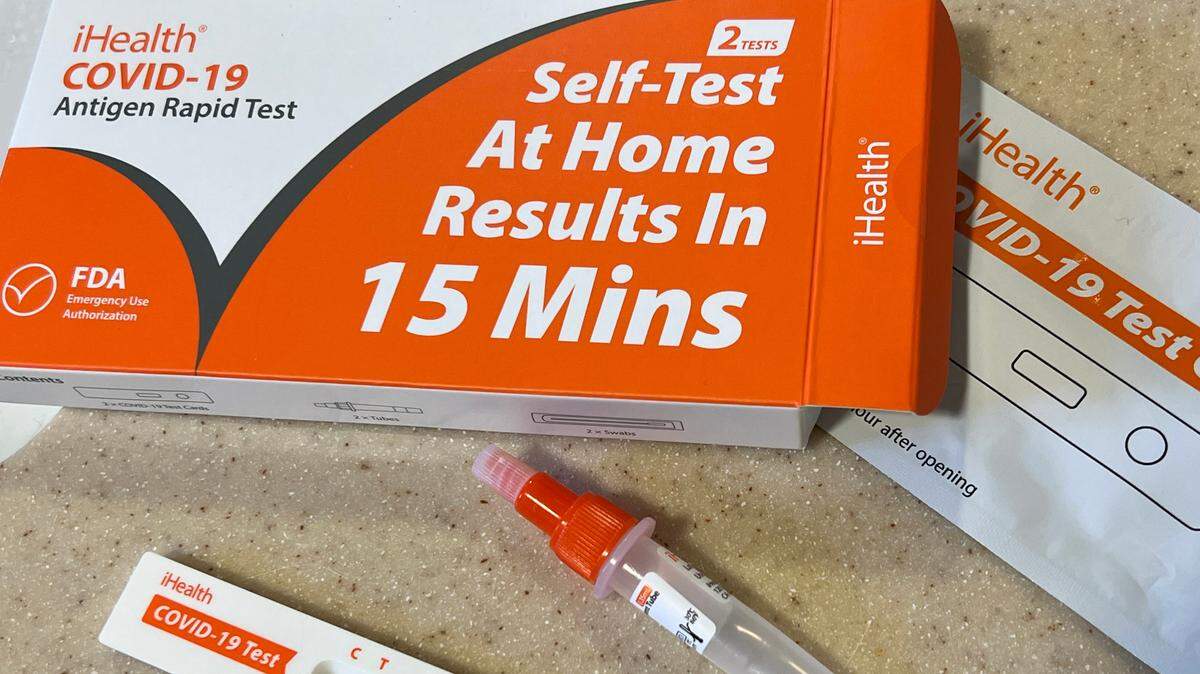
The Biden Administration’s offer of four rapid COVID tests to every household in America is a good start to mitigate the recent surge of coronavirus cases, albeit one that is many months, many transmissions and hospitalizations, and so many deaths late. But limiting households to just four tests favors well-heeled property owners over poor people and people of color who don’t have the means to live in single-family households or don’t have internet access.
The program rolled out this week, and millions rushed to get their four free tests, which will be mailed out via the U.S. Postal Service sometime “in late January.” But the program’s limitations aren’t a design flaw; they’re purposeful. Four-per-household is a hard and fast rule. Meanwhile, renters across the nation are already reporting system denials because the government’s distribution system doesn’t recognize differing apartment numbers at each address.
At first, this snag seemed to be the result of an oversight, but a quick look at the Frequently Asked Questions portion of the Postal Service website states that the question of large families living in one home was not only considered but also discarded at the expense of many.
“Is there a limit to how many tests I can order? Yes. To promote broad access, the initial program will only allow 4 free individual tests per residential address. Can I order more tests if I live in a large or multigenerational household? No. To promote broad access, the initial program will only allow 4 free individual tests per residential address.”
This doesn’t seem like broad access. It seems like limited access and artificial scarcity.
“Inequities arise when policies do not account for underlying differences,” wrote Samantha Artiga on Twitter. Artiga is the vice president and director of the Racial Equity and Health Policy Program for the Kaiser Family Foundation, based in San Francisco. “Moreover,” she wrote, “people of color likely have (an) increased need for testing since they are more likely to be employed in jobs that cannot be done remotely.”
Studies show that low-income communities and communities of color are already at higher risk of contracting the coronavirus and of developing a long-term, serious illness known as “long COVID.” America’s Indigenous community is dying of COVID at a rate 2.2 times higher than white people, and Black people at a rate 1.9 times higher, according to the Centers for Disease Control and Prevention. These communities are also the least likely to have access to rapid, affordable testing.
These are also the communities most likely to have multi-generational families or people living in apartments. According to a Kaiser Family Foundation study, 36% of Hispanic families, 25% of Asian American families and 23% of Black families live in a household with more than four people, compared with 17% of white Americans.
Additionally, American homeowners with two or more properties (such as, say, an Airbnb or vacation home) are disproportionately white and could feasibly order a set of four for each home.
One way to prevent a black market for COVID testing is to flood the market with cheap and reliable tests — as many as you want, for free, or at the very least inexpensively.
Not only is this possible but it’s also already being done in countries such as Britain, France and Germany, where rapid tests are widely available, and where many families keep tests in their homes to self-administer when necessary or visit clinics free of charge. In the United Kingdom, residents can order up to seven tests for delivery every 24 hours.
Four free tests per address nearly two full years into this pandemic illustrates the idea, supported by legal experts and social scientists, that equality doesn’t achieve equity. We cannot be thankful for a program that offers scraps if it continues to punish America’s poor, diverse and disabled communities when they are the ones most at risk.