Sacramento County was right to keep motels open for the homeless. But it has to do more
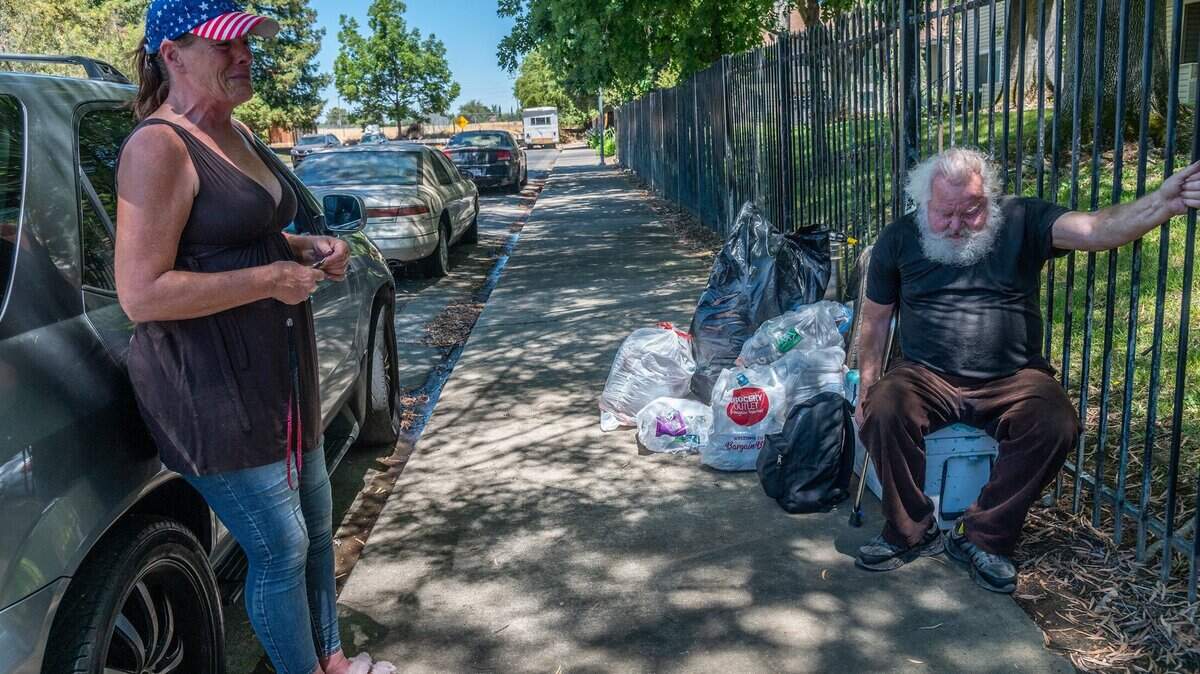
Sacramento County did the right thing last week by reversing course on the imminent closure of three motels housing more than 300 formerly homeless people.
Following criticism aired at the supervisors’ meeting Tuesday, the leaders of the largest government in the region decided to extend the housing program known as Project Roomkey.
Sacramento County only extended Roomkey until the end of June, however, instead of shutting it down later this month as originally planned. And let’s not forget that despite knowing the federal funds for Roomkey would end in March, the county waited until late February to announce it would be “ramping down” the program.
But let’s give credit where credit is due: While one Roomkey hotel will be shut down, the previously unhoused people in the program can still stay in the other two facilities for three more months.
There is still much more to do, however, before the county can claim to have added any housing capacity — as opposed to creating Band-Aids that don’t begin to close the region’s disastrous housing deficit.
The list of projects under the county’s “Housing and Homelessness Priority Issue Area” includes $10 million for landlord engagement and re-housing support; $5 million for countywide data infrastructure; $1.5 million for a nursing team for pregnant women, children and families; $700,000 for a pilot public health nursing team to provide outreach; $160,000 for an information management database; and $160,000 for two contracted “navigators” to work in the River District in a one-year pilot program.
Not one of these projects would add housing. Some 58,000 low-income Sacramento County residents can’t find an affordable home to rent, according to a California Housing Partnership survey released in May 2021. They need more than nurses and data management. They need roofs over their heads. The county must graduate beyond its current responses to the problem.
I get it. This is hard. But we’re in a housing crisis, and facing that crisis requires addressing the issue of capacity. We don’t need leaders who shift blame or dodge the responsibilities they sought and benefit from.
Supervisors are pondering how to allocate the $25 million they approved last year for homelessness. That approval was based on a study in June 2021 for which the county paid $600,000 to Deloitte. The survey was supposed to identify the needs of county residents, but it was only conducted in English for the first week, after which translations were available for the last week of the survey period. It also failed to identify the demographics of respondents.
So instead of sending Deloitte’s surveyors back for a fuller picture, the supervisors decided to issue $5 million in federal funding to each supervisor’s district in an attempt to address the unique needs of their constituents equally. But the supervisors’ districts are not equal.
According to Race Counts’ Statewide Vulnerability and Recovery Index, the 95824 and 95815 area codes are “the most in need of immediate and long-term pandemic and economic relief.” The 95824 zip code is in south Sacramento’s Lemon Hills neighborhood, mostly within District 2; 95815 skirts Gardenland to the east and encompasses Old North Sacramento to the south, in District 1.
The five county supervisors may each be getting an equal $5 million allotment, but this is not equitable use of the people’s money.
How about using the combined $25 million to create actual housing units for the county’s homeless? How about prioritizing the 300 homeless people who still face losing their Roomkey motel rooms on July 1?
Because now’s the time to think critically about how to create permanent housing — and avoid having this same conversation in a few weeks, when the funding runs out again.
An earlier version of this column stated that a community needs survey commissioned by Sacramento County was only offered in English. Halfway through the 2-week survey period, the county offered a survey in other languages.
This story was originally published March 14, 2022 at 5:00 AM.