
Still not willing to read subtitles? Then you’re missing out on the best Oscar contenders
Who could forget the moment “Parasite” won the Oscar for best picture — the first time a foreign-language film won the prestigious award? For cinephiles like me, the immense popularity of the Korean film following the Academy Awards was thrilling. It signaled a thaw in a stubborn strain of Hollywood nationalism that deprives foreign films of the appreciation they deserve.
In fact, “Parasite” so astonished certain amateur moviegoers to a degree that was curious — perplexing even. It was as if Americans were just learning that South Koreans, like people in other non-European countries, actually experience many of the same struggles and hardships we do in the United States.
Undoubtedly, the Oscar for “Parasite” coaxed reluctant American movie fans into giving foreign-language films a shot. But what explains the initial hesitation? Why do Americans have to be persuaded to see foreign films in the first place? And why do filmmakers from other countries still have to convince American audiences that they should watch their critically acclaimed movies?
Part of this resistance, of course, is explained by subtitles. And I get it: Sometimes I just want to half-watch a movie while scrolling through Twitter without missing critical plot points. But adamant unwillingness to ever read subtitles is a huge mistake.
After the memorable 2020 win for “Parasite,” director Bong Joon-ho gave a similarly memorable acceptance speech. “Once you overcome the one-inch-tall barrier of subtitles,” he said, “you will be introduced to so many more amazing films.”
Two years later, the filmmaker’s words ring especially true for 2022’s eclectic batch of Oscar nominees.
For us monolingual movie-viewers, most of this year’s best Oscar nominees require translation from languages other than English, including American Sign Language. Indeed, spectacular films about the deaf community are among the highlights of both this year’s and last year’s Oscar-nominated films.
“Sound of Metal,” a 2021 best picture nominee, depicted the emotional journey of a young man who lost his hearing as he alternately grieved and embraced the loss. One of this year’s best picture nominees is “CODA” — an acronym for “child of deaf adults.” It’s a moving portrait of a hearing high school student with a passion for singing who devotes much of her time helping the family fishing business and signing for her deaf brother and parents, played by the exuberant Troy Kotsur and the always lovely Marlee Matlin.
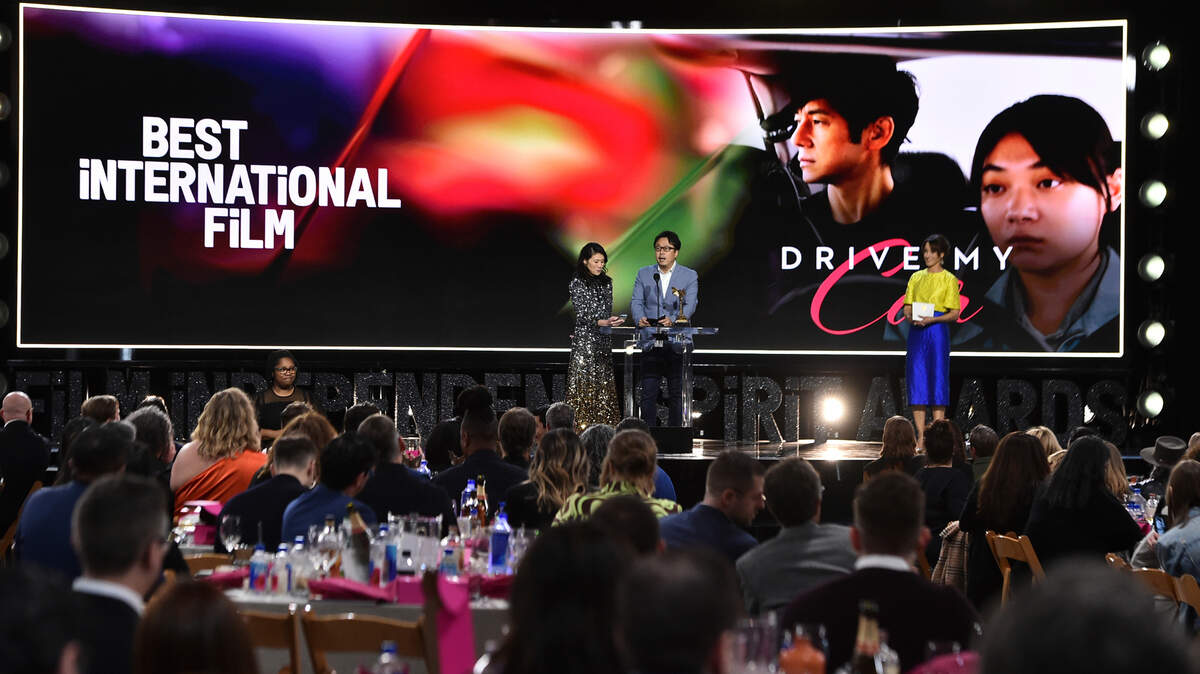
Japanese filmmaker Ryusuke Hamaguchi’s “Drive My Car” is the latest foreign-language film nominated for best picture. The stunning three-hour film, which also should have been nominated for best cinematography, is based on a short story of the same title by the Japanese author Haruki Murakami, an all-time favorite writer of mine.
When I’ve tried to sell “Drive My Car” to friends who are less inclined to see foreign-language films, they seem turned off by the fact that it’s in Japanese and has a 2-hour-59-minute run time. I understand that long movies can be a slog, and yet “The Batman,” with its 2-hour-56-minute run time, became an immediate box office success. Obviously, we are willing to watch long movies.
In the best animated feature film category, “Flee,” much shorter at an hour and a half, follows a documentary-style interview with an Afghan man who recounts his harrowing escape from Kabul as a young boy during the Soviet-Afghan War in the 1980s. The film, which at times uses news footage of Afghanistan from the 1980s, is poignant and terrifying — reminiscent of Israeli filmmaker Ari Folman’s 2008 animated autobiographical film “Waltz With Bashir,” which dramatized Folman’s time as a soldier in the 1982 Lebanon War.
The use of animation in both films makes the tragedies of war, loss and escape more haunting. Animation as a medium is so often used as a facade to hide difficult emotions. Here, the art form, which is disarming in nature, challenges the viewer with heavy, often disturbing stories while also allowing both Folman and Amin Nawabi, the subject of “Flee,” autobiographical control. Rather than dramatizing their lives with a cast of actors, animation becomes a more authentic mode of storytelling.
My favorite film of the year — and one of my new favorite films of all time — is Danish director Joachim Trier’s “The Worst Person in the World.” The movie is nominated for two Oscars, including for best international feature film.
Seeing this film in a theater for the second time clarified why I love it so much. It is, first and foremost, a spectacularly made film: The pacing is perfect; it’s funny, devastating, energetic and contemplative. But personally, I love it because of its honest depiction of a self-possessed woman navigating her way through her career and love life all while putting herself and her needs first. At a time in my life when friends are getting married and having kids, seeing an independent young woman onscreen who doesn’t find happiness or a sense of identity by getting married or becoming a mother, but instead by following her fiercely independent instincts whether right or wrong, was intensely therapeutic.
Recently, at the New York Film Critics Circle Awards, Renate Reinsve, the Norwegian actress who stars in “Worst Person,” declared that “subtitles are fashionable.” She’s right. If you’re deterred by subtitles, you’re missing out on the best films of our time.