
Horsefeathers: Proven COVID drugs gather dust while Americans take animal medicine
SARS-CoV-2, the virus that causes COVID, and Strongyloides, a genus of roundworms known to bedevil people in developing countries and horses in this one, are both, to be sure, nasty little buggers. But it turns out that for medical and most other purposes, the similarities end there.
The largest study to date of the efficacy of the drug ivermectin in treating COVID has come to what should be an unsurprising conclusion: A drug designed to rid horses of parasitic nematodes does nothing for people afflicted by the coronavirus. But try telling that to your average American state legislature, which is more likely than not considering a measure to help its constituents get the stuff.
The latest scientific salvo in the losing battle to depose ivermectin from its unlikely reign as the nation’s most popular unauthorized COVID drug comes at a strange moment for another medicine — one that is not only approved to treat the disease but also has the underappreciated quality of working. Paxlovid, the first highly effective anti-COVID pill, is collecting dust on shelves even as medicated horse paste is galloping off them. It’s a tragicomic symptom of a chronic and apparently incurable national case of mass delusion.
Normally understated experts greeted Paxlovid’s advent a few months ago with relative exuberance, hailing it as a “game-changer” and “a major step forward in the fight against this global pandemic.” Understandably so: In contrast to monoclonal antibodies, Pfizer’s antiviral drug combination is a relatively affordable five-day course of pills that can be taken at home, is expected to retain its efficacy against new variants, and has been shown to reduce the incidence of hospitalization and death among high-risk patients by nearly 90%. The Food and Drug Administration authorized it for emergency use in December, and the U.S. government, United Nations and others soon signed up for millions of courses.
And yet by February, just past the peak of the omicron surge, there were already multiple accounts of pharmacies sitting on growing piles of the drug. U.S. Health and Human Services Department data recently detailed by National Public Radio shows less than half of the available doses of the antiviral have been distributed to patients, while other effective COVID treatments are similarly underused. A recent search of federal data showed nearly 1,800 courses of Paxlovid sitting in pharmacies in Sacramento County alone.
Experts, doctors and patients noted an array of obstacles, from the all too familiar barriers to health care access, COVID testing and prescriptions to patient hesitancy and misinformation.
Given that Pfizer’s antiviral is supposed to be reserved for people at risk of serious illness — which is much more likely among the unvaccinated — the overwhelming majority of those forgoing or prevented from getting the medicine also skipped ample opportunities to avail themselves of another highly effective treatment, vaccination.
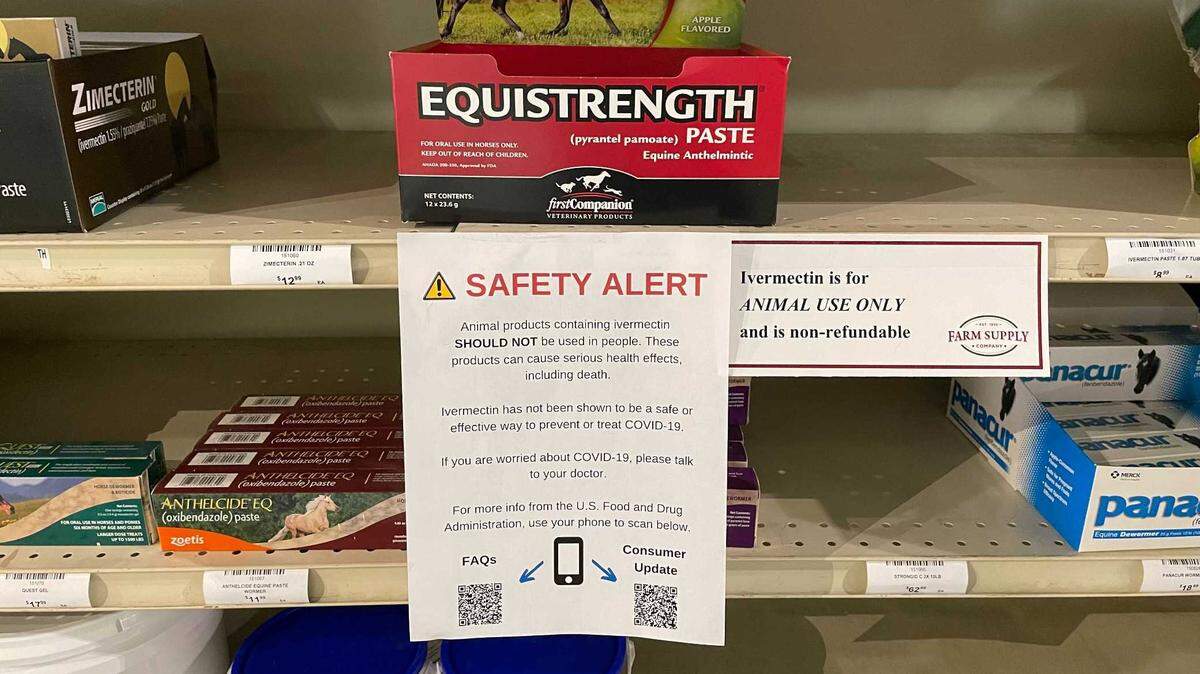
Ivermectin, vigorously promoted by hack politicians, right-leaning pundits and profiteering quacks — with no small assistance from amoral Silicon Valley social media platforms — has no such popularity problem. By last summer, according to the Centers for Disease Control and Prevention, prescriptions for the drug had undergone a “24-fold increase from the pre-pandemic baseline.” And that didn’t include spiking sales of veterinary versions available from farm stores, including “sheep drench,” cattle “pour-on” and flavored horse paste preparations, fueling a tripling of ivermectin-related calls to poison control centers.
It was serious enough that the FDA rolled out a plainspoken advisory entitled “Why You Should Not Use Ivermectin to Treat or Prevent COVID-19,” illustrated with stock photos of pleasant-looking medical professionals tending to their human and equine patients — separately, of course. “Never use medications intended for animals on yourself or other people,” the agency advised, explaining that “animal drugs are often highly concentrated because they are used for large animals like horses and cows, which weigh a lot more than we do.”
The nation’s elected officials have been considerably less helpful. According to the Federation of State Medical Boards, lawmakers in 28 states are considering measures to enable more misuse of unauthorized and unproven drugs such as ivermectin and its predecessor as the nation’s favorite COVID snake oil, hydroxychloroquine. Unfortunately, this isn’t due to an unexpected nationwide outbreak of wormy pack animals.
The explosion of human ivermectin abusers has been accompanied by a proliferation of studies, many of them substandard or worse, searching in vain for a reverse-engineered rationale. The drug’s apparently nonexistent potential to treat COVID has been studied thoroughly enough to enable a meta-analysis published last week. After eliminating the vast majority of the available research as unreliable, the study of studies posited that those finding a benefit for ivermectin could be reflecting the drug’s success in accidentally treating latent worm infections.
Meanwhile, the most extensive trial of the drug’s potential to treat COVID to date, recently detailed by the Wall Street Journal, found invermectin did not help rid patients of the coronavirus, resolve their symptoms, reduce hospitalization or prevent death. One expert said the study “should really help put to rest” the ivermectin craze.
Good luck with that. The disinformation-industrial complex is so devoted to this chimera that it’s accused Paxlovid, the drug that works, of being a repackaged version of the dewormer, coining the term “Pfizermectin.”
No wonder the latest systematic study of global excess mortality during the pandemic puts the United States in the upper echelon of death tolls despite our wealth and resources, alongside such disinformational purgatories as Russia and Brazil. With an estimated 1.1 million more deaths than would normally be expected in 2020 and 2021, Americans died of COVID in greater numbers than people in any country save India, the study found, and at over three times the global average per capita. We aren’t just buying a bunch of horse paste, in other words; we’re dying of it.
This story was originally published March 27, 2022 at 5:00 AM.