‘Feeling of duty’: A Sacramento-area doctor’s daring mission to aid hospitals in Ukraine
When the sun sets in Ternopil, Ukraine, a strange darkness now blankets the western city.
Light invites unwanted attention in a nation under siege, so those who stayed behind to fight the Russian invaders use cellphones to navigate their homes at night. Hospitals cover their windows with black trash bags so they can safely keep the lights on.
Dr. Liana Turkot, a Woodland-based physician for Dignity Health, was “shocked completely” by how the war transformed her homeland during a humanitarian mission last month.
When she was in medical school two decades ago, Turkot frequented a movie theater in the heart of Ternopil that has now been cordoned off by armed guards. Residents leave their empty bottles outside its doors, she said, presumably to build Molotov cocktails.
The warmth of the street lights that line the city on the Seret River have been replaced by cold shadows and the sirens of war.
“It sounds like wolves,” Turkot said. “(There was) complete darkness and this eerie, eerie sound that gets to the bone — it gets inside you. It’s not necessarily fear; it just paralyzes you. You don’t even know what to expect.”
The physician and her son, Dr. Oleg Turkot, a Johns Hopkins University anesthesiologist, spent three weeks in Poland and Ukraine providing emergency care training and distributing a trove of medical supplies to different cities in the war-torn nation.
Much of the world has become familiar with the awe-inspiring courage and selflessness of the Ukrainian people since Russian President Vladimir Putin began his authoritarian assault on the neighboring democracy almost two months ago. In many ways, Liana Turkot’s mission exhibited the same spirit.
“You do have a feeling of duty and almost like restlessness,” Turkot said. “Life changed (after the visit). Life before the war and life after the war — totally different.”
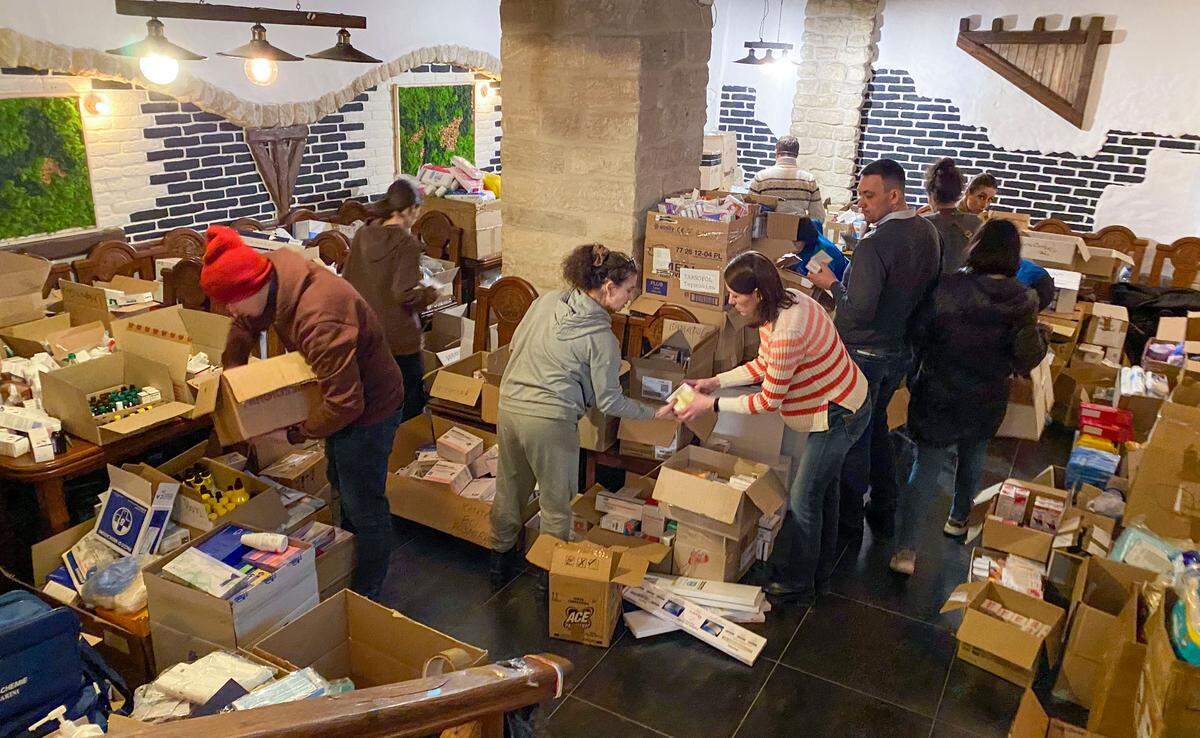
She helped transport 550 tourniquets, portable ultrasounds, surgical instruments and blood transfusion equipment, among other critical supplies, at the Polish border and across western Ukraine. Dignity Health in Woodland and Woodland Memorial Hospital donated most of the equipment. Turkot and her son purchased some themselves.
Oleg Turkot and other Johns Hopkins physicians spent four years traveling across Eastern Europe and beyond with an organization called Kybele, teaching obstetric anesthesiology to improve childbirth safety, his mother said. Oleg noticed a gap in access in his native country and started conducting similar workshops in Kyiv and Vinnytsia. Those connections came in handy.
‘I’m going with you’
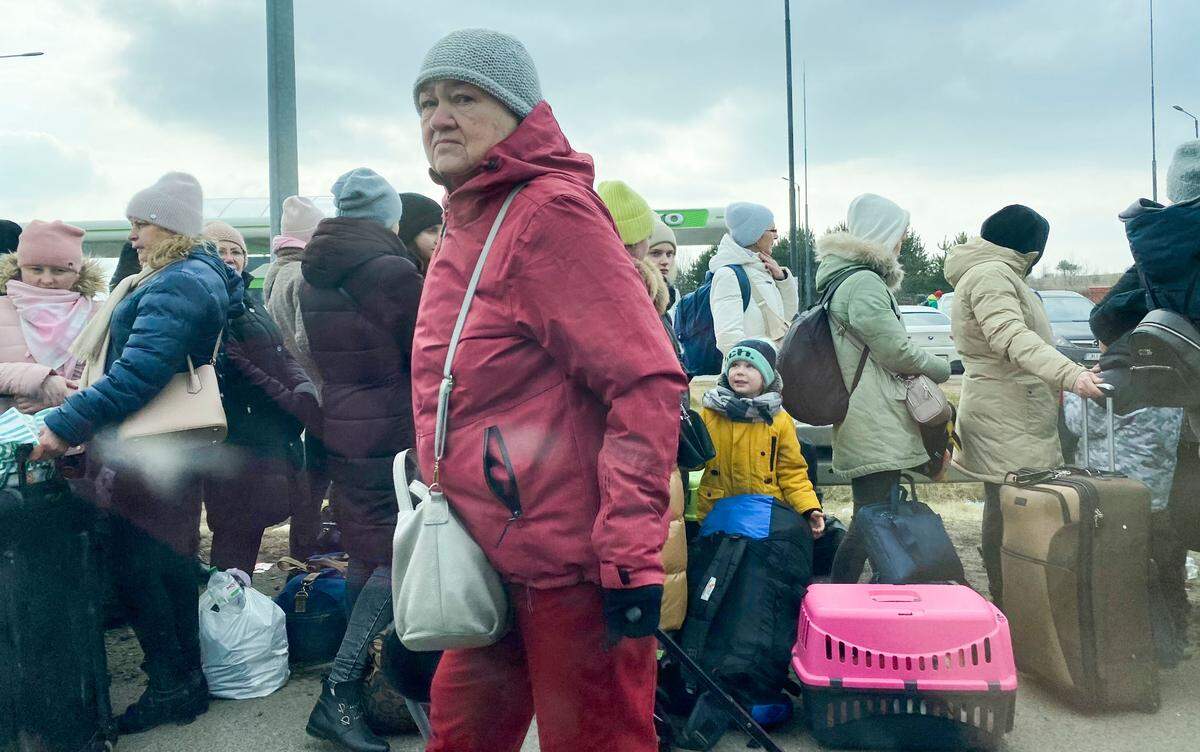
After Russia invaded Ukraine on Feb. 24 and Liana Turkot saw the images of refugees crossing the border to Poland, she felt compelled to help. Turkot was unsure whether or when the Ukrainian government would fall, and she thought she could simply provide medical care to refugees who fled with few belongings.
Unbeknownst to her, Turkot’s son had already made plans to visit Ukraine.
“Well, he’s not going alone,” she recalled saying. “You can’t go in the war by yourself. So I said, ‘I’m going with you.’ That’s how everything started.”
Thanks to her son’s contacts from his philanthropic medical work, they identified what was needed, gathered the donated and purchased supplies, and flew to Poland two days after they made the decision.
They borrowed a vehicle from a friend in the capital, Warsaw, and at 2 a.m. the next morning — despite concerns that the bombing of a nuclear power plant could expose them to radiation — they left for the Ukrainian border.
Over the next few weeks, they drove to Lviv, Ternopil and other areas, dropping off supplies at distribution sites to go to the frontlines of the war in eastern and southern Ukraine. Throughout their travels, they gathered doctors, nurses and volunteers from different hospitals and held demonstrations to teach them how to use tourniquets or perform surgeries with portable ultrasounds.
“In a time of war, people who are not anesthesiologists need to do intubation,” Turkot said. “People who are not trauma surgeons need to know how to handle it.”
The most difficult part of the trip was seeing all the women and young children at the border, she said. Turkot saw shades of herself, recalling the shock she experienced when she emigrated to the U.S. as a 31-year-old widow with a 6-year-old child. She had few possessions and didn’t speak English.
“I came to America with a child, and I know how difficult it is,” Turkot said, her voice catching. “At that moment, those people were just happy that they left the country. But I know the hardship that is waiting for them. ...They are going to countries where they don’t know languages. They are going to countries where they won’t have their professions back, where they have to accept totally different work that they’re not even thinking they’re going to do.
“But you have to do what you need to do in that situation.”
Turkot is not an emotional person. She’s resourceful. She’s hardened by the challenges she overcame to build a good life in the Sacramento area. When she spoke about the refugees, the real inspiration for this humanitarian trip became clear.
It wasn’t just a sense of duty that motivated Turkot to risk her life in a war zone. It was a single mother’s instincts to protect her son — the same instincts that drove her to build a better life for him in the U.S.
Every mother at the Polish border shared that impulse. Their husbands, fathers and sons all stayed behind. The women could comprehend how their lives were about to change. The children, however, were innocently running around as if they were simply traveling.
“They are not complaining,” Turkot said. “They are just — they are lost. ... Instead of going to school and learning algebra and chemistry and playing sports, this is the future you have now. It breaks my heart completely.”