
What a sold-out drag show in Placer County can teach us about our young LGBTQ neighbors
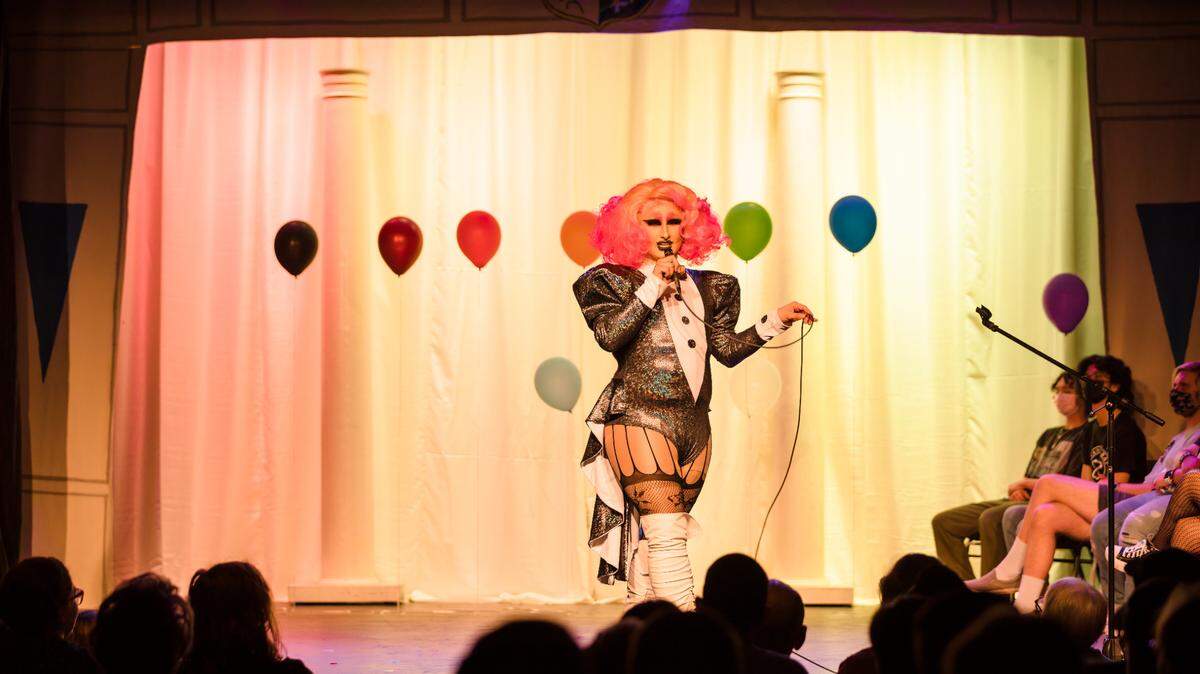
Drag queen Iris Omega stood in front of a multicolored row of balloons wearing white, knee-high heels, fishnet tights and a glitter bodysuit. Her orange-and-pink eye shadow matched her orange-and-pink wig. Loose curls, teased and styled à la Dolly Parton’s signature sky-high blond ringlets, hung around Omega’s face.
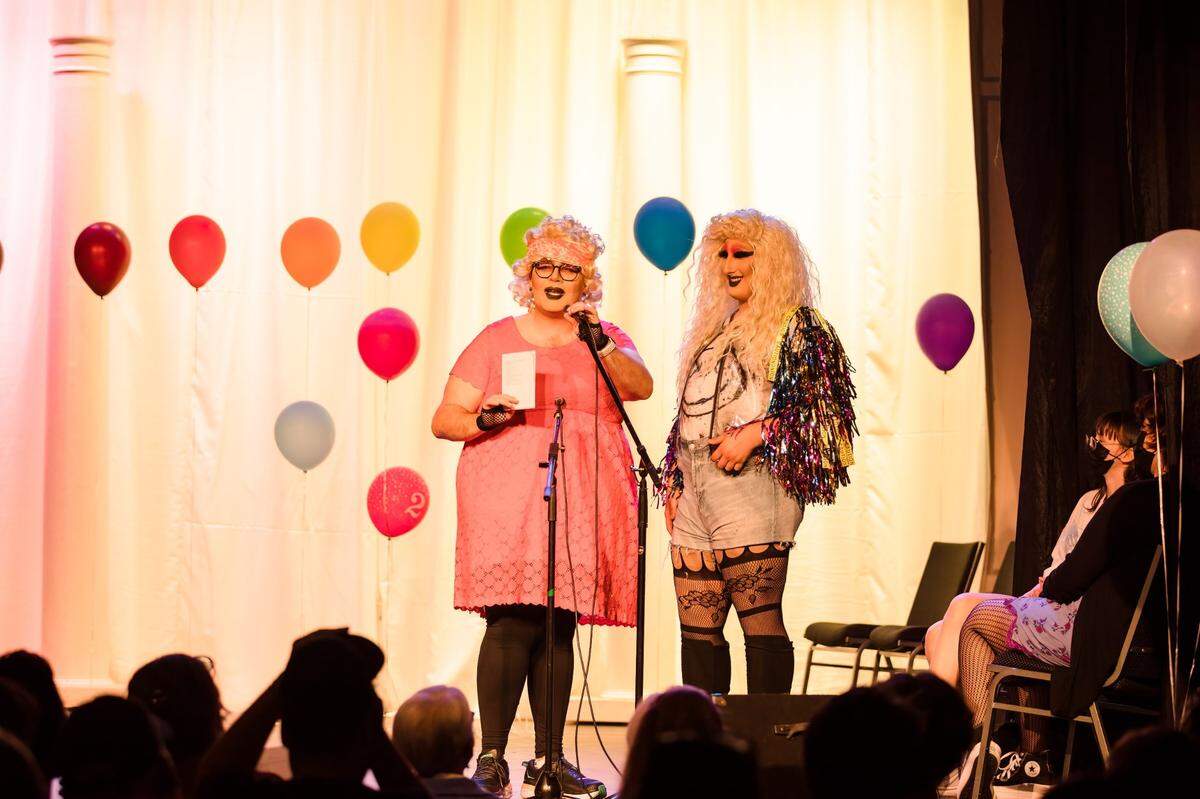
The 21-year-old Folsom native, who goes by her drag name, was hosting Placer County’s second drag show starring local transgender and queer young people. The show, delayed two years by the pandemic, was held on a recent Friday night at Loomis’ McLaughlin Theatre, which offered standing room to audience members who arrived after the performance sold out all the available seats.
The enthusiasm for the event demonstrated the need for safe places for our trans and queer neighbors in Placer.
The drag show was organized by the Landing Spot, a non-religious support group for LGBTQ youth and their parents, and meets monthly at the Loomis Basin Congregational United Church of Christ. The group was founded by church Pastor Casey Tinnin, who is gay.
Placer County can be an unwelcoming place for the LGBTQ community. Powerful conservative congregations such as Rocklin’s Destiny Church have promoted homophobic and transphobic beliefs, while local leaders and school officials often vote against inclusivity.
“Placer County has not been good to us as queer and trans people,” said Ember Ward, 24, a Landing Spot member who helped organize the recent drag show. “Placer needs a space for (queer and trans) kids to be visible so they know they aren’t alone.”
Discussions about trans and queer kids often focus on violence and distress. Tinnin and Ward wanted the drag show to provide a contrast. “This event was all about queer joy,” Tinnin said.
The event raised money for Camp Fruit Loop, a three-day summer camp for local LGBTQ youth.
Kerry McCants Fantham, who attended the show, said her daughter found community and befriended other LGBTQ young people through the Landing Spot. Fantham protests in front of Destiny Church in support of LGBTQ rights and was once verbally and physically attacked while holding a rainbow “love” sign and wearing a shirt that said “Protect Trans Kids” in a video that went viral.
“There is a lot of prejudice against the LGBTQ community here,” Fantham said. “So for this event to just celebrate the kids, I think it’s huge for the community. It shows kids that (they) don’t have to go to Sacramento to be accepted and be who they are.”
And it’s not just a handful of queer and trans kids who need and deserve Placer’s care and support. At the end of the drag show, Tinnin, the pastor, invited every queer and trans kid in the audience to get on stage. About 50 went up.
“When you lift up one marginalized community, you lift up everyone else,” said Ward, the show organizer. “If we lift up these youth, every other child is going to be safer, is going to be more able to be themselves and live in a world in which who they are isn’t something that people can take away from them. That’s essential for every child.”
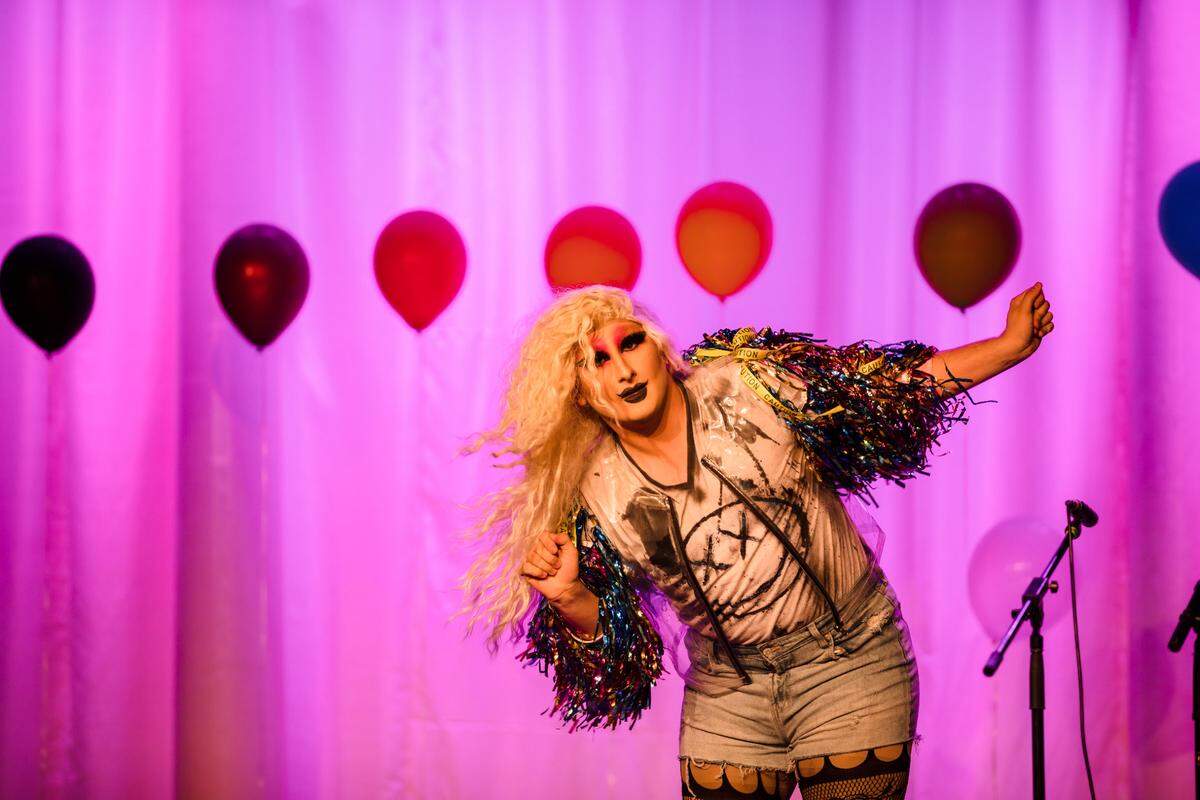
Drag show
Iris Omega discovered she could do drag professionally at the Landing Spot’s first such show — in April 2020, right before COVID shut everything down. Now Omega gets paid to perform twice a month at Sacramento’s Liaison Lounge.
Drag has changed Omega’s life. She has not only found a passion but also learned more about herself.
“Recently, because of drag, and because of all of the support I got from my fellow drag artists, I came out as non-binary,” Omega said. “It was a long and hard journey, but because of drag and blurring the lines of gender norms, it (gave me) a safe space to discover myself.”
Drag culture dates to the 1920s, when Black and brown queer and trans people left unwelcoming home environments to create their own “houses” (often spelled “haus”), where friends could become their chosen families. Members of houses would compete in drag events featuring gender-bending styles and fashions.
“Those folks could show up as their truest self,” Ward said. “It just takes those stereotypes of what gender is supposed to be and flips it on its head and makes it really fun and not so serious.”
Omega, who has now found her own chosen home away from home, choked up when she talked about how difficult it can be for queer youths to find safe spaces.
“For queer people, family is more than just blood,” Omega said. “Family is the people that love you for who you are. That’s why we did the drag show, to say, ‘We’re here, we love you and we exist.’”
What’s next
The Landing Spot raised over $2,200 for Camp Fruit Loop thanks to this month’s drag show. The fundraising is ongoing. Participants start camp by coming out of a physical closet — meant to represent their coming out as a member of the LGBTQ community. Since the camp is about finding queer joy, participants celebrate their names and gender identities.
But Landing Spot members agree that Placer’s LGBTQ youths need a permanent meeting space. They are looking for a welcoming spot in the county that could host group meetings and events.
As Ward noted, being queer often means switching between different personalities — at school, at home, alone — to feel safe or accepted. A space of their own would mean our queer neighbors don’t have to pretend to be anyone other than their authentic selves.
“If any young little queer kid is reading this, no matter how things feel, you are not alone,” Omega said. “You are loved and there is a space for you. And if your family doesn’t want to love you for being who you are, then we are your family now and we will love you for who you are.”