
On the issues: Angelique Ashby and Dave Jones, candidates for District 8’s senate seat
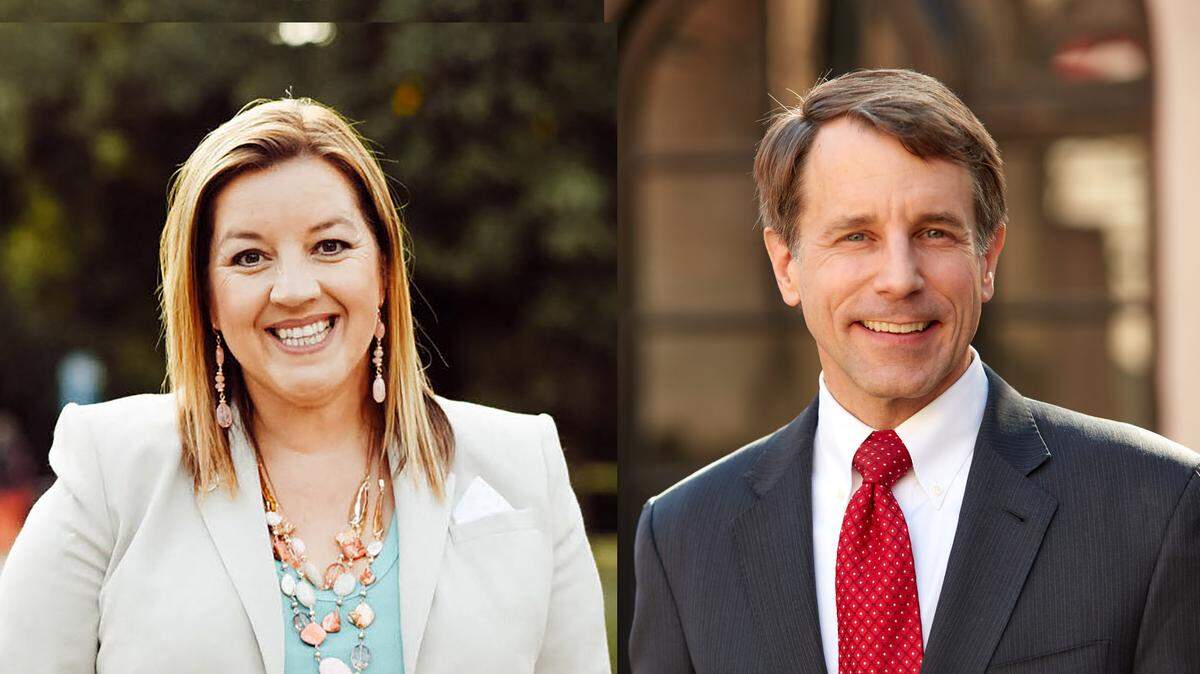
The following interview was conducted by members of The Sacramento Bee Editorial Board and the two leading candidates for the District 8 state senate seat, current Sacramento vice mayor and District 1 councilwoman Angelique Ashby and former California insurance commissioner, assemblyman and Sacramento city council member Dave Jones. It has been edited for length and clarity.
The Sacramento Bee: Tell us about yourself and why you wanted to run.
Angelique Ashby: This is an important race – Dr. Pan has been amazing and leaves big shoes to fill. I’ve had a lot of experience over the last 11 or so years of my life serving on the Sacramento City Council. I’m currently the vice mayor of the city of Sacramento and the council member for District 1. I will round out 12 full years of service at the end of this year in that seat. I’ve spent more than half of my time on the council as the only woman. I’ve also served as vice mayor or mayor pro tem nine times out of those 12 years – both with former Mayor Johnson and current Mayor Steinberg – which is something I’m very proud of and offered me the opportunity to lead on issues city wide. I’ve been in Sacramento a long time. I’m a graduate of Sacramento High School. I was a single mom at age 20 and had a baby really young. I learned how to use food stamps and I lived in low-income housing here in Sacramento. I used a great program called Child Action to help me pay for childcare. I worked full time, I raised my son on my own and I earned my degree from UC Davis and my law degree from McGeorge. Then I got married, and bought a house in Natomas. My husband is a nurse, he runs the emergency room downtown at Sutter here in Sacramento. And I decided to run for senate District 8 because my good friend Dr. Pan asked me to, and he has endorsed me in this race. I love this region so much, I feel like I have had a good run out here in District 1 and I’d like to see what I can do district wide.
Dave Jones: My wife, Kim Flores, and I first moved here in 1988. After I worked my way through college and law school, we chose Sacramento as a place to live because we loved all it had to offer. We’ve raised a family here and it’s been a great community for us as it is for so many people. I’ve had the privilege of serving as a city council member, a state assembly member and, lastly, insurance commissioner. Before that, I chose to be a legal aid lawyer right out of law school to represent low-income families with their legal issues to help them get some modicum of justice and assistance. For the last three and a half years, I’ve been at UC Berkeley School of Law, focused on combating climate change and climate risk. I’m running because I think our community deserves to have experienced leadership and leadership with results, and I’m proud of the results I’ve been able to obtain on the city council of authoring the city’s inclusionary affordable housing ordinance, which created thousands of units of affordable housing, the first living wage ordinance and the domestic partners ordinance before marriage equality. In the state assembly, offering what was then the largest preschool and early childhood education program, passing legislation to save our hospitals and also making sure that women weren’t discriminated against in the pricing of insurance. As Insurance Commissioner, I stood up to the biggest special interest time and time again and delivered all sorts of relief to consumers and businesses and also took on climate change, which is an existential threat. Now I’m running for the state senate because I want to continue to contribute to the vitality of our community, help us continue to have a high quality of life to make sure that we’re growing in a sustainable way, in a way that provides benefits to all Sacramentans, and ultimately, make sure that our state continues to be the best possible place to live, work, play and retire.
The Sacramento Bee: Housing and homelessness are top of mind and ever-present for residents in Sacramento. As Angelique knows, this is not an issue that the city can face on its own, and we are looking for the state to step in and help as much as possible right now. Lawmakers this week announced a proposal that would clear encampments from the American River Parkway. Do you support that proposal, even recognizing that it doesn’t necessarily address the ongoing issue of a lack of shelter and housing?
Ashby: I’ve been very vocal about this issue requiring more assistance from the county and mental health services. You can clear encampments all day long, and there are places where camping is inappropriate, but you’re just moving them from one place to another, you’re just displacing folks. I’m sure you watched the city council meeting last week where the business community brought forward this proposal for us and had us a bit between a rock and a hard place. I’m not opposed to the city of Sacramento building 6,000 units. I am leading on Project Homekey, which I think is a very good state program that provides funding for people like me to buy a hotel in my district and provide housing for 110 homeless families with young children on the street. I think that should be our priority. But it requires wraparound services. You’re not just moving people from one place to the other. We cannot do this without mental health, drug addiction, and trauma-informed efforts. You have to have domestic violence services. We have to pour into providers like Saint John’s women’s shelter, where their leadership has endorsed me, or City of Refuge, which is another group that has endorsed me. These are areas that have to be funded as well. I think the state has done a good job with things like Project Homekey. I think we need additional dollars for mental health services and wraparound services. And ultimately, at the local level, we need a partnership between the city, the county, the state and providers if we really want to make a difference here. We have everything it takes if we can just work together and funnel resources in that direction.
Jones: There’s no question the state has an important role to play – the $12 billion over two budget years for homeless assistance to cities and counties, the governor’s most recent budget proposal was another $2 billion and, on top of that, additional funding for behavioral health, mental health treatment and substance use disorder treatment, which is a problem that faces a significant share of the homeless population. So I certainly support putting more state resources there, but there has been a failure at the local level here in our county and in our city. And you can see this anywhere you drive with the number of people that are homeless. When I was on the city council back in 2000 to 2003, all the shelters were downtown or in the Richards area and I thought that wasn’t fair. I could see a tsunami wave of homelessness coming and I thought we needed to expand capacity and that each of us should do our fair share. I set about to identify a site, identify a developer and recruit a homeless shelter provider into District 6. That shelter, operated by Saint John’s, has been providing 200 shelter beds a night since that time. Sadly, no other council member followed that lead. And we now find ourselves in a place where we are literally thousands of units behind, and a change in federal law as a result of the Boise decision requires the city to offer shelter before it can move people from public places. This was an avoidable problem. Another thing I’m proud of is the city council members authoring the affordable housing inclusionary mixed-income ordinance which generated thousands of units. Sadly, a later council voted to gut that ordinance and substitute a fee, which is set too low, and now the number of units that are generating is hardly anything. So what would I do at the state level? I think we need to enact laws that lean in and insist that cities and counties build enough affordable housing and build enough shelter space – whether it’s tiny homes, manufactured homes, safe camping or shelters. We simply cannot allow local governments to not address this need as they have. Yes, we need to provide all sorts of services for domestic violence, mental health treatment, substance use disorder treatment, and early intervention with children to make sure that they don’t end up in circumstances where they find themselves getting recruited by gangs or involved in violence. All of that is important. But I do think what we’ve got to insist on when allocating these resources for the state is that they have to be deployed. There are certain places like Yosemite or the American River, where we simply should not allow people to camp because people want to be able to enjoy that free from issues associated with camping. So I don’t think that measures should be adopted alone. It needs to be coupled with continued funding. Coupled with the state insisting that spaces be provided for people with a stable shelter and that affordable housing be built in a way that it’s not been built recently locally.
The Sacramento Bee: Angelique, our board has been critical of your role in handling the face of this crisis – District 1’s contribution was a hotel and not safe grounds. Given that it’s one of those moments where every corner of the community has a role to play, what if voters might be skeptical of whether you can take the next step in leadership on this issue and make sure that it’s equitable in how we distribute the help?
Ashby: Sure, and let’s talk about 20 years of city council members that my opponent just insulted. Many of them, including our current mayor and our former mayor, and former Councilwoman Hammond and Larry Carr and others have built shelters in their districts. Many have been very contentious, some have been very successful and some have not. But there have been many shelters built since 2002 in the various districts in the city of Sacramento. I have been a strong proponent of funding programs like My Sister’s House, like Saint John, and like the City of Refuge that take women and children, particularly ones that have been humanly sex traffic, off of the streets and give them the resources that they need. Many of those are located in places like my district, but they must remain undisclosed. That’s been something that we’ve talked about a lot because the people who live in them are victims of domestic violence. It’s something we deal with often. I often am beat up over not disclosing things that are in my district. I am, however, the one proposing the first family shelter with long-term sustainable housing for 110 families in my district without taking funds from the city stress fund. But let’s talk about two decisions that were made at the state level that are definitely impacting us at the local level. One is redevelopment. When we lost access to redevelopment dollars, local governance – like your city and your county – lost hundreds of millions of dollars that they used to build programs like the Hotel Berry and Mercy Housing, all programs that provide wraparound services for our most at-risk populations. Your next state senator needs to be someone who understands the value of those programs. I do. I’ve worked very hard with the Sacramento Housing and Redevelopment Agency for the last 12 years to have a strong relationship with them to understand what it means to draw down those dollars to be able to provide housing at our most basic level for people who need additional services. And then let’s talk about the low-income inclusionary housing ordinance. It’s true that it was gutted, but it wasn’t gutted by the city council. It was invalidated by the court. I was there when it was rewritten. And there are several pieces that we changed from my opponent’s original draft. One was that he had written it not to apply citywide, but only to apply to new growth areas, which is why North Natomas has more low-income inclusionary housing than anywhere in the city – 11 complexes in District 1 alone. When we rewrote it, we made it city wide, which now means it impacts every neighborhood in the city, not just the new ones.
The Sacramento Bee: Dave, do you want to respond?
Jones: First of all, the court did not strike down the Inclusionary Affordable Housing Ordinance, the council voted to water it down by substituting a requirement to build units for a fee and the fee lagged far behind the level necessary to build enough units. The ordinance did apply to more than Natomas, it applied to redevelopment and infill areas and was generating units there as well. At that time, about 98% of development was occurring in the new growth areas and redevelopment areas. So it made perfect sense to apply the ordinance there and it generated thousands of units as a result. Since then, we’ve gotten hardly anything. I think it’s wonderful to repurpose a motel and make it into permanent supportive housing. And I certainly did that when I was a council member. And I also built affordable housing developments and projects in my council district and supported the building of them elsewhere. But that conversion of that motel in Natomas is not a shelter – it’s not a public homeless shelter. It’s permanent supportive housing. And that’s great, but it’s a different thing. Certainly, all of us have in our former council districts throughout the city, places that are undisclosed and confidential where survivors of domestic violence and abuse can seek refuge and shelter. We all have that, that’s not unique to Natomas either. But that’s also not a shelter. And so it continues to be the case that in a number of areas in the city, including Natomas, there simply aren’t shelters. Yes, recently, there were some shelters built in other parts of the city and that’s great, but we’re still thousands of units behind where we need to be and that’s why I think the state needs to lean in and say enough is enough. The county, which bears some responsibility here as well as the city, needs to get into the business of providing these shelter sites and they have to provide more affordable housing – that’s simply not occurring right now. And yes, the state can play a role in providing mental health treatment and substance use treatment and also providing services for those that are suffering from abuse and domestic violence. And I certainly support providing all those services. I also support the proposal to make sure that the county services are done more in a coordinated way. I do think that we find ourselves in a position where we have a mess and people can see it – they’re living it, they’re experiencing it. And it needs to be solved now and I think the role the state can play is insisting that it be solved.
The Sacramento Bee: California has more and tougher gun laws than most other states, but legislators are still looking for ways to stem the sort of violence that has wracked Sacramento this year. Should the legislature pass an excise tax on guns to fund violence prevention programs, a version of which died last year for lack of support? What else do you think lawmakers can do about the sort of violence we’re seeing in our community?
Jones: Yes, California does have some of the strongest gun control laws in the nation and I support them and I support making them stronger. And they do work because if you limit the availability of guns, then you limit the ability of people to shoot people and kill people. I do support the proposal that there be an excise tax on guns and that that money be used to fund more gun prevention programs. I also think we ought to allocate more money generally to prevention programs – that includes intervention programs; peer-to-peer interactions between former gang members and youth that are being recruited or being solicited by gangs; and more direct funding for programs that help those who are suffering from domestic abuse and violence. You can draw a direct line between domestic abuse and violence and the use of guns. In fact, we saw that with regard to the shooters in the gang-related mass shooting in Sacramento – quite a number of them were involved in prior domestic violence disputes. I think we need to end the culture of not believing women when they say they’ve been abused. Courts ought to, when they issue restraining orders or orders against abusers, then order the bailiff to go and get the gun, not rely on the individual that’s subject to the order to check off a box to say, ‘Gee, I don’t have the gun.’ That’s simply not good enough. We’ve got 25,000 people in the Armed Prohibited Persons database in California that have guns whose guns should be removed. And the Little Hoover Commission did two excellent reports on this very issue. We need to increase the compensation for the DOJ agents that are seizing those guns, we need to look at whether they need to have college degrees because there’s plenty of law enforcement officials that don’t and we need to solicit the support of local law enforcement. We need to get those 25,000 guns out of the hands of people that we know shouldn’t have them. That’s going to cost some money. But we should appropriate that money because that’s one of the single best things we can do. In addition to more prevention, we need funding for prevention, intervention and treatment with regard to domestic violence and programs to try to help young people avoid getting into a situation where they find themselves in gangs and involved in gun violence. We should do all of those things and more, and the excise tax is one way we can pay for that.
Ashby: First of all, it has been devastating to be in leadership over the last few weeks. We’ve had 20 people shot in our city in the last two weeks, eight have died and 12 have been in some care in one of our local hospitals. Managing that from a city council standpoint – working with the Sacramento Police Department and probation and parole – has been a big challenge. I think that folks, like myself, like the current council that have been in leadership over the last few years, have really been pushed to the limit on things like this that get mixed in with a pandemic. It’s a different kind of leadership time in our city, in our county and in our state. Yes, I support all of the gun control mechanisms – the excise tax, education. But let’s talk about what’s really going on here. I’ve gotten very involved with Moms Demand Action over the years, a great organization. It’s easy to say, ‘Hey, we should have peer-to-peer groups.’ That’s true. And some of them work well and some of them don’t. But when you work at the local level, you really get to know exactly what you need. And there are groups in Sacramento like Brother to Brother or Voices of Youth. These groups have both endorsed me and supported me because I have gotten into the weeds with them on how to help with these programs. There’s a lot of conflating happening across Sacramento right now, around youth and gangs, when, in reality, we do have a gun issue in California – we have a very big gun issue. And it touches on areas including domestic violence. Domestic violence is actually the biggest problem we have with guns in Sacramento. We have over 20 youth in our juvenile hall system right now for gun charges. That should be terrifying for everyone. We don’t normally have those kinds of numbers. I had a librarian killed in my district. It was one of the most terrifying nights of my life. Her name was Amber Clark, her husband’s name is Kelly Clark. By the way, that case is in trial this week – that’s how long this stuff takes. Ever since that time, Kelly Clark and I have talked about ways we can get involved. That individual brought a gun that he bought in St. Louis, and we’ve had a very difficult time getting information about how that gun was obtained, how it was acquired, how this person was able to have a firearm and how this escalated to Amber’s being shot point-blank in the face in her car while she was trying to leave work.
The Sacramento Bee: The debate over criminal justice reforms and increasing public safety is top of mind for everyone in California right now. There’s been an increase in violent crimes over the last few years in Sacramento and around the state, but unfortunately, a lot of the discourse revolves around ballot measures that address jail populations, over-incarceration and misdemeanor crimes, not necessarily what we’re seeing with these upticks in crime. What are your views on this debate right now? What policies would you introduce or support to ensure that our criminal justice system is fair, but also protects the public?
Ashby: Prior to being a city council member, I owned a consulting firm with my dad. My dad’s the former head of foster care for the state of California and the former child welfare director for San Diego County. Unfortunately, like a lot of people, I lost my dad in 2020, but he was a hero to me. And in our consulting firm, we really focused on helping two populations: foster youth transitioning out of the system and reducing recidivism rates for those exiting the prison. I have worked very hard to create programs, one of which is here in Sacramento run by the Sacramento County Office of Education. It helps people start working on a reentry program to address their wraparound service needs before they get out of prison. Whether that’s document acquisition or jobs or programs or reunification or housing. There are a lot of issues that people face when they come out of being in custody, and this tries to help them succeed so they don’t go back. Focusing on rehabilitation in CDCR is going to be a big focus for me. On a local level, I’ve done more in terms of reforms in the city of Sacramento than any other council member. I put body cameras on the Sacramento Police Department. I wrote the police oversight commission into place. My former colleague, Councilmember Larry Carr – who has endorsed me – and I brought forward the Black Lives Matter 8 Can’t Wait policy platform and got that adopted by the city of Sacramento. I also personally added Breonna’s Law to the city of Sacramento, making Sacramento the first big city in California to adopt that law banning no-knock raid warrants for the Sacramento Police Department. I’m very proud of that work. I don’t know why every police department in the state of California doesn’t wear body cameras, I think that would be a good place to start. I’m looking forward to using a non-adversarial approach to push forward police reforms. And I’m very much looking forward to working with CDCR on how we rehabilitate people and give them the tools to succeed when they come out of custody to reduce our recidivism rates.
Jones: I had the privilege of serving for three years as the United States Attorney General’s special assistant. Janet Reno was the attorney general at that time, and she was a big believer in investments in upstream prevention as a way of trying to reduce downstream crime. She understood that we don’t just need to do investigations and prosecution, but we need to make adjustments upstream. And I’ve carried that with me to each of the offices I’ve served in. When I was a city council member, I brought resources into District 6 that were prevention oriented, designed to try to provide opportunities for use in a constructive way that sought to address domestic violence – that provided intervention before the individual found themselves engaged in crime. We need to continue at the state level to make those sorts of investments across the board, assisting local governments but also making direct state investments in nonprofits to try to prevent crime before it happens. The increase that we’re seeing in violent crime and particularly homicides in California, is not unique to California – it’s nationwide. I think it underscores both a need to redouble our efforts nationwide with regard to gun control. And sadly, other states and the federal government haven’t followed California’s lead which puts us in a position where oftentimes these guns come from outside and are used in crimes. So we need to see federal government action, federal government investment. When we think about criminal justice reform, we need to place more emphasis on rehabilitation within the correctional setting. Many of these individuals are going to be coming out and we need to arm them with education, training and rehabilitative services both while they’re incarcerated as well as when they re-enter so they don’t fall back into a pattern of crime and violence and taking lives and injuring people, as we just saw, sadly, tragically here in Sacramento. With regard to police reform, I supported all of the bills that were introduced in the legislature over the last three or four years to make sure that police that engage in this conduct are held accountable. I’m not taking contributions from law enforcement organizations.
The Sacramento Bee: Over the past year, CapRadio has reported on several ineffective wildfire prevention policies under the Newsom administration that failed to deliver on the sort of scale California needs to alleviate the risk of burning. What policies do you support to make our fire-prone areas in this state safer?
Jones: A much bigger state and federal investment in our forests and in aggressive forest management. I’ve been working on that very issue the last three and a half years in my position at UC Berkeley School of Law. That means more controlled fires and also ecological thinning. To its credit, the legislature of the last few years has appropriated about $2 billion for that, but we need to get that money out and into the forests and utilized. The last infrastructure bill that the feds passed was about $6 billion, that’s a good start. But the Nature Conservancy did a study the other year that said we need $5 billion to $6 billion every year for the next 10 years invested in federal lands, including federal forests in California, to knock down that wildfire risk. Underlying that, of course, is climate change. And I’ve been a champion in fighting climate change – as insurance commissioner, I was the first financial regulator in the world to direct an entire financial sector to divest in fossil fuels, in this case coal – $4 billion in divestment by the insurance industry. And I also required the insurers to report their investments in oil, gas and coal to give us and them better insight into the risks they were facing and to encourage them to further move down the path of not investing in fossil fuels. We’ve got to be more aggressive at the state level in moving toward clean energy and regulating fossil fuels. We’re just not moving fast enough. Now, because of my strong positions on this issue, that’s why Chevron is a principal funder of an attack ad that’s been launched at me as well as billboards that are designed to try to take me and support my opponent. Chevron doesn’t want me elected to the state senate because I am a climate champion and a climate warrior. That’s why they’re spending the dollars they are trying to attack me on TV, in ads as well as in billboards. But that’s not going to deter me from fighting for what we need to do, which is a more aggressive transition away from fossil fuels, toward clean energy, and also more investments in our forests to manage them better to make sure we knock down the severity of wildfires. One exciting thing I’ve been able to demonstrate in my work at UC Berkeley is that if you reduce the risk of severe wildfires through more aggressive forest management, you can also reduce the price of insurance and you can capture those insurance savings and use a portion of them to actually invest in more forest management. So there’s a tremendous opportunity here, but we need the state to lean in as well as the federal government to make more investments.
Ashby: We need to spend more money and time on reducing wildfires and doing forest management. Yes, it’s a matter of money and resources and putting the dollars toward that preventative effort. I’m very proud to be endorsed by the California Professional Firefighters and to have their support. I’m also very proud to have the endorsement of the State Building and Trades. I think we are probably in strong agreement here that there’s a lot more that needs to be done and can be done on forest management, it’s just a matter of expending the dollars. There are a lot of proposals on the table around things like giving people incentives to make their homes less prone to fire, building in certain areas, putting in infrastructure in certain areas that help. A lot of things we already do in cities, but we don’t currently do in outlying areas that result in us having a Paradise-type situation that we all want to prevent from happening again. This is an area where I think you can expect to see me heavily involved alongside the firefighters, working on fire prevention in the years to come. My opponent here knows better because he’s been elected for 20 years, but I don’t have anything to do with an independent expenditure. And there’s nothing about an independent expenditure that involves me. I have taken no gas, no oil and no PG&E money in this race and I won’t – I took a pledge not to do so. So any position they would have about him would be on his own merit and having to do with his 20 year career and not having anything to do with me.
The Sacramento Bee: One of the issues in the legislature right now are the Building and Trades when it comes to climate policy – they have opposed a lot of the bills over the last couple of years that would reduce greenhouse gasses that aid the clean energy transition, and a lot of times they’re pushing for policies like carbon capture which is kind of a Trojan horse to stall what I think climate champions want which is a just transition. Angelique, if there’s a policy being proposed where the Trades are in opposition, would you be willing to go against them?
Ashby: It’s true, you’re right, except for that the trades group that primarily does that is the plumber and pipe fitters, which actually broke away from the State Building and Trades to endorse Dave. So your question is probably more appropriately directed at him.
The Sacramento Bee: Dave, do you feel like you’d be able to stand up to groups that have endorsed you both that might be opposed to some of these reforms the public wants to see on climate?
Jones: Yes. And if you look across the entirety of my public service career, I’ve done exactly that time and time again: Standing up to special interests, making decisions based on what’s in the best interests of the people. That’s why I have served and why I’m eager to serve again, because I stand for the people, not the special interests, not the corporate interests. There are two people in this race, basically, and they’re attacking me and supporting her. It’s no mystery why. They’re attacking me because I’ve been such a staunch advocate for combating climate change. In 2016, I was the first financial regulator in the world to ask the entire financial sector to divest from fossil fuel. No financial regulator has done that since. I got a letter from 12 red states’ attorneys generals threatening to sue me. What was the impetus for that? The oil and gas industries are trying to take me out. My response to them was: Bring it on. As a regulator, it’s absolutely essential that we ask regulated financial institutions to take a look at the risks that they’re facing by investing in the oil and gas sector. I have been very, very aggressive with regard to advancing a platform that supports an accelerated, just transition from fossil fuels to clean energy. We simply need to move faster and we need to do more in the energy sector, in the building sector and in the transportation sector because the planet is burning. We see this in California year after year – more severe and frequent wildfires. We’re seeing this in atmospheric river events that pose a threat to our region in terms of flooding, in urban heat islands – the planet is simply burning. We’ve got to move fast. Yes, I absolutely stand up to special interests and I have done that. That’s exactly why Chevron is spending tens of thousands of dollars in attack ads to take me out because they don’t want me in the legislature. They want my opponent. And that’s the choice that voters have to make.
Ashby: I don’t know much about the independent expenditure because it’s illegal for me to do so. But they’ve put out information just yesterday about who was paying for that independent expenditure, and business was the primary giver, including small businesses, health care and public safety people. There were at one time seven people in this race, and those folks that oppose Dave still oppose Dave. It wouldn’t matter if there were 70 people on the ballot, it’s him they don’t want to see return to the state legislature. It has nothing to do with me.
The Sacramento Bee: The California Public Utilities Commission is considering reforms to rooftop solar right now that give generous subsidies to households and make it easier for widespread adoption. Utility companies say the cost of these programs is pushed on lower-income residents. Where do you stand on this issue and what sort of role does rooftop solar play in California’s clean energy transition?
Ashby: I’m very proud to be supported by at least three members of the SMUD board, Rob Kerth, Heidi Sanborn and Rosanna Herber. I think it is a delicate balance here because 25 years ago SMUD encouraged people to put solar on their homes, but then, of course, the cost to buy back that solar power just rose astronomically. That created a subsidy program where people who couldn’t afford solar are now subsidizing the program because the folks with the solar are not paying for wildfire mitigation or other components SMUD provides. I personally think that SMUD has done an amazing job with their mapping program and trying to create equity. They’re trying to allow people to have solar on their homes and still get some kind of assistance with it, where they spend for 12 years and then it pays for itself. But we should not be allowing communities in need to have to subsidize that program, and I think we should not be singularly focused on solar. I think the state can definitely help in these conversations. I stand squarely in the corner with SMUD. I think they’ve done a great job. I think what they’ve done around mapping a pathway forward on all of the climate issues and getting us to a net zero is really important and meaningful work. I’m proud to be in this area where we have SMUD and I will be equally proud to be the senator for the SMUD region and work with them. People come from all over the country to talk to SMUD and ask them how they’re achieving what they’re achieving. That’s a point of pride for all of us. But I do think there are equity issues. In everything that we’re doing around climate control, there are equity issues. How do we make electric vehicles and hybrid vehicles more affordable for people? If we switch to all electric, how do we make sure that the cost of that doesn’t go so high that there are some families that don’t feel comfortable taking hot showers? How do we keep restaurants on board? These are all questions that have to be answered. The government is going to have to be involved in the costs and buying down those expenses so that we can make the advances that we want to make and must make on climate control. These are pressing issues. I’m a mom of three kids. I have a daughter that’s only eight years old right now. We have to make sure that we have a planet that we can hand over in better condition than it was handed to us.
Jones: I certainly support rooftop solar and more deployment of rooftop solar, whether it’s single family homes or multi family homes or commercial buildings or industrial buildings, we just need to do more. We also need to do more large array solar, we need to make it easier to identify sites and permit sites to connect that to the grid. We need to make sure that the grid itself functions in a way and is available in a way so that we can bring more large array solar into the grid. We also need to dramatically expand wind. We’ve got tremendous opportunities offshore in California to dramatically expand wind, and the state is investing heavily in that and encouraging the private sector. We need to invest in battery and storage. One of the ideas the PUC had was to try to align battery storage with more rooftop solar where it’s being subsidized or otherwise deployed. I think that’s absolutely essential because the more rooftop solar we have, the better the ability to store it. When the sun isn’t shining and we’ve had that energy stored, we can then deploy it and use it. I supported the subsidy for rooftop solar, I continue to support that subsidy. I do think a balance needs to be struck, however, with regard to making sure that utilities – including public utilities, like SMUD – can meet their fixed costs. I think SMUD found a good balance. I think the PUC, with the direction of the governor and the legislature, has been reined in and now needs to find that balance. We also need to balance that against fixed costs and the fact that there are quite a few people that don’t yet have access to rooftop solar that are paying into the system. We need to make sure we do this in an equitable and proportionate way. So I think it’s interesting that one of the proponents of ending the subsidy is PG&E, which is responsible for some of the worst wildfires we’ve had and has contributed to the independent expenditure campaign that’s launched against me that’s assigned an IPL and ensured that my opponent gets elected. These are public records. You don’t have to coordinate with an independent expenditure campaign to know who’s spending what, and PG&E and Chevron are major donors to this campaign to try to take me out. I’m proud of having stood with SMUD – against PG&E’s wishes – to bring to Yolo County the same benefits that we’ve had from SMUD. I support a drive toward 100% clean energy, and SMUD’s commitment by 2030 to eliminate all their natural gas power plants, including eliminating two of them even faster than that.
The Sacramento Bee: Just to get this independent expenditure conversation off the table, Angelique is not funding that. We want to have a discussion between the two of you, and not between the dark money that’s coming into this campaign. So let’s just try and leave that out of this discussion
Jones: I don’t think you can ignore the elephant in the room, which is that hundreds of thousands of dollars in dark money is being spent by a major oil company and others that are designed to try to take me out to benefit the other opponent.
The Sacramento Bee: It might be designed to take you out, but she’s not funding it, so it’s not relevant to this discussion. That’s a campaign reality. We can have larger discussions later on campaign finance, but that’s not what this discussion is supposed to be.
Jones: I respectfully disagree, but I’m happy to answer any other questions.
The Sacramento Bee: Earlier this year, legislators failed to advance a proposal that would have made California the first state in the country to adopt a single payer health care system. Assembly Speaker Anthony Rendon was more supportive of this latest attempt to pass a sweeping reform and even though there was never a vote, the progressive caucus is about to revive the proposal in the next session. Would you support a single payer system? Why or why not?
Ashby: Healthcare is a new concept for me – at city council, we hadn’t really dealt with it until a pandemic hit and then all of a sudden healthcare is front and center. I am married to an emergency room nurse and boy have I seen this pandemic from the frontline on his poor, tired face. I’m really, really proud of our nurses, I’m proud of my team and I’m also very proud of Senator Pan, and it feels very empowering for me to have his support because of what a healthcare hero he has been for so many years in the state of California. I’m proud to have led one of the largest vaccination clinics in our whole region – 30,000 vaccinations in a very short period of time. We partnered with our school district and the county and we really tried hard to reach communities of color, particularly the Latino community. My chief of staff, Karina Talamantes, used every bit of her experience as the daughter of immigrant farm workers to get out there and find folks and get them vaccinated. I’m very, very proud of that effort. Gracefully moving on from this pandemic is a big part of my platform. I’m a mom with kids still in school, and I’ve seen the gap – it’s a big gap – and I think we’re gonna have to spend a lot of money and time helping them, helping small businesses and helping those nurses in the health care community. On health care for all, the city of Sacramento took a vote on whether or not to support that dialogue and I voted yes on that resolution to ask the state to continue the dialogue. To be honest, I do have concerns about it. I worry about where the money will come from and whether it’ll hurt schools or our wildfire efforts. I do think the federal government really needs to be involved. So I have a lot of questions and concerns from the outside in. But I do adamantly believe that everyone in the state of California – this wealthy state – should have access to high quality health care and it’s a conversation I’m really looking forward to rolling my sleeves up on and getting involved with as your state senator.
Jones: As the state’s insurance commissioner, I’m very proud of having been one of the leaders implementing the Affordable Care Act. In 2010, I ran on the Affordable Care Act, not away from it, as many Democrats did, because it was taking such a beating nationally. It was the right thing to do. It dramatically expanded access to health insurance. It saved lives by getting rid of lifetime caps and annual caps on the provision of health insurance. It’s provided a lot of benefits. And I also know as a past insurance commissioner how much waste and inefficiency and profit-taking there is in the system. Even with the Affordable Care Act, we have about 3.5 million Californians that aren’t covered. You see enormous profit-taking by middle people that aren’t really adding any value to the system. And we continue to have worse health outcomes and pay a larger share of our GNP than any other western industrialized country in the world as a result of our existing byzantine healthcare system. So yes, I supported AB 1400. I think we do need to move to a universal healthcare system. I was disappointed that the bill was not taken up for a vote. I do think that this is a reform that we need. We will need the federal government’s participation to make this work. There also is the question of cost – it’s going to require a lot of upfront investment. But if you look at the amount that employers are paying alone, for health insurance for their employees, it’s pretty close to what the cost is all in annually for AB 1400. I’m confident we can get there, but in the meantime, there’s more we can do. We need to be more aggressive in building up our public health system. I was proud to have worked as a volunteer at a number of vaccination sites and I saw firsthand the need for more state resources to assist in deployment of vaccines. We also need to continue down the road of expanding the Affordable Care Act. I was proud to have advocated successfully to Jerry Brown to expand Medicaid to single adults. I’m proud to support expanding it for undocumented persons. There are some things that we can and should do that I’m committed to doing as a state senator, as we build the road to AB 1400 and the universal health care system.
The Sacramento Bee: I want to give you both the opportunity to conclude with a few closing thoughts.
Jones: I’m very proud to be endorsed by the California Democratic Party, by NARAL Pro-Choice California because of my staunch support for access to reproductive health, by the Sierra Club and California Environmental Voters for my staunch advocacy for the climate. I’m proud to be endorsed by the California Labor Federation because of all the work I’ve done to help working families and working people in this state. I’m proud to be endorsed by medical providers like family physicians and ER physicians. I’m proud to have a broad-based coalition of supporters that includes former senator Deborah Ortiz and leading state senators like Monique Limón, María Elena Durazo, Connie Leyva and former Assemblywoman Lorena Gonzalez. What I bring to this race is a track record of successful actions on behalf of our region, and experience actually serving as a legislator. I’m the only one in this race that’s done the job before and has done it successfully. I have led a statewide department responsible for regulating a big part of our economy and have stood up time and time again to special interests. Those special interests don’t want me in the state senate. Chevron, pharma and insurers and others. I just ask you as voters to look beyond those ads and look at who’s funding them. I’m excited about the prospect of serving. I’m excited about taking my experience and the coalition that we have built to help make Sacramento, Elk Grove, the unincorporated areas of Foothill Farms, North Highlands and Rio Linda even better places to live.
Ashby: I am bubbling over with excitement because it’s just such a good time right now in Sacramento to be a part of what’s next. I have five mentees on that ballot, and I’m hoping all of them have good outcomes. I just see a very different future. My opponent is right – I haven’t served in the legislature before. I’ll be new, like so many women and so many people of color and so many young people. There’s a real change in the air and I know you can feel it and I can, too. We haven’t elected a woman to our senate seat or any of our three assembly seats in the city of Sacramento in 20 years. If I don’t win, it’ll be 30 years. I don’t want that to happen. I want women to have a seat at the table. I think it’s important, and I have a lived experience as a former single mom who actually used food stamps. I always say there are two kinds of people in Sacramento: the ones who know what a green envelope from SMUD means, and the ones who don’t. A green envelope is when your bill is late, which I received many times when I was a young, single mom. It’s hard to feel insecure about food. It’s hard to feel insecure about your house. It’s hard to live in low-income housing or to rely on a program for your childcare. I’ve been there. And I legislate from a place of lived experience. I too, have a long list of really impressive endorsements – 400 local leaders, the mayors of Elk Grove and Citrus Heights and the entire Democratic Legislative Women’s Caucus. I am just so proud and I hope that people who read this will give me an opportunity to serve at the next level. I love Sacramento and I’ll give you everything I’ve got.
This story was originally published April 23, 2022 at 6:00 AM.