For some wildfire survivors, returning home is the only way to heal
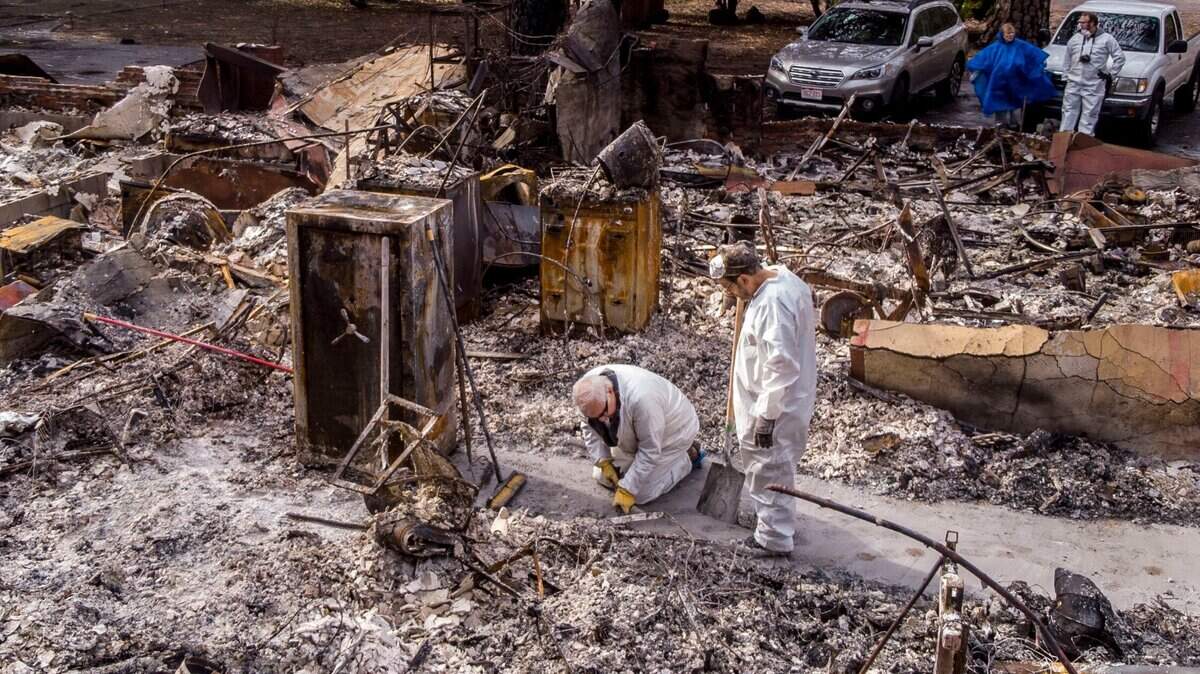
When large swaths of Butte County burned in 2018’s Camp Fire, residents who lost their homes fell into one of three categories: People who left, people who stayed nearby, and people who believed returning home was their only hope.
Survivors, scarred by the state’s most destructive and deadliest wildfire, scattered across the county. But some simply couldn’t imagine living anywhere other than their little Paradise on the hill. And so the work began to rebuild the tiny mountain towns of Paradise, Concow, Magalia and all of the surrounding communities in Butte County forever changed by the fire.
But while others may question if it’s wise, for some survivors, it’s the only choice that makes sense.
Fires have shaped the landscape of California for thousands of years, but it’s only recently that humans have begun to encroach into parts of our environment most prone to these annual events.
The migration of people into the WUI — the Wildland Urban Interface, pronounced “woo-ee” — has been instrumental in the increasing danger of wildfire destruction and casualties.
According to the U.S. Fire Administration, the WUI is the zone of transition between unoccupied land and human development. It is the line where homes and other developments intermingle with undeveloped wildland and vegetative fuels.
The first major fire in a WUI community to capture the state’s attention was in Coffey Park near Santa Rosa, during the 2017 Tubbs Fire. More than 2,800 homes were destroyed and 22 lives were lost. The suburb sat squarely within the WUI, even though many believed a wildfire could never enter such a well-populated area.
Almost all of Butte County is in WUI territory.
According to a study conducted earlier this year, the number of overall people living in the wildland-urban interface in the American West roughly doubled from 1990 to 2010, and the population in the highest-hazard regions grew by 160% — from 1 million in 1990 to 2.6 million in 2010.
As more people move into the WUI, the opportunity for fire ignitions increases, and according to the U.S. Fire Administration, more than 46 million residences in 70,000 communities in the U.S. are at risk for WUI fires. It is why, when faced with rebuilding, many fire victims simply choose to move away.
But people move into the WUI for the same reason humans have always done so: To live among the beauty of nature and abandon busy cities for the simplicity of trees, water, and sky. There are simply more people than ever choosing to make that move. But there’s also a special kind of post-traumatic stress that survivors share after a wildfire, one that pulls them back to the scene of their greatest trauma.
Losing a home to a residential fire is traumatic enough, but losing an entire community? The depression that many survivors say is magnified in the months and years after. But survivors of wildfire also find comfort in each other, through their shared experience of loss.
In addition, the home lost in wildfires is often the only one many have ever known. Housing is cheap in the WUI, which is why it has attracted so many residents seeking to escape California’s high-priced cities. The adrenaline after a traumatic event will often lead survivors down a path of choices — including rebuilding — that years later, they may come to regret.
Butte County’s median income sits around $54,000, and less than 30% of its residents can claim a higher education degree, according to the U.S. Census Bureau. Less wealthy, less educated survivors of natural disasters are more likely to suffer from depression and PTSD, according to a 2017 survey by the Substance Abuse and Mental Health Services Administration.
Instead of asking why survivors want to move back, it’s time Californians focus on the reasons that drove them there, and what we can do to help in the face of annual wildfires and recurring traumatic events. Thousands of California residents face this danger every year, and thousands of homes will be the next Coffey Park or Paradise.
This story was originally published May 1, 2022 at 5:30 AM.