
With the deaths of Esteban Villa and Bill Dorman, Sacramento lost two beautiful spirits
Sacramento is a little less righteous, fearless and big-hearted today following the recent deaths of two noble spirits who lived in search of truth and in the service of their students at Sacramento State for decades.
Esteban Villa, a luminous artist in the tradition of Mexican muralists, died Sunday just days shy of an honorary doctorate to be conferred on him by his alma mater. Villa was 91.
Bill Dorman, a journalism and government professor at Sacramento State who opened doors for his students with his tireless advocacy for equity, died on April 26. He was 81.
Both men were fixtures in their academic communities and made their bones in the cultural upheaval of the ’60s. Each lifted the voices of young people as two of the best mentors anyone could hope for.
Villa was part of a rebellious collective of Mexican American artists called The Royal Chicano Air Force that included the late Ricardo Favela and Jose Montoya. Starting in 1968, they transformed the art department at Sacramento State by painting murals that told the story of struggle in the harvest fields and the streets experienced by Mexicans and Mexican Americans.
Their artwork coincided with the ascension of legendary labor leader César Chávez as he focused national attention on the deplorable conditions and meager pay earned by workers in California’s harvest fields. In heroic and loving murals, placards and posters, Villa and his compadres translated the dignity and humility of the workers against the greed of their bosses.
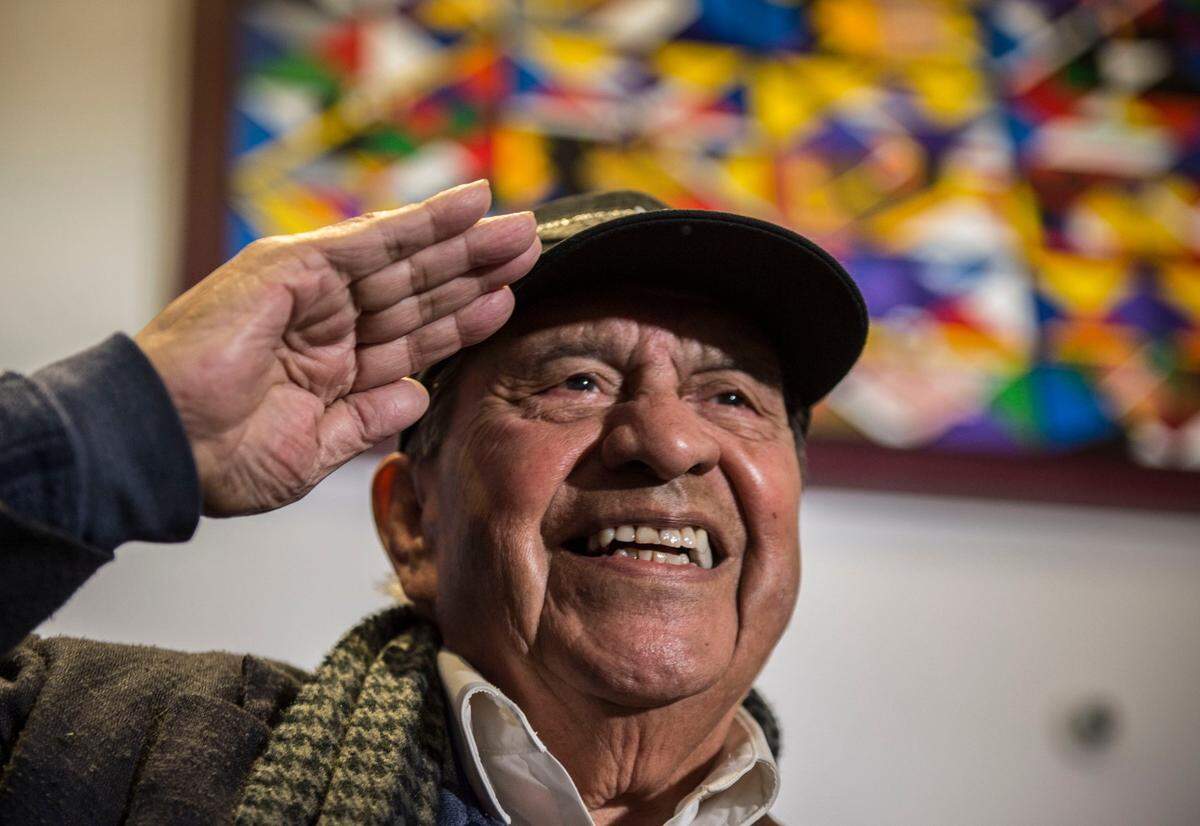
“We lost a giant this week,” said Sacramento State President Robert Nelsen of Villa.
Villa worked the fields with his family, in his native Tulare County, where his first name was anglicized to Steve. He long remembered the particular way growers used to praise him.
“When I was in school, it became pretty clear what my destiny was,” Villa told me in 1997. “The growers’ kids would tell me, ‘You’re a fast picker. Someday, you’re going to work for my father.’
“I was lost,” he said of a youth spent stooped over in scalding Tulare County. “I had no identity.”
Dorman didn’t have it much easier, raised by a single mother in Monterey County. He worked manual labor on the famed Cannery Row and was imbued with the desire to overcome his circumstances and use knowledge to pry open doors that had been closed to him —and, later, to his students.
.png "image (1).png")
Dorman arrived at Sacramento State in 1967 to teach journalism at the dawn of the Civil Rights movement. He cut a dashing figure in his turtle neck sweater, jacket, and glasses, but he was no effete academic. It became his mission to prepare aspiring journalists from backgrounds that were barely represented in American newsrooms only a half-century ago.
“What many of our students didn’t have was the skill set when they first came in,” Dorman said in 2016, in an oral history of his career compiled for Sacramento State by Rhea Stone. “But they could acquire it. And once they acquired it, watch out!”
His students would build careers with National Public Radio, the Los Angeles Times, CBS, The Bee and many other outlets. One of his students, the late Lorenzo Patino, would become one of the first Latinos to be a municipal court judge in Sacramento. The courtrooms within the Main Jail on I Street are named after Patino.
“I first met Bill in 1969, as a young Sacramento Bee reporter fresh out of college and starting my first major newspaper job,” said Sigrid Bathen, who would later also teach journalism at Sacramento State. “It was a tumultuous time with few women or people of color hired as reporters or editors. Bill was part of an influential group of academic and civic leaders — the Community Coalition for Media Change — which worked with us to improve coverage as well as hiring and promotional opportunities.”
Bathen said Dorman was “the consummate teacher, inspiring, encouraging and challenging his students.”
Chris Dorman said his father was “obsessed with critical thinking, pointing his students in the right direction.” From the time he was very young, Chris said he remembers his father shouting at the TV screen while watching news programs, saying “That’s BS!” at the answers politicians provided to journalists.
Villa, like Dorman, was a true romantic.
A former high school dropout and U.S. Army veteran, Villa would study art at UC Berkeley before teaching at Sacramento State.
“In 1971, in the first sanctioned piece of Chicano public art in Sacramento, Villa gave voice to his roots and his new-found identity in a mural that still graces a brick wall inside a youth gymnasium at the Sam Gordon Washington Neighborhood Center on 16th Street,” I wrote in 1997.
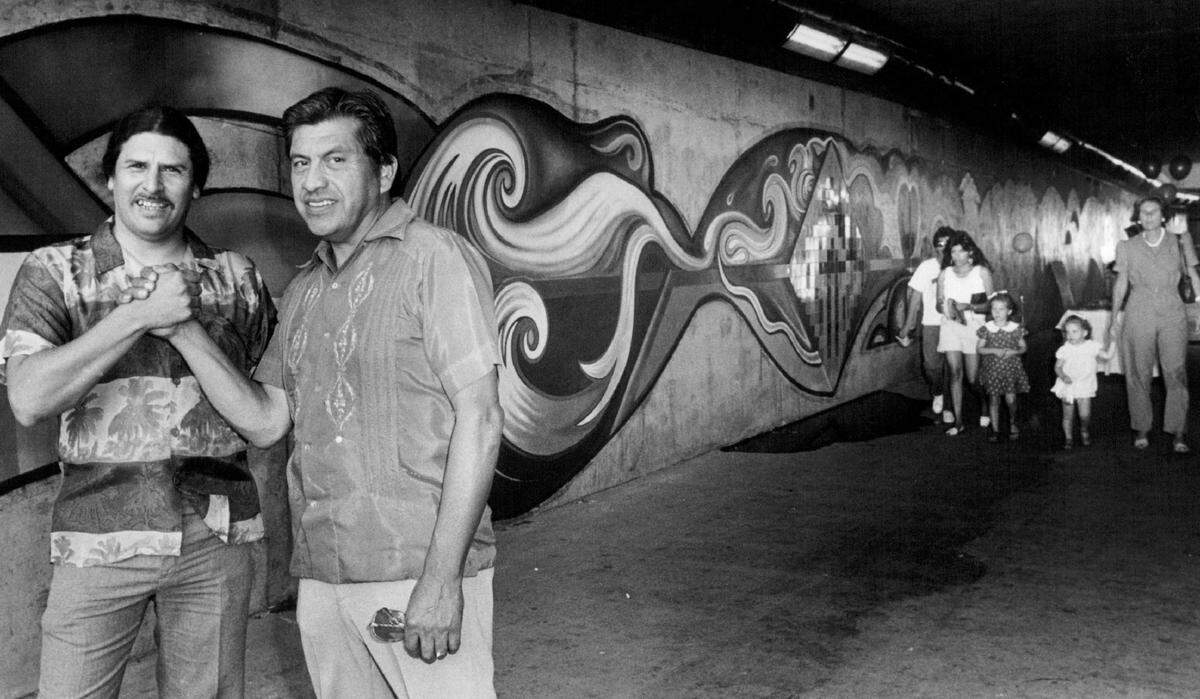
“People thought we were about attacking the American system, but we really weren’t,” Villa said to me then. “We were struggling for our rights back then, struggling for affirmative action, for Chicano studies, for Chicano teachers. That’s what this mural is about.”
Villa felt grateful that he had found a purpose: “I’m comfortable with who I am now and despite the drive-by shootings and the school dropout rates of our Chicano kids. I feel positive about the future. You have to. You never want to give up who you are. You have to fight for what you believe in,” he told me. Villa’s artwork, and that of his RCAF brothers, is on display at Golden 1 Center.
Dorman also translated his purpose in life for the betterment of others. In a lecture before he retired in 2007, Dorman said: “A citizen incapable of informed political judgments or lacking the courage to dissent is no citizen at all but merely a subject.”
Dorman’s family has started a GoFundMe page to raise funds for a scholarship in Dorman’s name and for the Friends of the Library at Sacramento State. They are also planning a fall celebration of his life. Villa’s family will accept his doctorate at a Sacramento State graduation ceremony at Golden One Center on Friday night.
Sacramento will miss them both.
This story was originally published May 20, 2022 at 5:00 AM.