
‘Forgiveness will help’: Can families move forward after crash that killed Rocklin teen?
When former Sacramento City Councilman Allen Wayne Warren heard that someone who had once been arrested on a DUI charge had struck and killed an Inderkum High School basketball star in Rocklin this spring, it took him right back to August 11, 1978.
His father, Allen William Warren, died that day, at age 48. Because six days before, his dad’s Chrysler New Yorker had been T-boned by a drunk teenager. As police with their sirens on tried to pull the kid over, he instead ran a red light trying to get away.
If that young man was ever arrested, “there was never any mention of it to me,” Warren said in a long interview in his office on Del Paso Boulevard, not far from where the crash happened. After a loss that “life-altering” and “destabilizing,” he didn’t think much about the driver at all until after some time had gone by.
But what he’s learned in the years since, as a result of that accident, might he hopes be of some use to both the driver in the Rocklin crash, Placer County CEO Todd Leopold, who has now been placed on paid administrative leave, and those grieving the pedestrian he hit, 18-year-old Anthony Williams.
Rocklin police recently announced that the driver who hit Williams on the evening of March 19 was not at fault, and let’s hope that’s true. But because they still haven’t released any of their findings, or how they arrived at them, the public still doesn’t know if Leopold was even tested for alcohol. And as Warren says, “that in itself is somewhat indicting. It would seem to me we would want the facts, right?” Always.
When I wrote about Leopold before, some readers chastised me for dragging his “private life” into print. But when you take someone else’s life, even unintentionally, that’s pretty much the opposite of your own private business.
The life that that teenager took in August of 1978 was that of a father of eight who’d served in Korea. He painted airplanes at McClellan Air Force Base for a living and coached Little League in his off-hours. He took in kids in trouble, and loved to fish and hunt. He was “a strong person,” says his only son. “He did things of meaning, he said things of meaning, and he expected results.”
Not long before his accident, he told then 14-year-old Warren, “Son, at some point I’m going to die. I’m not afraid to die, but I need you to know this: When I die, I need you to go forward and live your life. Don’t sit around mourning for me. That day that I die, I need you to do whatever it was you were going to do that day.”
His son took that advice, if inadvertently: Warren and some friends went to see the movie “Jaws” that day at the Arden Fair mall. When he returned home, there were so many people at the house that he knew what he was going to hear when he went inside.
For a while after that, “I changed as a person,” quitting sports and becoming much more withdrawn. Even inquiries about how he was doing were hard to take. “People were sympathetic, they were checking on me, but I just didn’t want to be in that space.”
Over time, though, Warren’s father’s influence — the voice inside him that said, “I am here, just not physically” — led him back to living as fully as his dad would have expected.
He keeps the license plate that was on his father’s car when he was hit on his desk. To remind him to ask himself, “What do you do after a trying situation? After a triumphant situation? Do these singular events define you, or do you continue to define yourself by your actions?”
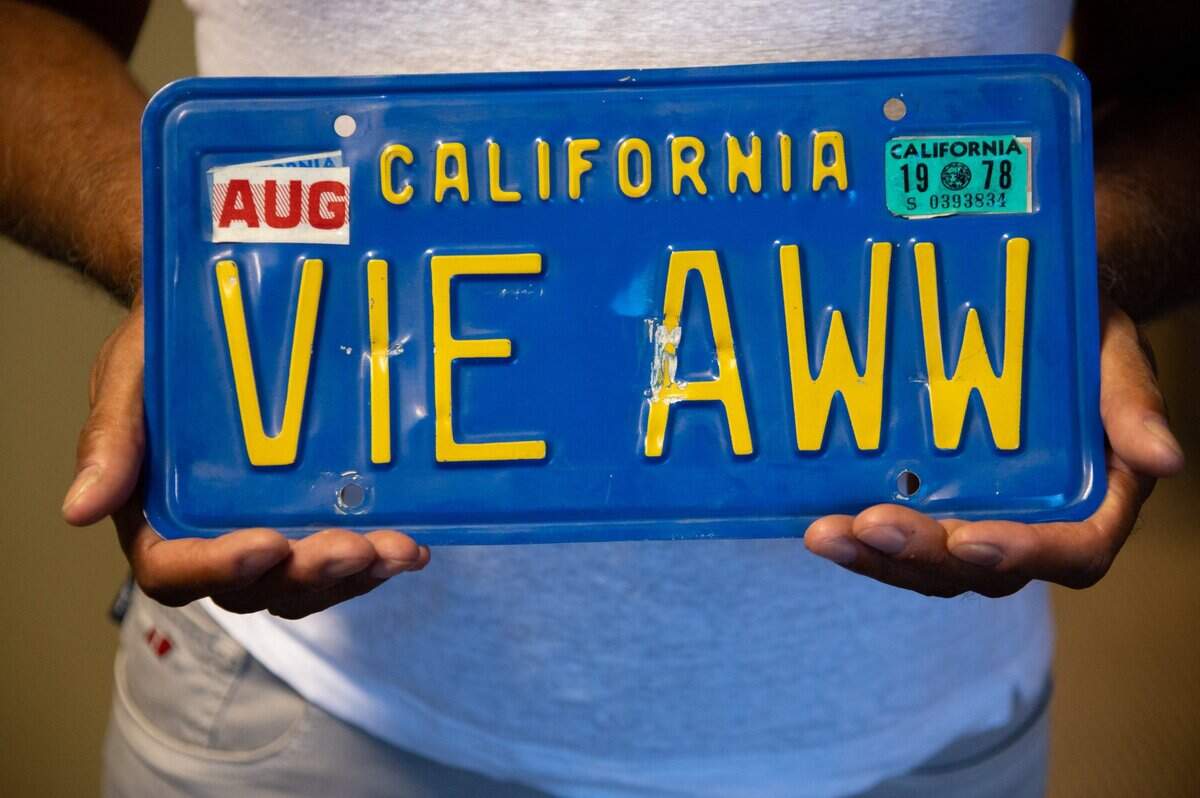
Hearing of Williams’ death made him “feel some of what the young man’s loved ones must be feeling now,” but it also made him think of Leopold, because “I’ve often wondered what happened” to the driver and the friend who was with him, and “how it impacted their lives. Did it make them better people? I’d like to think that it did.”
He did locate the driver later, and was tempted to reach out, “just to see how they were doing, to see how their life turned out, to see if somehow there was some healing in the fact that they knew that I didn’t hold a grudge, that I didn’t feel any animosity towards them.”
If someone reading this knows that person, just passing on that message could be an important service. And I know from experience that reaching out in forgiveness is a healing thing to do.
After my 16-year-old brother John, who had just gotten off work from his summer job on July 21, 1979, hopped on the back of the motorcycle of a friend who had been drinking that day, he was thrown off and killed. Unfortunately for everybody, the boy refused to speak to my parents, then or ever. They were desperate to know what John had said and felt at the end, as he suffocated from a perforated lung. They also wanted to tell the boy that they forgave him, worried about him, and wanted him to be OK.
Well, his parents never let him come to the phone, and whenever he saw my folks in the grocery store where he worked in our small town, he fled to the back. It was only a few years ago that I heard from a friend of his that he had never gotten over it, and talked about it every time he drank. So with his prior permission, I called him to say exactly what Warren would like to say to the driver in the accident that took his father’s life.
We both sobbed, and it was definitely cathartic for me. He still wasn’t telling the whole truth — even to himself, if I had to guess — because he said it was John who’d been driving, when we knew from police and from witnesses that that wasn’t the case. He didn’t remember either the accident or its aftermath, he told me, because he’d been in a coma in the hospital for five days afterwards. When no, he was walking around at our town’s summer fair uptown that night, and was never in the hospital. But that he wasn’t physically injured does not mean that he walked away unscathed. And though he can’t fully face what happened, even now, it was still an important conversation, for me and I hope for him.
So like Warren, I hope that Leopold and Williams’ loved ones do talk when the time is right, for all of their sake. “If there is something that’s swept under” and is left unresolved, Warren says, “it scars your soul. You carry it around. You can get away with something outwardly or through the system, but you don’t get away from it inside of you.” You don’t have to be responsible for a death to know that. The man whose motorcycle my brother was thrown from more than 40 years ago is still carrying it around, and it doesn’t have to be that way.
To those who are not only dealing with Williams’ loss, but with their anger at how it was handled, Warren says, “they may not believe it, but forgiveness will help them allow what happened to Anthony to propel them in a way that brings, from their sorrow, joy and happiness to others.”
Doing that, he said, “does work. It won’t make it easy, but easier. Ultimately, you decide what you want Anthony’s legacy to be. Is it that he propelled strength, love and the creation of an environment that is better because he was here?”
That’s what Warren is doing in talking about all of this: “It’s still a journey every day.” Loss does change you, and it really is up to us to decide how.
This story was originally published June 1, 2022 at 5:00 AM.