
What top Republicans are telling us about the Jan. 6 insurrection — and about themselves
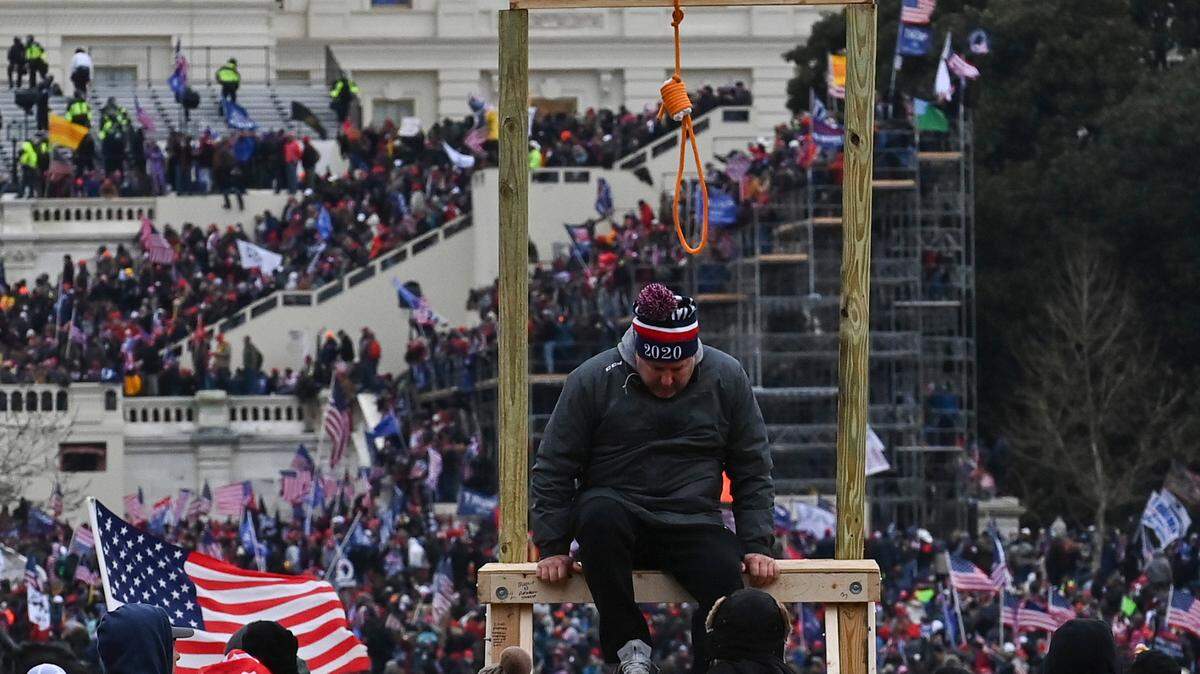
The Jan. 6 hearings have painted a remarkable portrait of a democracy on the brink. What’s as remarkable is how much of the narration came from prominent Republicans confirming that a former president fomented the insurrection by lying bigly and knowingly about his electoral defeat: his campaign manager, his attorney general, his daughter.
Statements against interest, as the federal rules of evidence call them, draw credibility from being contrary to what we might expect from the source. Donald Trump’s top lieutenants provided a more convincing account of his willful and dangerous deception than could, say, Nancy Pelosi or Adam Schiff. But they also told a story about the storytellers themselves, namely their willingness to enable an assault on the foundations of our government that went well beyond Trump and persists to this day.
No one typifies this inadvertent self-revelation so much as former Attorney General Bill Barr, the dour Trump henchman who became the improbable scenery-chewing star of Monday’s hearing. Barr described the ex-president’s conspiracy theories with an often unprintable thesaurus of synonyms for what the man we actually elected calls “malarkey.” His testimony offered a more forceful version of what he first said publicly the month after the election: that the Department of Justice had “not seen fraud on a scale that could have effected a different outcome in the election.”
Even that comparatively understated contradiction of his boss landed as a bombshell at the time because of Barr’s sycophancy up to that point. The nation’s supposed top law enforcer seems to have drawn the line at endorsing Trump’s last losing battle with the constitutional order. But he did so only after extensive devoted service to the former president’s war on the law and the truth.
Having done his first tour as attorney general under George H.W. Bush, Barr lumbered out of his long retirement with an unsolicited apologia for the president. His effective application for the job was a lengthy memo explaining why Special Counsel Robert Mueller should not be investigating whether Trump illegally obstructed justice. When Mueller concluded that the president had indeed repeatedly obstructed the investigation in probable violation of the law, Barr, by then attorney general, bottled up the report and disingenuously claimed Trump had been exonerated.
Barr’s second tour as attorney general largely conformed to that craven debut. He repeatedly interfered with his department’s successful prosecutions of the president’s cronies and appointed a special counsel to investigate the investigation, largely without success. And his department cooked up another phony investigation of the automakers that agreed to abide by the California pollution standards Trump was trying to undo.
Despite Barr’s subsequent realignment with the will of voters, he had echoed Trump’s preemptive and baseless attacks on voting by mail during the pandemic-haunted 2020 campaign. And when he hastily left office after belatedly acknowledging the election’s legitimacy, he did so with an obsequious resignation letter praising Trump’s “unprecedented achievements ... for the American people.”
The former attorney general is now just one of many Republican foxhole converts to the rule of law. Trump’s 2020 campaign manager, Bill Stepien, had the gall to distinguish himself from Rudy Giuliani and other overtly unhinged members of Trump’s inner circle by telling the committee he was part of “Team Normal.” What new normal is this? Stepien worked to elect and reelect a president who sowed doubt about the integrity of both the 2016 and 2020 elections and pointedly refused to accept the results long before any votes were cast.
Stepien’s other campaign credits include the retaliatory closure of the George Washington Bridge under New Jersey Gov. Chris Christie and, speaking of retaliation, the campaign to unseat Wyoming Rep. Liz Cheney, the Jan. 6 committee vice chair the party is punishing for telling the truth about the election and the plot against it.
No eleventh-hour extraction from team Trump was more fraught than that of former Vice President Mike Pence, who was the focus of testimony by his top aides and others on Thursday. From 2016 until Jan. 6, 2021, Pence’s devotion to the president was extreme even by the standards of the vice presidency and Trump’s cult-like coterie. But he ultimately withstood a campaign by Trump and Southern California lawyer John Eastman to pressure him into illegally and calamitously blocking the usually pro forma congressional certification of the election.
In the hearing’s riveting account of Pence escaping the murderous mob by as little as 40 feet, wondering whether he could trust the Secret Service and attempting to restore order from a secure bunker, he nearly came across as a tragic hero. The tragedy is his considerable role in bringing about the disaster that befell him and his country.
Much the same can be said of his party, which is busy trying to elect state and local officials who are willing to overturn the next election.
“The former president or his anointed successor ... would attempt to overturn that 2024 election in the same way that they attempted to overturn the 2020 election, but succeed,” J. Michael Luttig, a conservative former federal appellate judge, told the committee. “I would have never spoken those words ever in my life except that that’s what the former president and his allies are telling us.”
That is, don’t take my word for it. Take theirs.
This story was originally published June 19, 2022 at 5:00 AM.