
Yes, a California court ruled that a bee is a fish. No, that’s not the crazy part
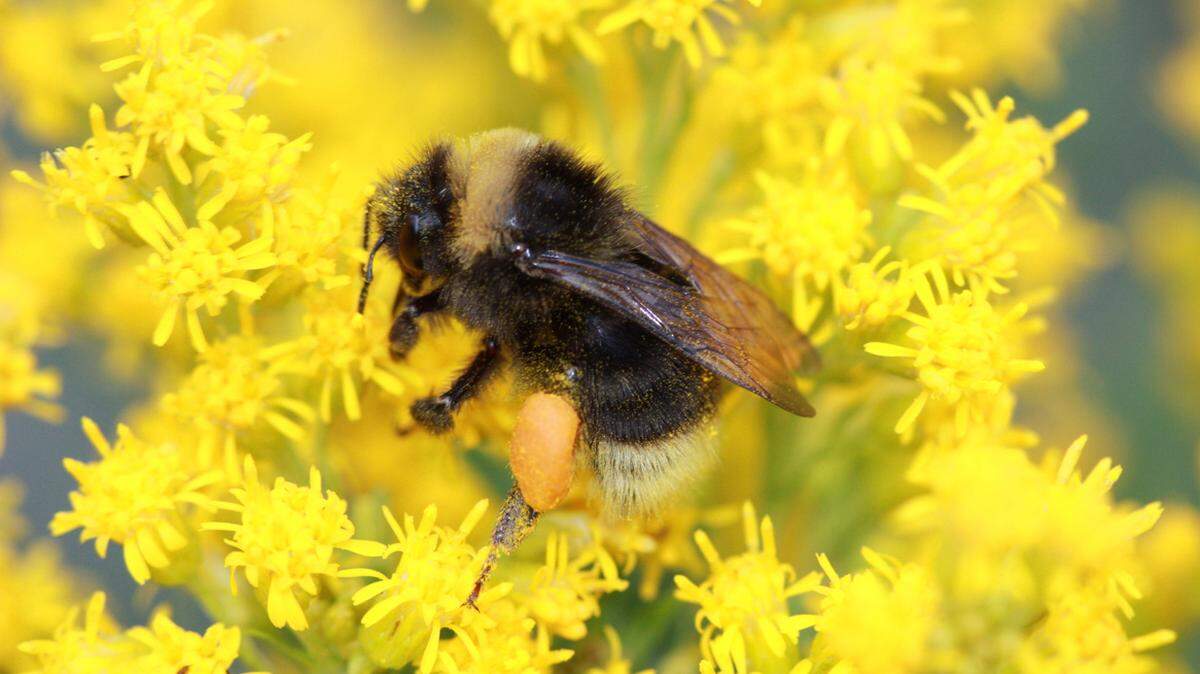
It turns out that a publication need not be named after an insect to be fascinated by its taxonomy. News outlets across the country and beyond have puzzled over and bristled at a California court’s recent ruling that a bee, contrary to all folk and scientific wisdom, is a fish.
That’s probably because beyond its obvious Dadaist appeal, the finding fits well-worn California story lines. Lefty California, where out-of-control bureaucrats will call a bug a barracuda just so they can regulate it! Wacky California, where you can be whatever you say you are, even if it’s in a whole other phylum!
The ruling does employ superficially surreal reasoning to reach the conclusion that bees, which are among the most crucial threatened life forms on earth given their role in pollination, can be protected by a law designed for just such a purpose. But it’s not the ruling that’s absurd so much as the case itself.
The dispute concerns the California Fish and Game Commission’s 2018 decision to consider protecting four dwindling bumblebee species under the state’s Endangered Species Act. A group of agricultural and pesticide interests sued to prevent the commission from doing so, pointing out that protecting the pollinators might force them to, you know, try not to kill so many of them.
The growers’ legal argument, which a Sacramento County Superior Court judge found convincing, was that the Endangered Species Act protects threatened “birds, mammals, fish, amphibia or reptiles” — none of which, it’s worth noting, are insects. But a panel of the Sacramento-based 3rd District California Court of Appeals unanimously demurred on the grounds that a bee is, according to the laws of the great state of California, a fish.
Those who find this result absurd shouldn’t blame the judges; they should blame Ronald Reagan, who signed the act into law in 1970. The statute thereby enacted defined fish as “a wild fish, mollusk, crustacean, invertebrate, amphibian or part, spawn or ovum of any of those animals” — most of which, it’s worth noting, are not fish.
One of those categories, invertebrates, includes insects and a whole host of other often overlooked animals. But the plaintiffs argued, and the trial court agreed, that the law’s unorthodox definition of fish must refer to aquatic invertebrates, not just any invertebrates.
The appellate court, however, noted that the law has already been used to protect a terrestrial invertebrate, the Trinity bristle snail, and that for many other reasons it should be construed liberally to protect all kinds of endangered species, which is after all the whole point. The appellate court thereby leveraged a super-literal reading of one of the more nonsensical sections of the law to arrive at a less literal but more sensible reading of the whole statute.
State and federal protection of endangered species has been enshrined in law for half a century and extended to a wide variety of threatened life forms — including plants, mollusks, crustaceans and insects — for good reason. The proposition that a group of species on which so much other life depends should be arbitrarily excluded from protection is the fishiest argument here.