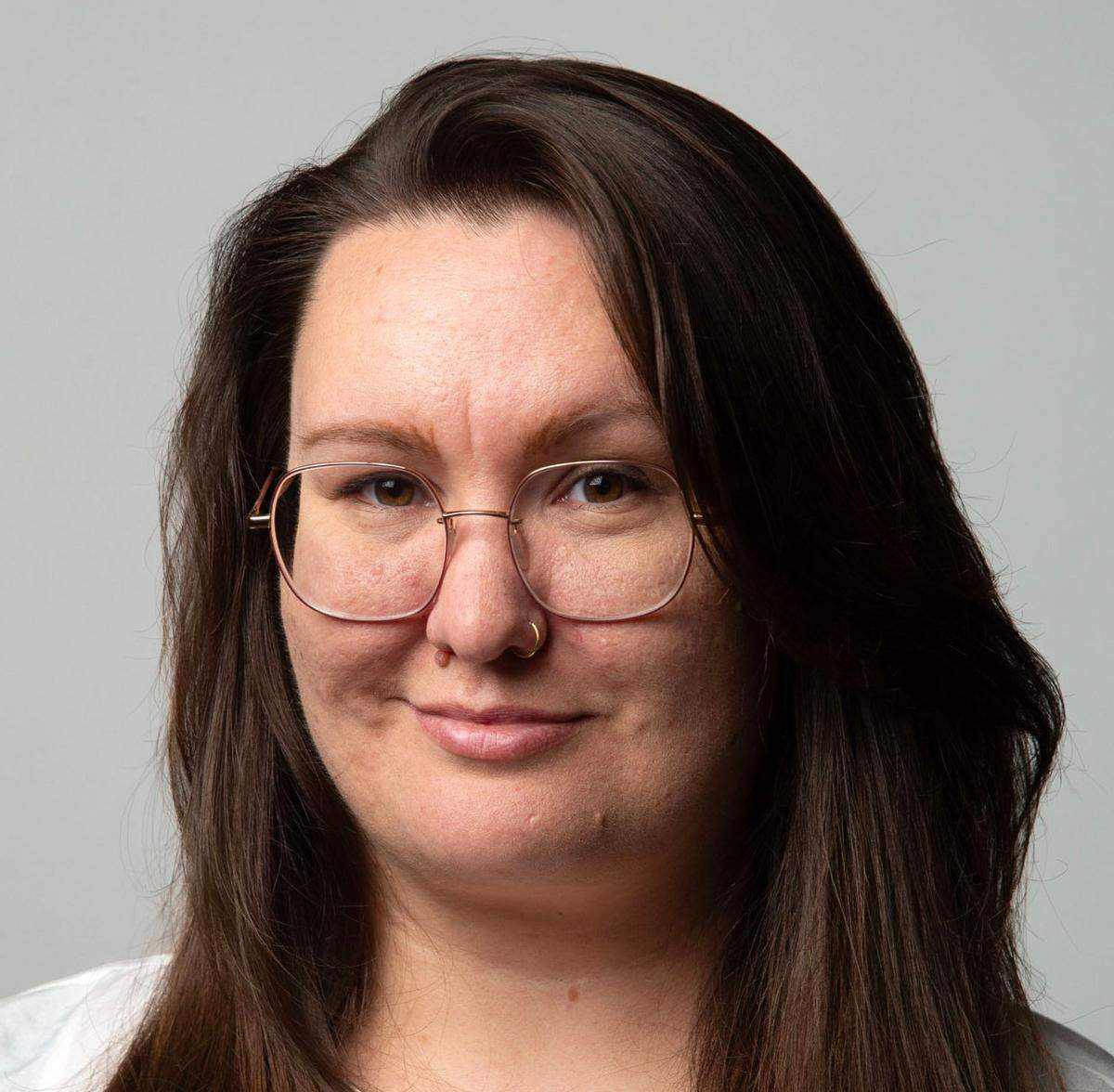
A Sacramento County official pointedly refused to identify his pronouns. But why?
.JPG "Sacramento County Supervisors appoint members to the Sacramento County Mental Health Board. Recently, one board member filed a harassment complaint against another.. Member Corinne McIntosh Sako said the issue began when she asked member William Cho to identify his preferred pronouns and he refused.")
Leading a meeting of the Sacramento County Mental Health Board in October, Corrine McIntosh Sako asked fellow member William Cho to identify his preferred pronouns. He categorically refused.
Cho, in an apparent attempt to belittle McIntosh Sako’s request, described himself as “human.” The next day, he sent her an email in which he declared that such a request to state one’s preferred pronouns is “astoundingly alarming, disturbing and premeposterous.”
McIntosh Sako contacted me, frustrated by what she described as harassment by Cho. She said the county counsel and equal employment opportunity analysts have been slow to act.
At a meeting in March, McIntosh Sako said, Cho called her “crazy” — an interesting choice of words at a Mental Health Advisory Board meeting — and likened her to a “soccer mom,” a phrase that comes loaded with misogynistic baggage.
“These county players (are) going to be making decisions about hundreds of millions of dollars ” McIntosh Sako said. “Also, they’re talking about this new public safety and justice accountability program that also has an advisory board. But who’s going to want to serve on an advisory board when this type of behavior occurs?”
Cho did not respond to multiple requests for comment. Sacramento County also did not respond to requests for comment, citing the active investigation.
If Cho had agreed to an interview, I would have asked if his objections to pronouns are rooted in linguistics or something deeper, such as a political objection to gender fluidity.
Pronouns matter. When they are used incorrectly, they can diminish, exclude or figuratively erase people who are transgender or nonbinary. Why would we do that to another human being when it could easily be avoided with a dash of linguistic compassion? Why would we feel threatened or upset by the use of gender-neutral pronouns to address people who don’t wish to be described as “he” or “she”?
Societal change scares people who fail to recognize that the world has moved on without them. Out of fear, these people might bully anyone who has the audacity to show the grace and kindness they can’t, all while falling further into obsolescence.
Cho, unwittingly perhaps, demonstrated perfectly that the words we use — how we use them, when we use them and who we use them with — are political and always have been.
Patchwork language
There has never been a point in the history of English when everyone spoke the same language. The only consistency in the language over the last millennium or so of its recognizable existence has been English’s inconsistency.
Our patchwork language descended from German and, before that, Proto-Indo-European, French, Latin, Greek and any other careless language English met in a dark alley and robbed for loose grammar.
But pronouns in particular have become not just an American debate but an international one, stoked here by extremist pundits who do little to disguise their hatred of transgender or nonbinary people. But it’s worrisome that grammatical furor has descended so far as to enter our chambers of local governance.
While Sacramento County does have workplace prohibitions against verbal harassment, including the degradation of someone’s sex, sexual orientation or disability, how it will address the Mental Health Board dispute remains to be seen.
This particular debate — over how we use our words in social situations and the workplace — has played out in the past so many times. We can look to the relatively quick but controversial switch to “Ms.” in everyday and workplace use. In a matter of years, starting in the early ’50s, “Ms.” became an accepted term for a woman whose marital status was unknown.
Famously, long before that, William Shakespeare was just making up words as he went along, including “sanctimonious,” “laughable,” “critical,” “disheartening” and “castigate” — all words for which there are excellent uses in this very debate.
Share your pronouns
Sometimes changes take whole generations to sink into the consciousness of the language. Sometimes it’s a matter of mere months.
The recently adopted custom of announcing one’s pronouns at the beginning of a conversation has rapidly picked up favor as a verbal signal of inclusion of people who may choose to identify outside a strict gender binary. It’s a signal that they are welcome in the conversation.
And yet this personally painless act of inclusion of a group of people who have long been castigated has been seized upon by a sanctimonious wing of English speakers who insist that the version of the language they learned is the only correct one. It’s laughable.
All languages change because the needs of their users change. The same way our great-great-grandfathers would have stared in confusion at “floppy disk” or “phone cord,” so will our great-great-grandchildren.
If you can’t comprehend this shift as a communal kindness, then the next time you’re asked to identify your preferred pronouns, how about simply doing so? Be content in the knowledge that we are all, always, contributing to the long and fascinating history of English as a strange — and often inadequate — means of expression.
This story was originally published July 21, 2022 at 5:00 AM.