
‘Impossible’ to ban homeless, says Sacramento man living on American River. He’s right
Driving down Arden Way in Sacramento the other day, I saw a boy of 7 or 8 walking down the sidewalk toward a homeless man whose tent was taking up the whole square of concrete where he’d set up camp. The child had to step into the street to get around the tent, which he did, causing cars to swerve and me to shriek.
So, no, I’m not among those outraged that Sacramento officials have decreed that sidewalks should not be blocked by homeless people; in fact, that’s obvious. So is the county’s penny in a wishing well that no one can live on the American River Parkway.
Only, moving folks around accomplishes nothing, as our officials are surely all too aware. And without having anywhere to send them, all the Sacramento City Council and the Sacramento County Board of Supervisors really did this week was express the hope that when they open their eyes again, those living on our streets won’t be there anymore.
On Wednesday morning, I walked down to the river’s edge to find out what a couple of the people living on the water behind Ancil Hoffman Park in Carmichael think about the “plan” to ban camping on the parkway.
“That will be impossible,” said former FedEx corporate account salesman Eddie Edmonds, who at 51 has been in a tent for four years and in his current spot for almost two. Last year, the county “said we all had to leave,” Edmonds told me, but despite the flurry of tickets handed out to encourage that result, that’s not what happened.
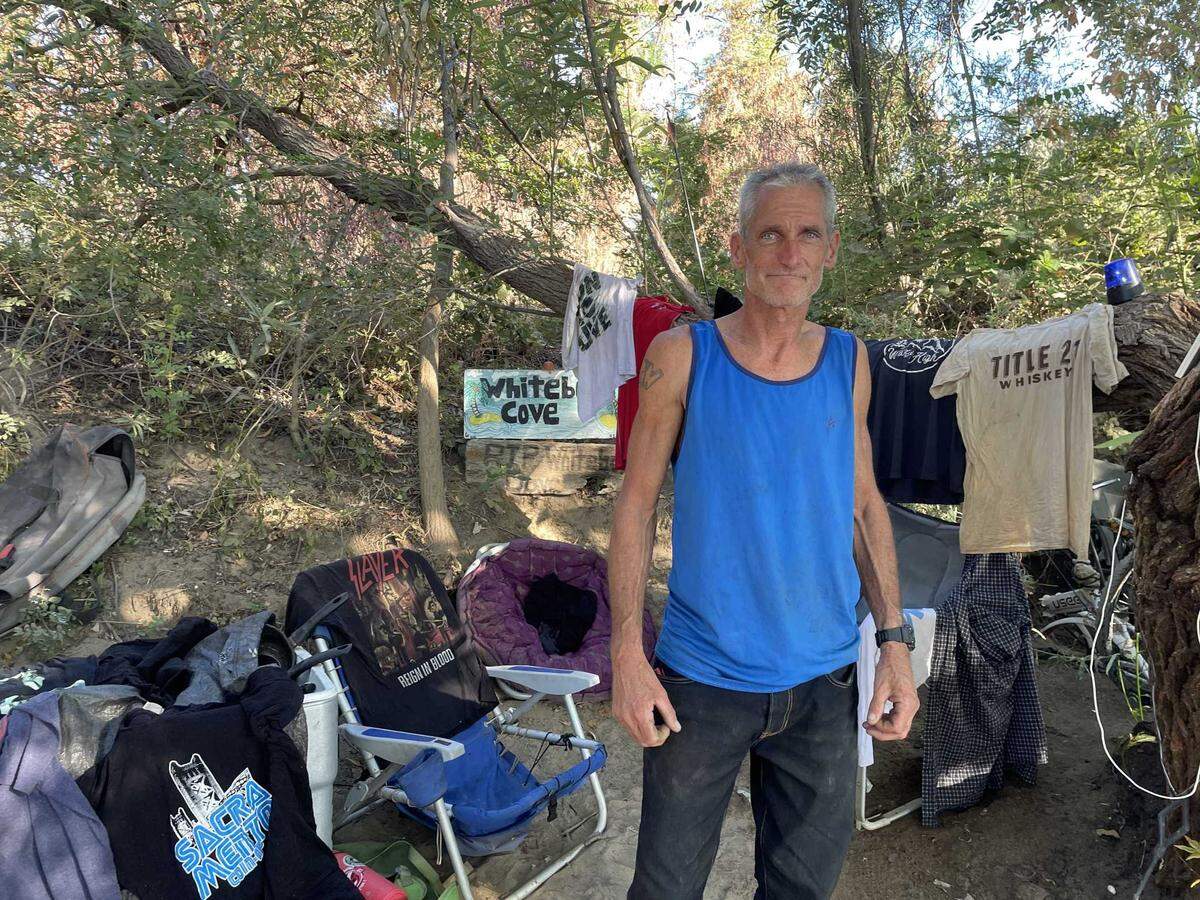
Eddie’s neighbor Brandy French, who is 48, said homeless people “can’t even move a rock” without being ticketed, whether they’re on the river or “up top,” as they call the world above the riverbanks. “I’ve gotten 72 loitering tickets up top in one year.”
Every one of the thousands of people camping on the parkway and the almost 9,300 homeless souls in our county has a different constellation of reasons that they are where they are. Brandy said she’s here because of her own “bad choices. It’s my own fault.” Likewise, the first thing Eddie said about his circumstances is that he’s in a tent “by choice” and that “not doing anything clears the mind.”
There’s so much more to their stories, though: It was not “by choice” that Eddie’s dad was “in and out of prison for 30 years.” Or that his brother, Robert Lee Edmonds, whose death immediately preceded Eddie’s fall into “freedom,” was murdered in prison four years ago, shortly after he was convicted on 16 counts of child molestation and sent away for more than 100 years.
Later, when Eddie tried to get off the street by moving in with his uncle, COVID-19 came along, he lost his job and “fell back into this.”
I can see why it might be easier to say he’s camping “by choice.”
Brandy said she’s had a shot at two group living situations, but “they want to put me in a men’s group, and I’m transgender. If I could get a place by myself, yes,” but otherwise, “somebody would say something, and I’d probably catch another case.” She’s not out here to cause trouble but to avoid it.
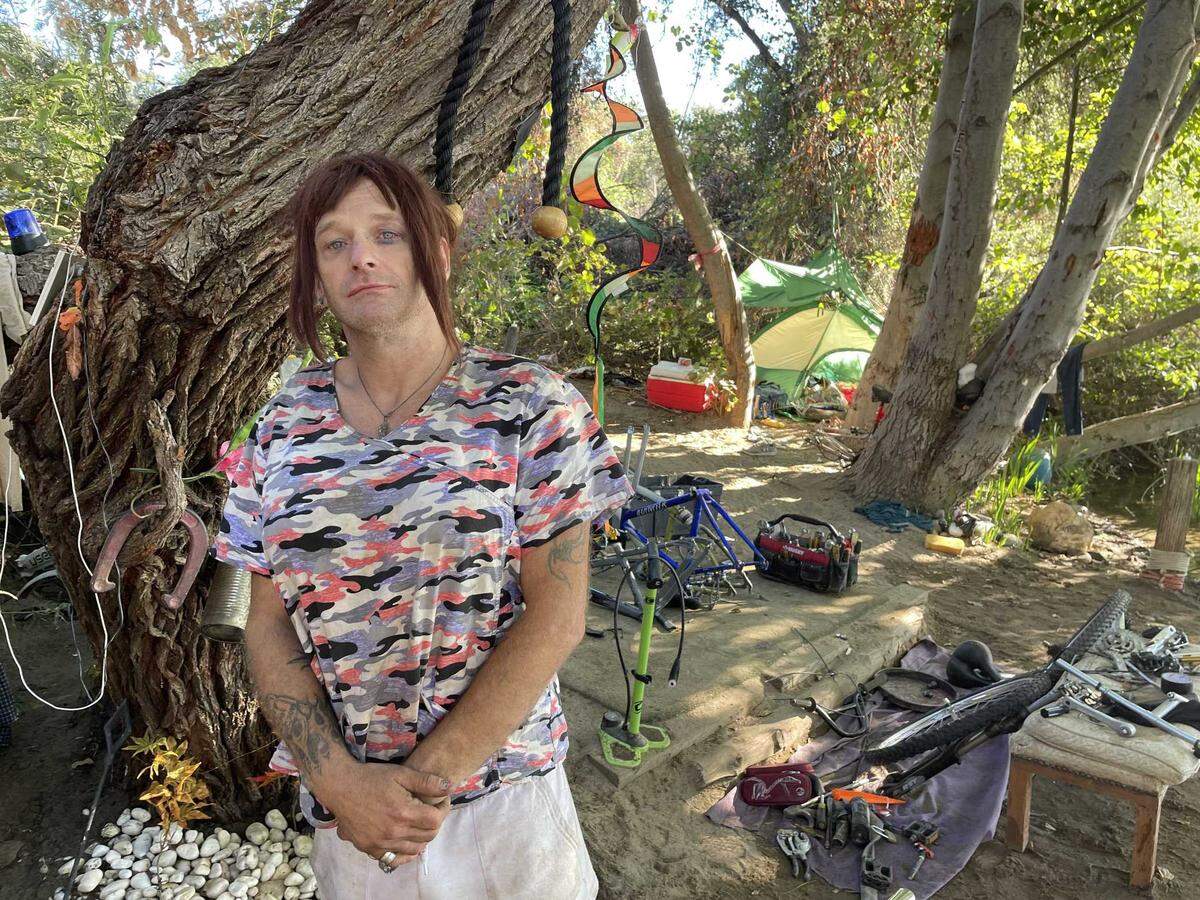
Though Brandy herself has never been to prison, “most people in my family have. You get institutionalized” inside, in a way that makes life on the outside a challenge. “Being homeless is the same way,” she said, in that “you adapt,” to the point that you can forget how to live any other way.
She summed up how the rest of us react to the multiplying number of homeless people on our streets as succinctly as anyone has: “When people see us, it makes them feel bad, and they don’t want to feel bad. I understand.”
So do I.
Empathy alone — for those pushing carts around, for those whose job it is to get them off the streets, and for that little boy with his head down, walking into traffic to get around a tent — won’t by itself solve anything either. Yet I do think we have to start there.
The bill has come due for so many things we’ve allowed our electeds to do over the years, from cutting training programs to putting insurance companies in charge of our health care to so favoring the haves that the have-nots now have nowhere to be.
At this point, massive spending and incredible political will will be required, no matter how much we want to think otherwise. It’s our NIMBY selfishness, though, that’s both one of the greatest barriers to progress and something we actually have the power to change. Either we can welcome those living on the margins as neighbors, or we can continue to walk past them on our sidewalks, but we have to pick one.
This story was originally published August 25, 2022 at 5:00 AM.