On this Women’s Equality Day, are we really any better off than our great grandmothers?
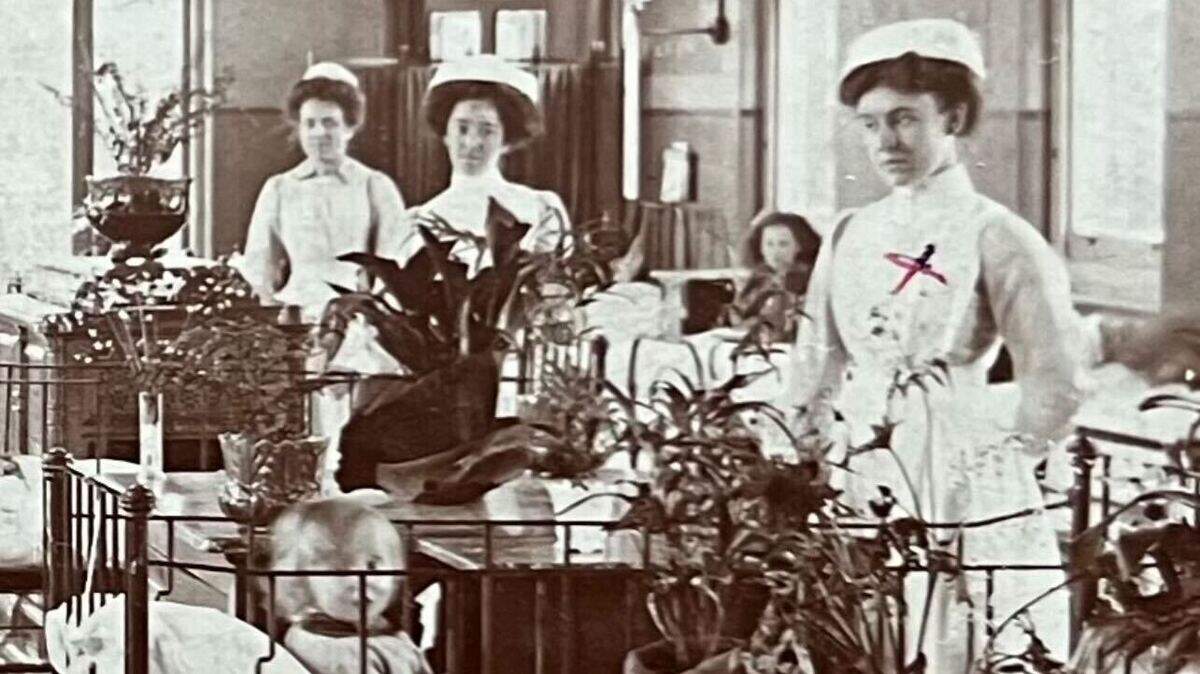
Grace Burrell was 32 years old when she, along with millions of other American women, received the right to vote on Aug. 26, 1920, after the 19th Amendment was passed.
More than 100 years later, on Women’s Equality Day today, her great-great granddaughter — that would be me — is also 32 years old.
I have several pictures of Grace in my home. She watches me every day. Grace was supposed to be married with children by the time she reached my age (I am not); she did not own her home (I do); and I am what she would call a career woman of independent means, while she left her family and World War I-era job as a ward nurse in Croyden, England, to be a homemaker for her husband and two children in the U.S.
Yet since that time, America has been painfully slow to fully enfranchise half its population: women. I can’t help but imagine that my life in 2022 is very different than the life of the great-great grandmother in 1920 to whom I owe my middle name, but really, what has changed? Some days, it feels like we’ve gone backward.
What would Grace think of the state of women’s rights today? While she and I would likely disagree on politics, I still think she’d be overjoyed that her great-great granddaughter is an independent woman in the workforce, as she once was before she married and started a family, as women were expected to do in her day.
But the 19th Amendment did not guarantee enfranchisement for every woman, and Native American, Asian American, Latinx and African American suffragists had to fight for their own voting rights in the decades to come. Even 102 years later, the statistics for working women are startlingly bleak. Despite legal gains for women of color in the form of the Snyder Act of 1924, the Equal Pay Act of 1963 and the Civil Rights Act of 1964, women in the workforce today still only earn, on average, 82 cents for every dollar a man earns.
Working mothers and women of color earn even less than that: Equal Pay Day, which is the day every year in which women catch up to men in salary from the year before, is March 9 for Asian American and Pacific Islander women. For mothers, it is June 4; for Black women, it is Aug. 6; and for Latinas, it is more than nine months into the year on Oct. 21.
Journalism, my chosen profession, would have been nearly unthinkable to Grace in 1920. Though stalwart pioneers such as Nellie Bly, Ina Eloise Young and Dorothy Thompson were already making their mark, they were relegated to the society pages, or shunted to “women’s news.”
If there were women in the newsroom, they were still mostly white women and still are, according to a 2021 study of Gannett newsrooms. Male journalists still outnumbered women by 2 to 1, the study found, and white journalists outnumbered journalists of color by more than 4 to 1.
And the pandemic has set working women back more than 30 years. In February 2021, women’s labor force participation rate was just 55.8% — the same rate as in April 1987, when my mother was younger than I am right now.
Nothing is more bleak than the ground we’ve lost in reproductive rights. In 1920, birth control was just starting to become a respectable norm, though child-bearing persons would not gain the right to their own bodily autonomy until 1972 with Roe v. Wade. To think that in 2022, we lost that right is a sobering reminder that even 102 years later, women are still fighting to be seen as equal citizens under United States law.
I hope that my great-great granddaughter in a century’s time — whether she was born as a woman or not — can look back at this century and see the same kind of determination and the hope of suffrage for all that our grandmothers passed down to us more than 100 years ago today with the 19th Amendment.
Now let’s get back to work.
This story was originally published August 26, 2022 at 3:39 PM.