
UC Davis’ anti-Semitism problem is long-standing. So is the school’s unserious response
UC Davis Chancellor Gary May boasts about his university’s ranking among the best universities in the nation and best veterinary programs conducting some of the best research. University officials are, for obvious reasons, less likely to mention that UC Davis placed among the universities with the highest number of anti-Semitic incidents.
That 2016 study, published by the AMCHA Initiative, which documents anti-Semitic activity on hundreds of U.S. campuses, has not been conducted more recently. But its findings, which also placed UC Santa Cruz, Berkeley, Los Angeles and Santa Barbara in the top 10 American universities with the highest overall anti-Semitic activity, were affirmed in a 2017 federal hearing examining anti-Semitism on college campuses.
“On every UC campus, ... Jewish students described an environment in which they felt isolated and many times harassed and intimidated,” reads a passage from a transcript of that hearing.
UC Davis leaders denounce anti-Semitism but have done little beyond that to combat hatred or reassure its traumatized Jewish community.
During my years as a UC Davis undergraduate, anti-Semitic acts on campus left me and my Jewish classmates feeling despised, persecuted and endangered by our neighbors. Worse, when I and other student journalists exposed the shortcomings of the university’s response, the administration raised baseless doubts about our reporting.
In 2019, when I was campus news editor of the California Aggie, UC Davis’ student newspaper, I edited and contributed to a report that university administrators had backed out of commitments to Jewish students to hold a town hall and workshops to combat anti-Semitism. The Jewish community pleaded for these workshops for months after several acts of anti-Semitism on campus. UC Davis administrators finally agreed to organize the events in response — only to ultimately renege on their promises.
Our article prompted Mark Yudof, a former president of the UC system who is Jewish, to express “concern and puzzlement” to UC Davis Chancellor May. Yudof and other members of the Academic Engagement Network, a national organization of college faculty focused on combating anti-Semitism on school campuses, worried “that a university commitment to host several workshops by the Anti-Defamation League as part of the campus response to anti-Semitism (had) been placed on hold,” according to an email I obtained through a public records request.
May responded that the Aggie’s reporting contained “numerous inaccuracies” of which the administration had made the newspaper aware. He said the article had since “been updated.”
In response to a request for comment for this column, UC Davis representative Melissa Blouin explained that a staff member in the chancellor’s office sent an email to the chancellor and others stating that the headline and content of the Aggie’s article had been quietly changed without an editor’s note.
But that wasn’t true. The article was never changed because it wasn’t wrong.
To this day, the university has done little to curb the anti-Semitism that caused the former UC president to email May in the first place.
In the 2019 email, May told Yudof that he was working on a “university-sponsored town hall on campus” that he would “personally attend.” But no such meeting ever happened, with or without May
“I hope this response sheds a clarifying and healing light on a sadly mischaracterized incident,” May concluded.
For me, though, one thing remains very unclear: If UC Davis really does celebrate diversity and “strive to maintain a climate of equity and justice demonstrated by respect for one another,” then why isn’t working to protect students from discrimination more of a priority?
Last weekend, banners with anti-Semitic messages like “Holocaust is anti-white lies” and “Communism is Jewish” were hung across a bicycle overpass on campus.
“UC Davis works to help all members of the community feel at home and welcome,” Blouin said in a statement on behalf of the university. “Sadly, there is a history of anti-Semitic hate incidents and hate crimes in Davis and on campus, including this most recent deplorable anti-Semitic incident. UC Davis always immediately responds to these events. We investigate hate crimes, condemn hate incidents and reach out to affected communities with support.
“We are devastated by the recent anti-Semitic hate incidents and will continue to do what we can to bring people who commit hate crimes to justice. We recognize that, short of eliminating these hate crimes altogether, it will never be enough.”
I don’t believe that the university can ever eradicate anti-Semitism in Davis. But I do believe that it isn’t doing enough to combat hatred of the Jewish community.
Last weekend’s banner display was just the latest evidence that it’s time for May to finally hold the workshops and town hall he promised to Davis’ Jewish community three years ago. UC Davis must take that and other immediate steps to demonstrate that it’s serious about fighting anti-Semitism.
Failure to act
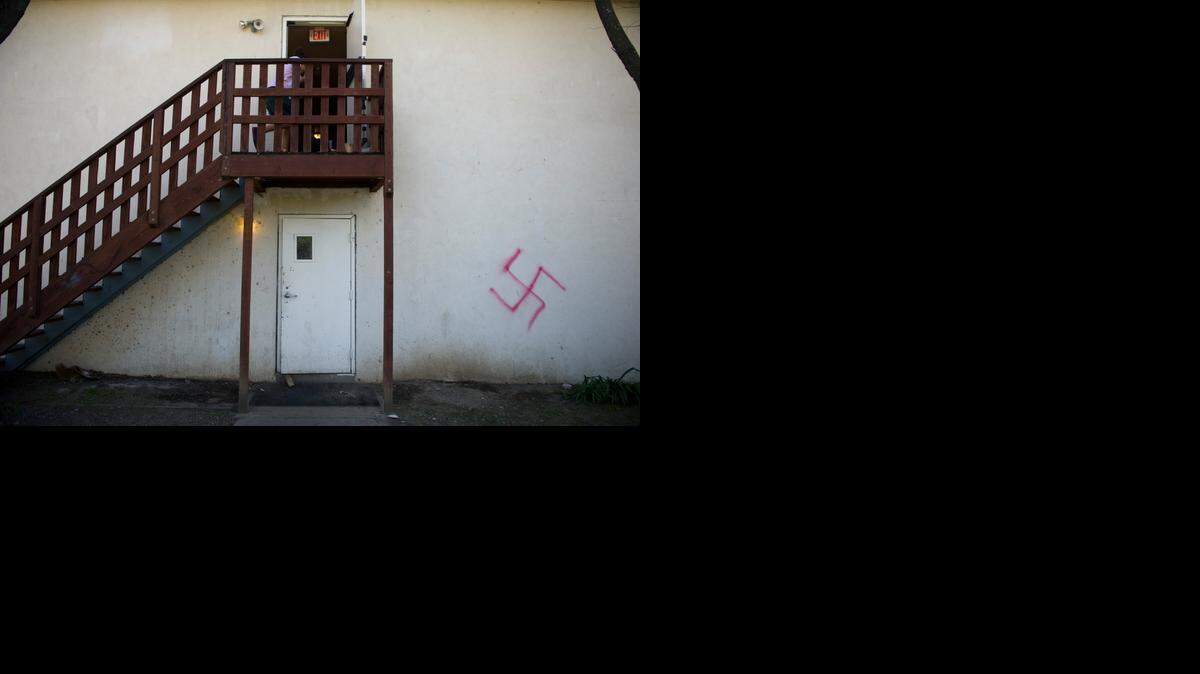
Two years before Gary May became chancellor in 2017, swastikas were spray-painted on the Alpha Epsilon Pi Jewish fraternity house. Five years before that, swastikas were spray-painted throughout the campus.
The problem persisted under May’s leadership. During my four years at UC Davis, neo-Nazi, white supremacist fliers were twice found posted around campus. During the first incident, in 2018, the fliers read: “everytime some anti-white, anti-American, anti-freedom event takes place, you look at it, and it’s Jews behind it.” The year before that, in 2017, a sermon at the Islamic Center of Davis called for the annihilation of Jews.
Each time an anti-Semitic hate crime occurs, UC Davis posts a similar response on its website: A photo of May sadly gazing out a window is followed by an uninspired condemnation of said hate crime; a reference to the campus Principles of Community; and something along the lines of “hate has no home here.”
Davis’ Jewish students and alumni know the message well. At this point, I might even be able to recite it from memory.
Davis’ anti-Semitism problem is not limited to the alt-right. Anti-Semitism is not considered an issue of concern or importance among some of the leftist activists I encountered during my time there, and many Jewish students I knew were welcomed into these circles only if they condemned Israel and identified as anti-Zionist. Since at least the early 2000s, Students for Justice in Palestine have cruelly and purposefully staged annual anti-Israel protests on Yom HaShoah, Holocaust Rememberance Day.
Condemnation of anti-Semitism on the UC Davis campus from the left was usually qualified or begrudging, often offered in the context of condemning white supremacy and its impacts on all marginalized communities. And while condemning white supremacy in all its forms is necessary, it’s also crucial to acknowledge that anti-Semitic hate crimes target Jews, and Jews only.
Talk less, do more
Obviously, UC Davis’ administration condemns anti-Semitism. But words aren’t enough. Anti-Semitism hit a record in 2021: The Anti-Defamation League, which tracks anti-Semitism nationwide, reported 2,717 incidents in 2021 — a 34% increase from the year before.
I watched as some of my closest friends in college took hours and hours out of their lives to beg their college leaders to care about anti-Semitism. They shared their trauma and their personal experiences with anti-Semitism. They thought they were being taken seriously, but they weren’t.
May has a lot of work to do to begin repairing his relationship with Davis’ Jewish community. He can start by talking less and doing more.