
Rape and resilience in Sacramento’s ‘snake pit’: ‘Being a female out here is hard’
Just outside the stretch of homeless hell known by its residents as “the snake pit,” Duane has been sleeping in his Saturn for the last three nights. And God willing, he says, he won’t be sticking around for a fourth.
He’s been living out of his car for two years now, so that’s nothing new. The record heat has been “brutal,” but that’s not what has him on edge, either. “Regardless of hot or cold, it’s dealing with personalities” in the camp in Sacramento’s River District, along the Northern Bikeway, that has kind of freaked him out. “I didn’t realize there were so many mental issues out here.”
You can see just about every form of human misery, and of human resilience, too, in this encampment, where a new “mayor” was just chosen, after the last guy in that role finally got off the waiting list for housing for veterans. At the height of the pandemic, residents set up their own makeshift isolation tent for those with COVID-19.
LaTonya Haynes is sitting amid heaps of discarded clothes and trash in a colorful dress and pearls that say that whatever she has left behind, she has not surrendered her dignity.
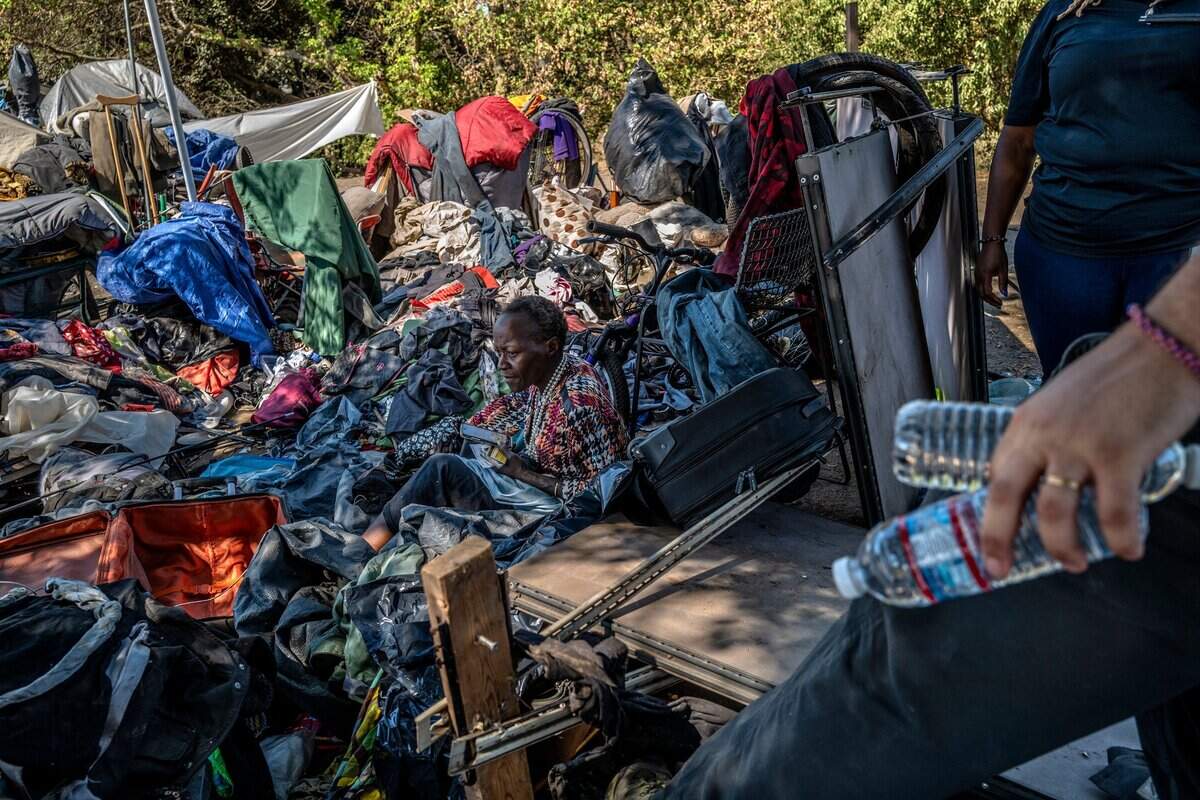
“I came back to live the rest of my life,” says 54-year-old Haynes, a Sacramento native who returned from Tulsa two years ago and has ever since been living in this same spot, across from a grove of almond trees. “There’s no place like home,” she says, even if “my daughters, they don’t like me out here.”
Her daughters are right to worry. And Duane is right that many in the camp obviously do need serious psychiatric care. As California Sen. Tom Umberg told me recently, if you don’t have a mental illness when you become homeless, “you will in 30 days.”
Especially with the explosion of the cheaper and much more potent “new meth,” much of the addiction and illness you see out here really is the result of homelessness, rather than the cause. That so many who came after an eviction end up with psychosis only makes them harder to help.
One woman lies on a mattress in the full sun, on a day when the high is 111. As clouds of dust blow her way, she keeps screaming, “Shut up your mouth!” and “You don’t run my business!” at somebody who isn’t there.
“She’s got a mental disability, and she’s out here on a f---ing mattress,” 40-year-old Sacramento native C.K. Bailey, who lives here in a wooden shack, tells Hope Cooperative outreach workers angrily. “There’s a lot of women out here that just lose it. It hurts me that somebody I’m talking to two weeks ago, now they’re talking to the wall.”
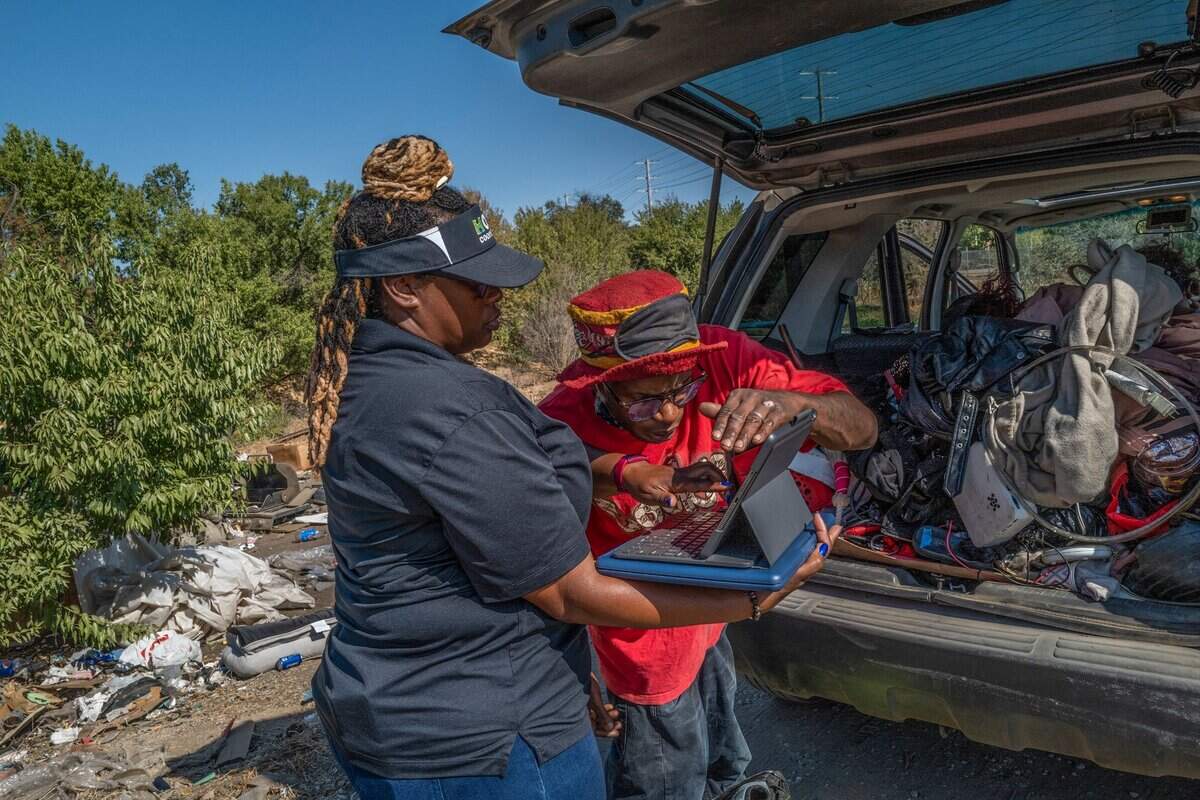
Celina Gallegos, who has multiple sclerosis, isn’t talking to walls, but she isn’t well, she says, either physically or mentally. “I can’t do shelters because I was raped out here,” across the bicycle bridge on the other side of the American River, “and I don’t trust people. I don’t touch people no more. It’s really scary; a girl recently was asleep with her boyfriend beside her and woke up with someone on top of her.”
The surprising part of this story is not that Gallegos, who is 42, was raped two years ago, but that she then went to a hospital, had a rape kit done, and reported what had happened to police. “The cop told me it was my fault because I had a little bit of meth in my system. I went off on him. I said, ‘You’re the reason girls don’t tell.’ Being a female out here is hard because the guys overpower us.”
For a year after that attack, she says, she was “scared to walk outside. I wasn’t the only one he did it to.” She knows that the man was never arrested because she still sees him occasionally, though “I stay far away.”
‘Most women on the street have been raped’
Women in the camp look out for one another, says her friend Lucia Mercado: “We try to keep all of the females together.” But that strategy isn’t protection enough, here or anywhere elsewhere.
“Most women on the street have been raped,” Catherine Moy, a city councilwoman in Fairfield, who ran a homeless shelter in Solano County, told me. “They end up taking meth to keep themselves awake at night” to try and ward off more attacks.
The South Sudanese refugees in a camp in Uganda I’ve written about a couple of times were, without any exaggeration, better off materially than these Americans living two miles from the seat of power, such as it is, in the fifth-largest economy in the world.
And the stories homeless women like Gallegos tell me about being raped remind me of Sudan, too: When women in Darfur told the world that they couldn’t even go out looking for firewood without being attacked by the notorious Janjaweed soldiers, the world was properly horrified.
Yet when it happens here, who knows or cares?
Other dangers are obvious: When it’s this hot, those with mobility as well as mental issues are at particular risk of dehydration. A man roasting a chicken at the entrance to his tent could easily have started a fire.
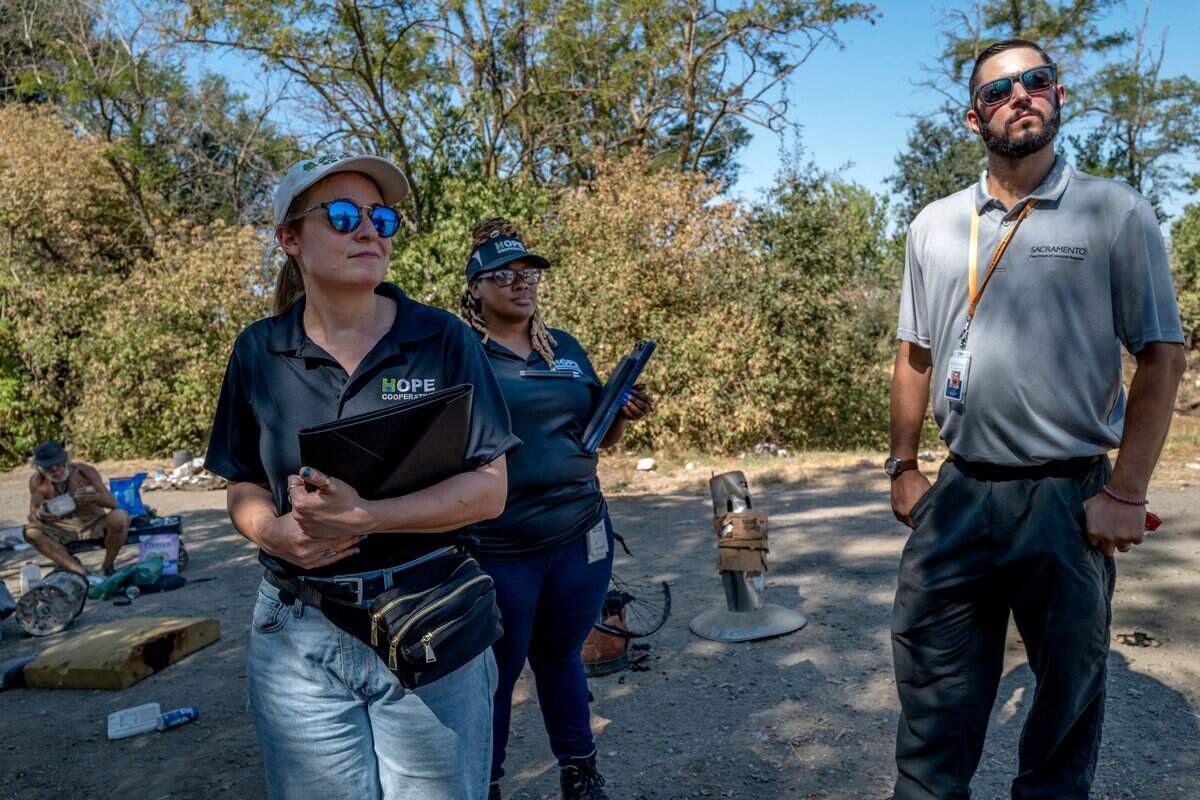
The outreach workers who check in on this community regularly work so hard and so lovingly, but that they need more resources is obvious. “Today is one of those frustrating days when there are no shelter beds to offer,” says Hezekiah Allen, who works for the city’s Department of Community Response.
HOPE Cooperative’s lead outreach worker in the River District, Alanna McWilliams, is gratified that one man who has been living here since 1992 told her he’s ready to trade his river view for a shelter bed. But there’s some bad news behind even that good news: “His health declined. Two weeks ago, he was running away from us.’’
And whatever constellation of problems brought folks here, nobody should be living like this.
Some good things are happening: It’s a big deal that counties are applying for new grants for the kind of expanded mental health treatment options that are barely available now, and Gov. Gavin Newsom deserves all kinds of credit for that.
But the CARE Court concept intended to help those like the woman who is out here on a mattress screaming is more than a year away from implementation, and there’s still no right to treatment, no matter how sick you are. Newsom has not said he will sign Sen. Henry Stern’s crucial “Housing that Heals” bill, S.B. 1446, which would require CARE Courts to guarantee housing and treatment.
The same day I visited the snake pit, two homeless people I ran across right on I Street downtown were offering up still more evidence — and it’s everywhere — of why he should sign it. One was a woman wearing nothing from the waist down, walking as fast as she could. The other was an older man in a wheelchair who couldn’t stop crying.
When I stopped to see what the matter was, he made no particular sense, but covered his face with his ball cap so I wouldn’t see his tears. You could say that he and the rest of the world seemed to want the same thing, which was to go on pretending that he wasn’t there at all.
This story was originally published September 12, 2022 at 7:40 AM.