
Will California Democrats call off the drug war to save lives? Well, they’re ‘open’ to it
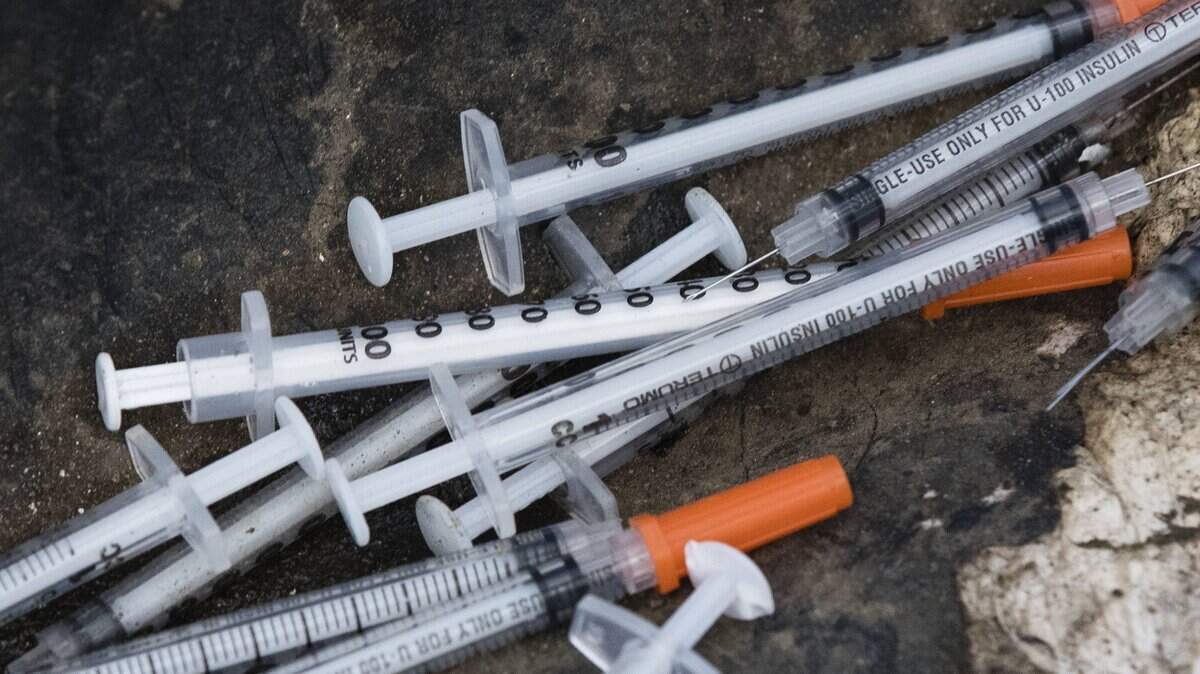
The leaders of this supposed promised land of progressivism and pot legalization might be “very, very open” to abandoning our counterproductive, half-century-old drug war. But don’t mistake that for any intention of actually doing so.
“Certainly very, very open” was the phrase Gov. Gavin Newsom used back in 2018 to describe his position on a bill to allow safe injection sites, a thoroughly proven means of reducing overdoses, discouraging public needle use and litter, and otherwise mitigating the harms of substance abuse.
Lawmakers sent Newsom just such a bill, authored by state Sen. Scott Wiener, at the end of the last legislative session. And while Newsom may well have been very open to signing it, he also turns out to have been very open to vetoing it, which is what he did.
Newsom’s veto was just one example of California Democrats’ continuation of the legacy of a California Republican, Richard Nixon, who declared the war on drugs over 50 years ago.
His reversal came two weeks after one of the Legislature’s twin sausage grinders, the Assembly Appropriations Committee, eviscerated another bill by Wiener, D-San Francisco, by which California could have joined an enlightened movement to stop locking people up for using psychedelic drugs. The committee turned the legislation into a study bill, the legislative equivalent of thumb twiddling, despite broad support, muted opposition and mounting evidence that non-addictive substances can help treat mental illness among veterans and others.
In the wake of the setback, Wiener vowed to continue to “make the case that it’s time to end the War on Drugs.”
While some Californians may be under the impression that we withdrew from that war during the Obama administration, when the state’s voters thought they were legalizing cannabis, it’s been a halting retreat at best. Sacramento County and other jurisdictions encompassing about half the state still prohibit legal marijuana sales. And it was only this week that Newsom signed legislation allowing cannabis to be delivered statewide and prohibiting employers from playing vice squad by forcing people to surrender bodily fluids just to get and keep their jobs.
“For too many Californians, the promise of cannabis legalization remains out of reach,” the governor acknowledged.
When Newsom appeared amenable to the safe injection bill four years ago, he was the relatively youthful, progressive-seeming lieutenant governor who had made himself the fresh face of legalized marijuana. And Jerry Brown, the relatively crotchety, intermittently conservative Democrat then in the governor’s office, had just vetoed safe consumption legislation.
Newsom’s stated very-openness allowed many optimistic Californians to persist in the suspicion that he would be different — while, as the incurable cynics among us might have noticed, carefully preserving his ability to weasel right out of a risky position. By now, all of us — disappointed optimists and vindicated cynics alike — know who was right.
Asked about his veto last week, Newsom told McClatchy’s California editorial boards that the local jurisdictions clamoring for the sites were to blame. “I didn’t see one plan from any of those three counties,” he said. “They weren’t prepared for this.”
That might surprise officials in San Francisco, who completed a $6 million purchase of a building for the purpose last year, suggesting its plans are rather far along.
All of this might be a comical caricature of political duplicity if not for the lives at stake. San Francisco, for example, has lost more people to overdoses in recent years than it has to COVID.
Newsom’s refusal to let the city stem the toll can’t be squared with the science or his ostensible determination to undo drug prohibition. But it can be explained by his recent gestures toward a future presidential run, during which any association with the sanctioned use of addictive intravenous drugs would surely be exploited by his opponents.
In such a situation, a politician could explain that he took a principled stand to save lives. But it’s easier not to take a stand at all.