
How special interests exploited a loophole and put a Sacramento County tax hike on the ballot
Back in March, Region Business Association chief Joshua Wood was trying to get ahead of criticism of Measure A, which if approved by county voters in November, would trigger a 0.5% sales tax to raise at least $8.5 billion for transportation projects.
The political operative fired off two emails to try and coordinate a few meetings.
The first was to James Corless, executive director of the Sacramento Area Council of Governments, the region’s chief planning authority. The agency was in the midst of an analysis pointing out that the measure could dramatically increase pollution and jeopardize the region’s access to state and federal money for transportation and housing.
The other was to Greater Sacramento Economic Council president Barry Broome, who had accused Wood and his co-conspirators of plotting a huge revenue grab with little public review. He expressed as much in an economic council board meeting earlier that day.
“You did not seek any input from us or many others,” Broome replied. “You should not be surprised.
“Political operatives design(ing) the transportation plan outside of a public conversation is unacceptable. To expect us to watch you tax 8.5 billion (dollars) without regard to the region’s need is going to get opposition.”
The sharp exchange between two of Sacramento’s most influential business figures highlighted a fatal flaw of Measure A. By collecting 70,000 signatures, the half-cent tax hike qualified as a “citizens’ initiative,” and reached the ballot without government approval or extensive public scrutiny. As a result, a proposal that experts believe will dangerously increase carbon emissions could go into effect with 50.01% of the vote.
Hundreds of emails and text messages obtained by The Bee through the California Public Records Act reveal the absurdly generous interpretation of the term “citizens’ initiative” that was applied to Measure A.
A brain trust comprising Wood, California Alliance for Jobs executive director Michael Quigley, and consultants David Townsend and Will Kempton, a former Caltrans director, had an outsize role in sponsoring and negotiating Measure A. They are the leading voices of the Committee for a Better Sacramento, the coalition of development firms and construction unions bankrolling the campaign. Quigley’s organization alone has donated nearly one-third of the more than $2.5 million raised, according to campaign finance records.
A Sacramento Transportation Authority survey last year found that 54% of voters would support a new measure — well shy of the two-thirds supermajority that a 2016 attempt, Measure B, needed but narrowly missed. The agency’s board chose to hold off on floating another initiative, but more impatient people felt that 54% support was plenty. A 2017 California Supreme Court ruling created a loophole for special interests to gather signatures and negotiate directly with government agencies to pass taxes with a simple majority vote.
“This path was available now,” Quigley told The Bee’s Editorial Board last month. STA had inadvertently cleared the way.
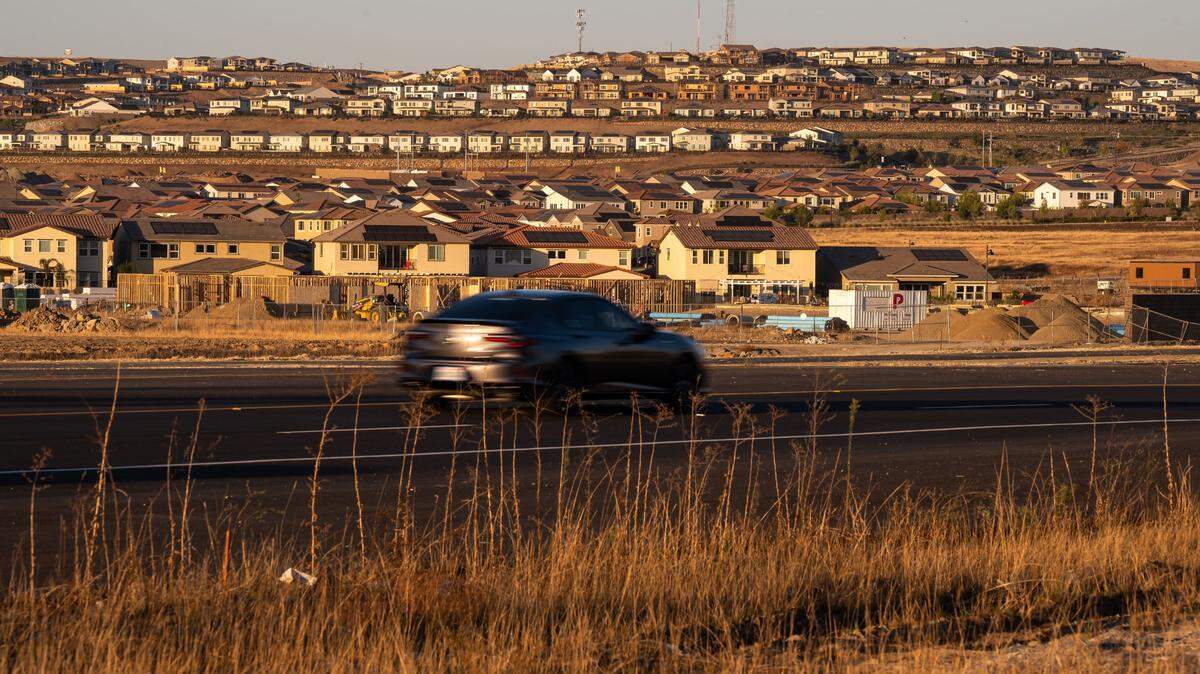
The campaign conjured an initiative that used parts of two previous sales tax proposals but added dozens of road projects with huge benefits for sprawl developers and labor groups. Among the first contributors to the campaign were landowners who would benefit from the controversial Southeast Capital Connector, a 34-mile expressway that would link Elk Grove, Folsom and El Dorado Hills. The project, which is slated to get $300 million from Measure A, is expected to induce unsustainable new growth south of Rancho Cordova.
By amassing the requisite signatures, Kempton, Quigley, Townsend and Wood melded the public’s desire for better infrastructure with an unsustainable project list that forced local leaders to the bargaining table — most notably Sacramento Mayor Darrell Steinberg, who initially opposed Measure A. Email and text records show Wood in particular enjoyed extraordinary access to politicians, public officials and business leaders over the course of the year.
That didn’t necessarily mean it was positive. Yolo County Supervisor Dan Saylor, a longtime SACOG board member, at one point told Wood in a text message that he found his “conduct throughout this effort to be offensive.”
Saylor was part of a subcommittee brokering a deal among the planning agency, STA and the campaign to ensure that Measure A would not violate state climate laws and compromise the six-county region’s access to funding. Having connector officials sign the so-called “memorandum of understanding,” or MOU, would have gone a long way toward ensuring that.
In a June 28 exchange, Saylor told Wood “one of my threshold hurdles is that all four parties sign,” referring to Southeast Connector officials who ultimately didn’t sign the agreement. “If not then there is no ‘deal’ in my mind.”
.JPG "SAC_xm0709traffic030020 (1).JPG")
Concerns ignored
The texts and emails offer a glimpse of how Wood and Corless zealously pushed through the MOU, despite their disparate motivations. Campaign officials needed the memo to ensure political support and curtail the risks of Measure A, while Corless needed it to retain SACOG’s ability to function as the region’s climate regulator.
Under immense pressure in the summer months, Corless plowed forward despite serious misgivings on his own staff and among board members representing outlying areas, records show. As the agency began analyzing Measure A earlier this year, several employees exchanged notes about how major roadway expansions would affect the region. Their concerns were eye-opening.
They noted that a rapid bus system along the connector, a supposed climate solution pitched by Measure A proponents, would be “a bigger drain” on Sacramento Regional Transit and fail to generate ridership. They also pointed out that the Sacramento Municipal Utilities District would have a harder time achieving its clean energy goals because new rural development “will be harder to serve with renewable electricity and it will require more transmission lines.”
“Our region is falling short by upwards of half a billion (dollars) a year in maintaining the transportation infrastructure we have,” wrote SACOG planning manager Clint Holtzen. “Any measure that doesn’t really move the needle on maintaining what we have is just saddling the future with a larger unfunded liability.”
Those reservations reached the bargaining table. On July 4, Kirk Trost, a longtime SACOG counsel who returned to the agency to help broker the MOU, resigned in the thick of negotiations. The agency’s lawyers heavily redacted dozens of documents disclosed to The Bee, including almost all of Trost’s resignation letter, for which they broadly cited attorney-client privilege.
Nonetheless, Trost’s resignation sent shockwaves through the agency and its board, especially members from Placer County. Three days later, on July 7, Lincoln City Councilman Paul Joiner emailed colleagues across Placer, requesting their support to bring the MOU back to the entire board for further debate.
“I feel compelled to reach out after Kirk Trost’s withdrawal as SACOG’s Attorney,” Joiner wrote. “His action and comments only added to my already high level of discomfort over the way SACOG is handling the MOU.”
Other Placer board members echoed his concerns, asking Corless and Sacramento City Councilman Rick Jennings, SACOG’s board chair, for another meeting on the subject. It never happened.
“James is trying hard to avoid having to do so claiming he’s following board direction,” Joiner wrote in a July 14 email. “He’s largely dismissing Kirk Trost’s withdrawal.”
Joiner did not respond to an interview request.
Grassroots democracy?
The memo was eventually signed — without connector officials’ assent — and approved by the STA board on July 27, nearly two months after SACOG’s final public debate on it. STA is charged with administering Measure A money if the proposal passes. Under the agreement, the agency can fund the more hazardous projects only if the developers prove that they can mitigate the environmental damage they cause.
The MOU could be amended, however, meaning its environmental protections could eventually be stripped away. In an interview with The Bee’s Editorial Board, Steinberg vowed to sponsor state legislation next year that would codify the MOU, giving it more force and permanence. Quigley said he would support that effort, but — like the agreement itself — that could change.
Both Steinberg and Quigley said they consider the Measure A negotiations “a model” for other California cities, and Quigley is adamant that it “only improves air quality.”
The state’s air quality regulator, one of the largest environmental agencies in the country, disagrees. California Air Resources Board executive officer Steven Cliff said last week that the $510 million set aside for environmental mitigation was “grossly inadequate, leaving the feasibility of mitigation in question.” Cliff told Bewsey, the Transportation Authority chief, and Elk Grove Mayor Bobbie Singh-Allen, the chair of the agency’s board, that the cost of neutralizing emissions could be greater than the cost of the projects themselves.
“Projects funded by this measure will be paid for by residents in and visitors to Sacramento County for four decades, and any negative impacts will endure for decades more,” Cliff wrote.
In their purest form, citizens’ initiatives are supposed to represent grassroots democracy, rallying a wide range of people behind a single cause. Measure A is the antithesis of that. It’s democracy purchased by a select few citizens who are spending money to make even more in the decades to come, heedless of the cost to the public.
In this case, the grassroots response is the opposition to the citizens’ initiative. And it’s wide-ranging, including anti-tax conservatives, environmentalists, climate activists and good government advocates. They just need 50.01% to stop it.
This story was originally published October 16, 2022 at 7:00 AM.