
Supposedly progressive California fell behind on marijuana legalization. Here’s how
President Joe Biden’s recent move to pardon people convicted on federal marijuana charges and review the U.S. government’s classification of the drug was a rightly celebrated milestone. It was also a measure of the daunting distance still separating the country from sensible drug policy. A protest outside the White House this week underscored the unfortunate reality that because Biden’s dispensation was limited to simple possession charges, he had released no one from prison and left thousands incarcerated for marijuana-related crimes.
The glacial federal retreat from 50 years of ruinous drug criminalization might look backward from the vantage point of Californians who have grown accustomed to the benefits of legalization. It’s been six years since the state’s voters overwhelmingly agreed to end cannabis prohibition and more than a quarter-century since they became the first to allow medical use. And yet California’s reversal of marijuana prohibition remains remarkably halting and uneven, especially for a state often caricatured as freewheeling and progressive.
In fact, most of the cannabis used in California is still purchased illegally, enriching criminals and cartels instead of legitimate businesses and governments, according to a new analysis by the marijuana information website Leafly and Whitney Economics, a cannabis consulting and research firm. Their report estimated that 60% of California’s marijuana trade remains in the black market. That means the state’s rickety regulatory regime has captured less of the legal market than those of all but two of the 14 states with legal sales.
The success of other states clarifies the depth of California’s failure. The Leafly report estimates that neighboring Oregon, for example, has managed to legitimize 90% of the cannabis market, while Colorado’s system handles 99% of the trade, relegating the illicit market there to a rounding error.
California has about one legal marijuana retailer for every 38,000 residents, compared with about one for every 5,000 residents in Oregon and Colorado. Only three of the states with legal retail had fewer stores per person than California, and the Leafly report found a “strong correlation between legal cannabis stores per capita and legal market capture.”
The culprit? California’s fetishization of “local control,” the same impulse that saddled the state with one of the nation’s worst housing shortages and made it home to the majority of the country’s unsheltered homeless people. Just as California long thought it wise to allow its wealthiest cities and suburbs to block housing and shelter for virtually any reason, it continues to allow cities and counties to prohibit sales of a supposedly legalized drug.
Most of California’s cities and counties — 62%, according to the state Department of Cannabis Control — still prohibit legal marijuana sales. Voters were told they were legalizing the drug in 2016 through Proposition 64, whose prominent supporters included then-Lt. Gov. Gavin Newsom. But they were actually leaving much of the question in the hands of the likes of the Sacramento County supervisors, who are dithering over whether to legalize sales within the county’s jurisdiction to this day.
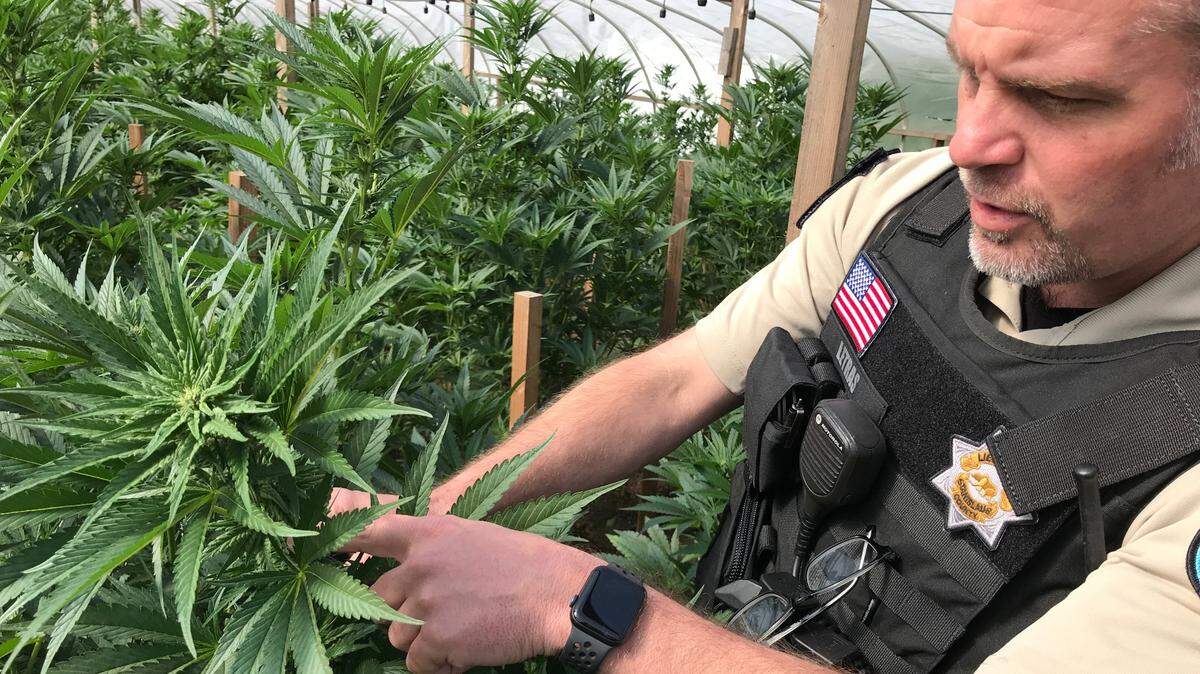
As a consequence of continuing local prohibition, some Northern California residents face driving for hours just to purchase cannabis legally. So it’s no wonder that the illegal trade continues to thrive. California Attorney General Rob Bonta recently announced a redoubling of the state’s long-standing efforts to root out illegal marijuana grows, inadvertently revealing the extent to which the state remains on its drug war footing of yore.
Newsom and the Legislature have recently taken steps to bolster the legal market by providing tax relief to the cannabis industry, legalizing delivery across the state and funding more enforcement. But none of that really addresses the original error of local control of an ostensibly statewide policy.
It could take yet another ballot measure to truly legalize the drug by undoing local control entirely, which is what one coalition of legalization advocates is proposing. Given that most of the state’s voters thought that was what they were doing six years ago, such a measure probably would — and should — pass.