
Republicans want you to vote on crime in Tuesday’s election. Here’s why you should
A political party intimately identified with lawlessness claims to want crime to be a top issue in Tuesday’s election. Somewhere near the heart of this absurdity stands the obscure and desperate figure of Nathan Hochman, California’s Republican candidate for attorney general.
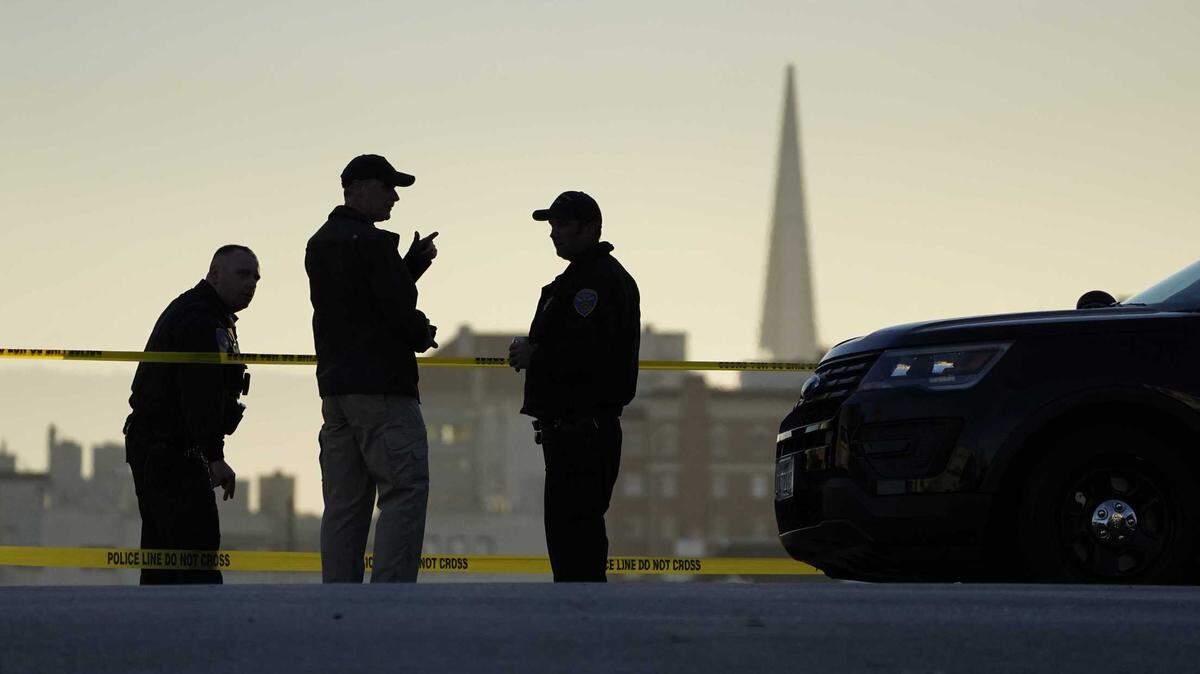
On the very morning that a man hunting House Speaker Nancy Pelosi with a hammer put her husband in intensive care, Hochman had the chutzpah to show up in the Pelosis’ San Francisco neighborhood to attempt to spin the crime in his favor. Hochman told reporters that the targeted violence against the Pelosis was “part of a continuum of attacks we’ve seen in San Francisco” and perhaps even “a spiral of lawlessness” in that city but was “probably ... not because of certain rhetoric by one party or another.”
A few days later, perhaps sensing the overwhelming weight of evidence that the alleged assailant was in fact deeply influenced by the rhetoric of one party or another — namely, Hochman’s — the candidate revised his message. The attack on Pelosi was now “in essence a hate crime,” he asserted on Fox News, and moreover part of an “explosion of hate crimes” across California.
Hochman’s “insight” on all of this, as Fox generously called it, was not that we should be concerned about his party’s appalling embrace of anti-Asian, anti-immigrant, anti-transgender and other forms of bigotry. Rather, it was that California authorities aren’t doing enough to prosecute these offenses — at least not until we make Hochman our zealous avenger of those targeted for hatred and violence.
Hochman is far from the most viable or even identifiable of this election’s Republican hopefuls. But his late-campaign histrionics epitomized the oxymoronic message of his party: Please think about crime as you vote, but please don’t think about all the crimes the leaders of our party have condoned and committed.
The crimes Hochman and his fellow Republicans hope to magnify are those that scare generally paler and richer Americans into voting for anyone vaguely promising to protect them. The trouble is that he and his fellow Republicans’ account of the problem is dubious, and their proposed solution is nothing of the kind.
Murders did increase dramatically across the country in 2020 and incrementally in 2021, though the rate appears to be falling this year and remains well below the levels of the 1990s. It’s worth noting that this surge unfolded at the onset of a catastrophic global pandemic, under the Trump administration and in cities and states across the country regardless of political complexion or leadership. Some of the highest murder rates are found in such ruddy states as Texas, Tennessee and Missouri.
Murder, moreover, is one of the rarest crimes and one subject to fluctuations that don’t reveal much about public safety in general. Most of the available data suggests no similar increase in violent crime overall or in property crime during the same period. The public nevertheless has an exaggerated sense of the disorder thanks to magnification by the media and, well, Republicans.
One trend that is clear from the data is the greater prevalence of guns and, not coincidentally, shooting. States and nations with more gun control and fewer guns are demonstrably safer. And we all know where Republicans stand on that.
The everlasting Republican answer to crime, real or imagined, is more punishment, for which there is little evidence of any reliable correlation with public safety.
Republicans do have a pretty solid plan to promote violence, however, as evidenced by the crime scene to which Hochman dispatched himself.
The attack on Pelosi is different from any of the left-wing acts of violence against Republican figures lately cited to excuse it. That’s because besides being under multiple criminal investigations, the de facto leader of the GOP, along with much of the rest of the party, has spent the past two years excusing or extolling the Jan. 6, 2021, insurrection, one of the darkest acts of explicitly political violent crime in our history.
Indeed, a recently published preliminary study by UC Davis researchers identifies a subset of the Republican base that is “substantially more likely than others to consider violence usually or always justified to advance ... political objectives.”
In that light, heeding Republicans’ pleas to vote for public safety should mean voting against them.