
The price of environmental damage in California? Less than a tank of gas for these farmers
What is the cost of defying California’s environmental laws? Less than $50.
That’s all Northern California farmers will pay for blatantly draining the Shasta River in defiance of the state’s drought regulations last summer, likely killing protected salmon.
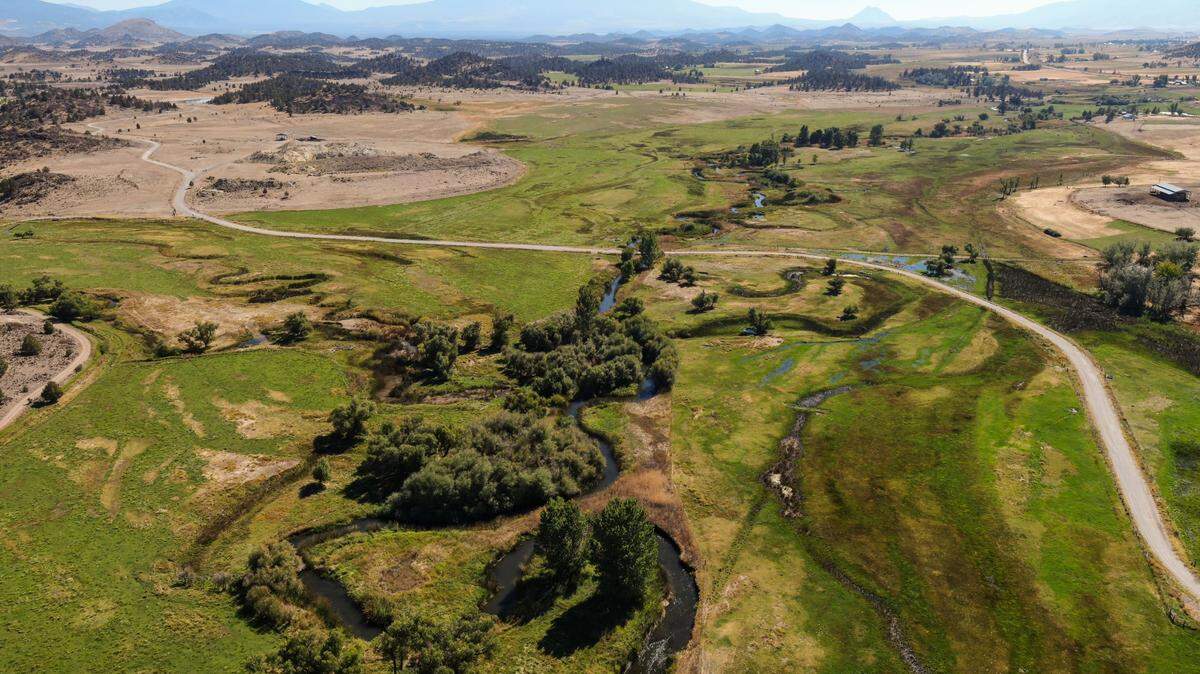
The Shasta River Water Association is an irrigation district serving about 100 farmers and ranchers in Siskiyou County. Over eight days, its members drained nearly two-thirds of the river to fill livestock ponds in the area.
This was the primary finding of a Bee investigation that suggests California is unable to stop farmers from draining water as they wish — no matter how much damage is done to the environment.
In theory, the State Water Resources Control Board has broad authority to regulate how water is used and to punish those who misuse it. But as The Bee’s investigation revealed, that authority is hopelessly undermined by “a convoluted web of state and federal laws.”
State authorities are not even equipped to effectively track water consumption. Water disappears, and state officials often have no idea where it went.
It’s clear that California farmers understand these systemic weaknesses and exploit them.
The irrigation district was fined $500 per day, for a total fine of approximately $4,000. But district administrators were savvy enough to shut off their pumps before the fee would have increased to $10,000 a day.
What good are laws meant to protect the state’s rivers, which are already suffering from chronic water shortages, if California is not prepared to enforce them?
Not only is there no deterrent; there is no remorse. The association’s president, Jim Scala, has said that he doesn’t want the association to pay a dime, because if they do, “it’ll be like admitting that we were in the wrong.”
The Bee’s investigation found that on average, only 11% of California farms and cities have complied with the state’s 2015 law requiring them to accurately monitor and report their water use to the Water Resources Control Board.
In the Shasta Valley, where the egregious draining took place this summer, the compliance rate is even lower — just 7%.
There are only 1,000 functioning gauges on a California river system that spans nearly 200,000 miles. The Bee found that in a recent report by a consortium of state agencies, the shortage of stream gauges “results in data gaps that hamper effective management of California’s limited water resources.”
The state Legislature and the governor must give the water board the authority and the tools to act quickly and decisively. And the state’s infrastructure must be able to track water use and diversions accurately.
The state must enforce its water laws to protect what can’t protect itself: Our fragile environment.
BEHIND THE STORY
MOREWhat are editorials, and who writes them?
Editorials represent the collective opinion of The Sacramento Bee Editorial Board.
They do not reflect the individual opinions of board members or the views of Bee reporters in the news section. Bee reporters do not participate in editorial board deliberations or weigh in on board decisions. The same rules apply to our sister publications, The Modesto Bee, Fresno Bee, Merced Sun-Star and San Luis Obispo Tribune.
In Sacramento, our board includes Bee Executive Editor Colleen McCain Nelson, McClatchy California Opinion Editor Marcos Breton, opinion writers Robin Epley, Tom Philp, LeBron Antonio Hill and op-ed editor Hannah Holzer.
In Fresno and Merced, the board includes Central Valley Executive Editor Don Blount, Senior Editor Christopher Kirkpatrick, Opinion Editor Juan Esparza Loera, and opinion writer Tad Weber.
In Modesto, the board includes Senior Editor Carlos Virgen and in San Luis Obispo, it includes Opinion Editor Stephanie Finucane.
We base our opinions on reporting by our colleagues in the news section, and our own reporting and interviews. Our members attend public meetings, call people and follow-up on story ideas from readers just as news reporters do. Unlike objective reporters, we share our judgments and state clearly what we think should happen based on our knowledge.
Read more by clicking the arrow in the upper right.
Tell us what you think
You may or may not agree with our perspective. We believe disagreement is healthy and necessary for a functioning democracy. If you would like to share your own views on events important to the Sacramento region, you may write a letter to the editor (150 words or less) using this form, or email an op-ed (650-750 words) to opinion@sacbee.com. Due to a high volume of submissions, we are not able to publish everything we receive.
Support The Sacramento Bee
These conversations are important for our community. Keep the conversation going by supporting The Sacramento Bee. Subscribe here.