
Yes, California’s vote count is slow. No, you shouldn’t trust anyone whining about it
California’s election results tend to emerge with all the speed of its sclerotic interstates, so each national vote brings a new round of puzzling over the reasons for the state’s long count. At its worst, this discourse devolves into the lazy or pernicious assertion that the primary goal of tabulating votes is to do it as quickly as possible — and that any failure to instantly gratify the desires of politicians and pundits is evidence of incompetence or skulduggery.
Over the weekend, prompted by a Fox News personality who found waiting for West Coast results “extremely frustrating,” congressional candidate Kevin Kiley shook his head and sassed, “Hopefully we’ll finish counting the votes by the time the 2024 election gets underway.” The Placer County Republican went on to argue that the tally was taking a while for the same reason that the state’s “roads are among the worst in the country” and its unemployment agency is a “total disaster,” namely, “We have a government that doesn’t perform.”
Putting aside the fact that different governments are responsible for each task he mentioned, it’s no wonder Kiley was exasperated. The Rocklin assemblyman was supposed to run away with the race in the Republican-leaning 3rd Congressional District. That it was too close for the Associated Press to call until Tuesday afternoon was an indication that it was not California but Kiley who underperformed.
While Kiley’s (Republican-dominated) home county appears to be working through thousands of ballots at an even more deliberate pace than the rest of the state, the California count takes time for mostly good reasons. The state makes it especially easy for a lot of people to vote, and it takes care to ensure that all those votes are accurately counted — which is, or at least ought to be, the whole point.
Much of the time involved comes down to the rise of voting by mail, which the state has made increasingly easy and voters have increasingly adopted. Majorities of California voters have been using mail-in ballots for a decade, and the pandemic accelerated the trend.
In 2020, Gov. Gavin Newsom and the Legislature saw to it that every voter got a mail-in ballot — a move to protect public health and encourage participation that was opposed in court, as it happens, by Kiley. That and other legal challenges ultimately failed, and remote voting has since grown from 65% of the electorate in November 2018 to 91% in this year’s primary.
California accepts ballots postmarked by Election Day as long as they arrive within a week, which means many valid votes aren’t even in the hands of officials until days after the polls close. The state also allows same-day registration, provisional balloting, correction of missing or deficient signatures, and redirection of ballots that turn up in the wrong county. And all of this is undertaken, by the way, in the most populous and third-largest state in the union.
These procedures work against the speed of the tally but in favor of participation — and rightly so.
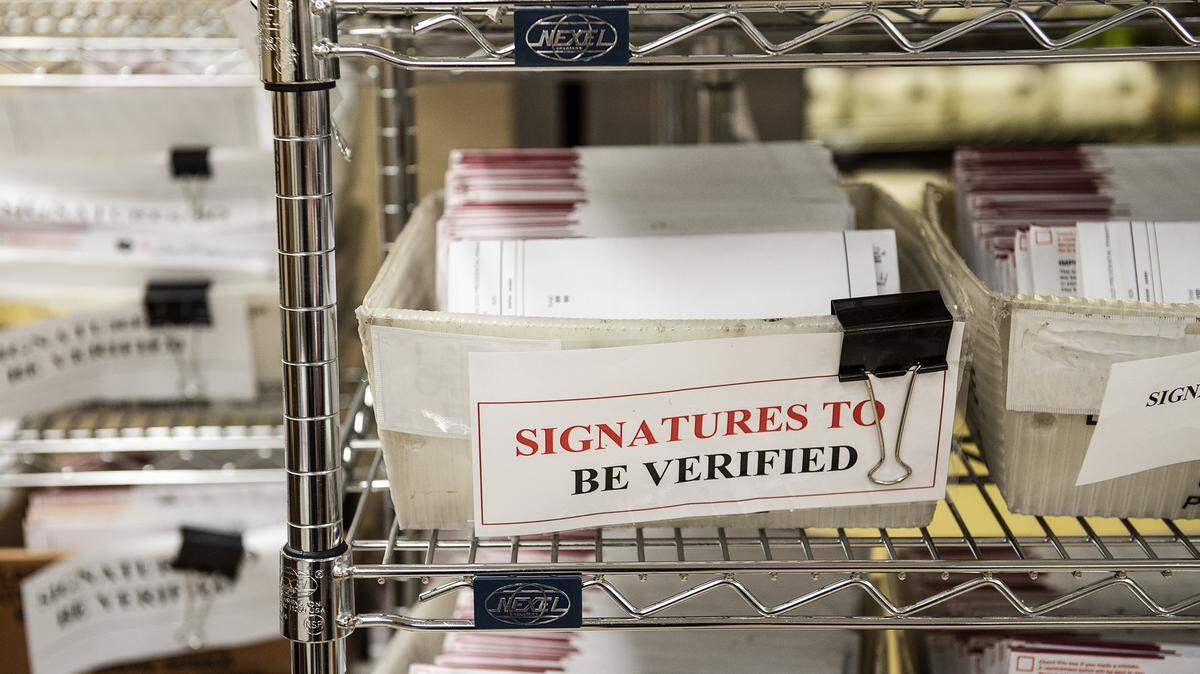
Verification of the signatures on mailed ballots and auditing of a portion of the ballots by hand, moreover, takes additional time. So Kiley and others arguing for speed are also arguing against verification, which is ironic given Republicans’ ostensible preoccupation with ballot security.
Given all the benefits of California’s expansive and deliberate tabulation of votes, the arguments for faster counting are underwhelming at best. A new Congress doesn’t convene until the new year, nearly a month after California requires counties to certify results, so a few weeks of waiting has no practical effect on government operations.
One of the most prominent proponents of instantaneous election results, not coincidentally, is Kiley enthusiast Donald Trump, who has often demanded that vote tallies cease while he and his allies are ahead. Many of those casting baseless doubts on California’s count are animated by the fear that a majority of the votes will be for someone else.