
Trump called for canceling the Constitution. His Supreme Court is a little more subtle
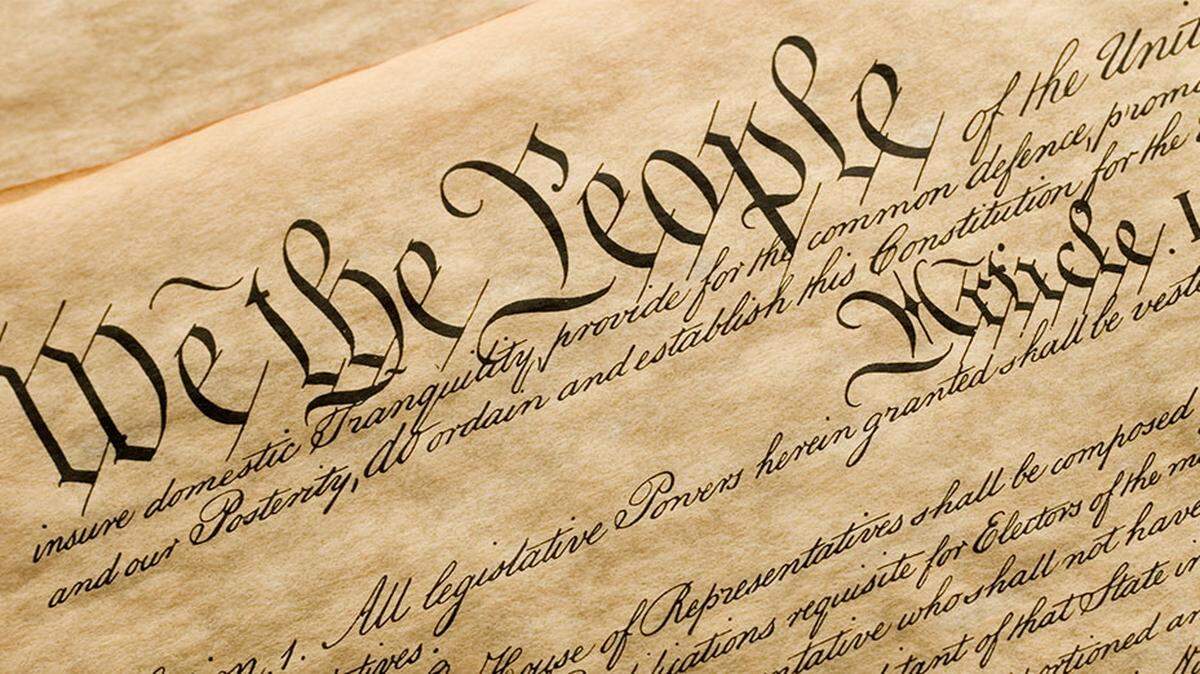
Former President Donald Trump has taken a lot of heat for his compulsive prevarication, so let’s give him credit for publicly and forthrightly advocating “the termination of all rules, regulations, and articles, even those found in the Constitution.” Thus spake Trump on his deceptively named social media platform, Truth Social, in response to Twitter’s otherwise underwhelming revelations of the messy details of its deliberations over the lurid contents of a computer linked to President Joe Biden’s son.
But Trump’s unusually honest non sequitur shouldn’t distract us from a potentially more effective plot against the Constitution. Befitting their elite educations and long practice in the dark arts of sophistry, the former president’s faction on the Supreme Court threatens to undo the document by subtler means: reading it so literally as to render it meaningless.
We have the misfortune to live in an era of post-rational Supreme Court jurisprudence finding, among other improbable conclusions, that corporate wealth is free speech, that the sixth of the economy relying on health care is not commerce, and that individual protections from state intrusion do not encompass the internal organs of half the population. Even against that backdrop, however, the case the court is expected to consider Wednesday is preposterous.
Moore v. Harper advances the argument that the U.S. Constitution explicitly allows North Carolina legislators to gerrymander election districts as absurdly as they want to regardless of the will of that state’s courts. More broadly, the petitioners imply that state legislators possess generally unchecked power over elections under something called the “independent state legislature theory,” which is a theory to roughly the same extent as the QAnon theory.
The Constitution famously empowers the states to decide how to elect their members of Congress as well as the electors who choose the president. Specifically, Article I, Section 4, holds that the “times, places and manner of holding elections for senators and representatives shall be prescribed in each state by the legislature thereof”; and, under Article II, Section 1, that each state should also select its electors “in such manner as the legislature thereof may direct.”
Whatever the wisdom and necessity of these provisions in the context of the 18th century, they have generated no end of mischief by allowing states to meddle with the machinery of elections through voter suppression, partisan redistricting and other means. In the fevered minds of those advocating the independent legislature theory, we need a lot more of that.
Based on a simplistic reading of the above provisions that ignores contemporaneous definitions of the words the founders used, the document grants state legislators, and state legislators alone, plenary power over federal elections such that governors, courts, constitutions and voters can’t restrain them. In other words, these people argue, state legislators are not subject to all the other institutions they normally share power with — whether by gubernatorial veto, court review, voter initiative or other means — in an area of the law that happens to be among the most crucial to our whole system.
Thus the court’s reactionaries would use a document chiefly concerned with limiting government power to find that a few politicians have unlimited power to choose the government. Two years after Trump and his co-conspirators lobbied state legislators to overturn election results — and two years before they can be expected to do so again — the antidemocratic implications of this idea should be clear.
The independent legislature theory reflects the sort of reasoning one expects from a crank whose legal education is limited to a tattered pocket edition of the Constitution. And yet enough of Trump’s nominees to the high court and their allies have endorsed this crackpot notion that it could become the law of the land. The president’s judicial emissaries would thereby effect his desired cancellation of the founding document by the slightly subtler means of willfully ignoring its obvious intent.