
California’s climate is the first to suffer in Newsom’s proposed budget cuts | Opinion
Just six months ago, California Gov. Gavin Newsom and his administration were boasting a budget surplus of $97.5 billion. Today, thanks to a falling stock market and a weakened tech sector, California has an apparently unforeseen budget deficit of $22.5 billion. Cuts must be made.
But Newsom’s proposed cuts seemingly come at the expense of climate-related projects, a curious decision from a governor who often speaks about how confronting climate change is one of his key priorities. Unsurprisingly, his actions do not meet the weight of his words.
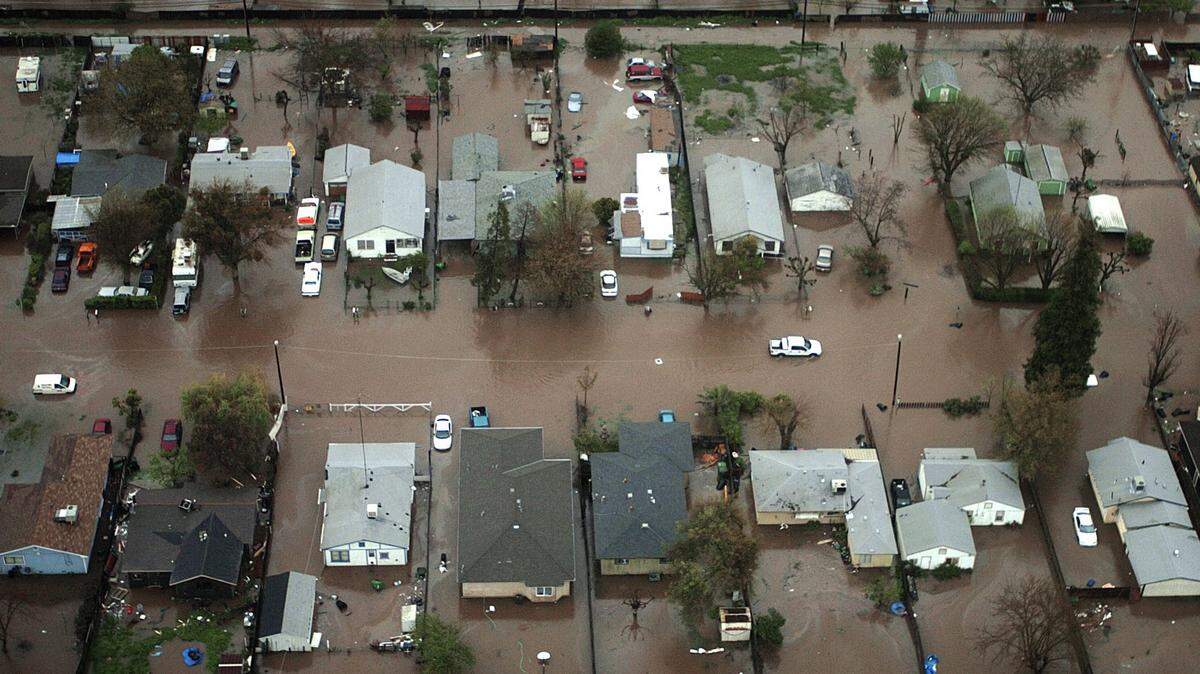
Newsom’s budget proposal, ironically released on the heels of an atmospheric river that unleashed catastrophic flooding across the state, suggests slashing approximately $6 billion dollars from climate-related projects, including $40 million that had been promised to floodplain restoration projects in the San Joaquin Valley.
In fact, most of Newsom’s proposed budget cuts involve scaling back key climate initiatives.
For example, the governor’s new budget plan proposes to reduce local rail projects budgets by $2.2 billion. Zero-emission vehicle credits and programs would also receive approximately $2.5 billion less, a reduction Newsom suggests could be offset by as much as $1.4 billion via cap-and-trade credit fees from the state’s biggest greenhouse gas emitters — a program once hailed as revolutionary but is tainted by recent research that claims to prove the credits do little to actually counteract climate change.
Just last year, the governor pushed a five-year, $54 billion climate package through the legislature that he said proved his commitment to being a global climate leader; he now proposes to reduce it to $48 billion.
More than half of that decrease in funding, or approximately $3 billion, directly concerns the state’s clean transportation initiatives, which are necessary to cutting vehicle emissions that are the state’s largest contributor to greenhouse gas emissions, as well as smog and air pollution.
In the proposed budget, Newsom suggested using federal funds to meet these goals instead. It is unclear where the state will find the money in time to meet the historic mandate his administration laid out just last year. In 2020, Newsom announced the state would begin the process of electrifying California’s cars and would phase out all sales of gasoline-powered vehicles by 2035. Now, the state is considering another difficult initiative, this time to phase out the sale of diesel trucks by 2040 and possibly help subsidize trucking companies to electrify their large fleets.
Meanwhile, California still proposes to spend $108.8 billion for K-12 schools and community colleges in Proposition 98 funding; while the University of California and the California State University system would each receive 5% more than last year’s budget, fulfilling the governor’s promise to increase the systems’ budgets over a period of five years if the schools met certain graduation rates. The UC system is still set to receive an additional $30 million to enroll fewer non-resident students.
Newsom has said he will not cut into the state’s $22.4 billion in reserve funds, but neither will he publicly admit to expecting a recession where those funds might be needed, preferring instead to take a “wait and see approach.”
There is no denying that Newsom’s administration has proposed historic climate and energy goals, and championed funding for much-needed projects to reverse the effects of climate change in California. We are not suggesting he doesn’t care about climate change, but that our state’s investments in combating climate change must increase, not decrease, to meet this historic threat.
It is so like Newsom to first propose these goals and then backpedal when a reduced budget materializes. California cannot seek to be known as a leader in climate change and reducing emissions, but put key climate initiatives first in line to the financial guillotine. We do not have time to “wait and see.”
California’s budget won’t be finished for months, and it will undergo numerous revisions in the meantime. We still have time to renew these funding streams for these projects. No sector will be grateful to have their budget cut, but climate change is an existential threat to every Californian and, we would argue, the most important.
What kind of Earth will our youngest residents inherit if California — whose government so wishes to be known as a world leader in reversing climate change — doesn’t first meet the dire threat climate change poses?
BEHIND THE STORY
MOREWhat are editorials, and who writes them?
Editorials represent the collective opinion of The Sacramento Bee Editorial Board.
They do not reflect the individual opinions of board members or the views of Bee reporters in the news section. Bee reporters do not participate in editorial board deliberations or weigh in on board decisions. The same rules apply to our sister publications, The Modesto Bee, Fresno Bee, Merced Sun-Star and San Luis Obispo Tribune.
In Sacramento, our board includes Bee Executive Editor Colleen McCain Nelson, McClatchy California Opinion Editor Marcos Breton, opinion writers Robin Epley, Tom Philp, LeBron Antonio Hill and op-ed editor Hannah Holzer.
In Fresno and Merced, the board includes Central Valley Executive Editor Don Blount, Senior Editor Christopher Kirkpatrick, Opinion Editor Juan Esparza Loera, and opinion writer Tad Weber.
In Modesto, the board includes Senior Editor Carlos Virgen and in San Luis Obispo, it includes Opinion Editor Stephanie Finucane.
We base our opinions on reporting by our colleagues in the news section, and our own reporting and interviews. Our members attend public meetings, call people and follow-up on story ideas from readers just as news reporters do. Unlike objective reporters, we share our judgments and state clearly what we think should happen based on our knowledge.
Read more by clicking the arrow in the upper right.
Tell us what you think
You may or may not agree with our perspective. We believe disagreement is healthy and necessary for a functioning democracy. If you would like to share your own views on events important to the Sacramento region, you may write a letter to the editor (150 words or less) using this form, or email an op-ed (650-750 words) to opinion@sacbee.com. Due to a high volume of submissions, we are not able to publish everything we receive.
Support The Sacramento Bee
These conversations are important for our community. Keep the conversation going by supporting The Sacramento Bee. Subscribe here.