Fat people don’t deserve to die simply to preserve America’s hateful weight stigmas | Opinion
Heavy. Plus-size. Overweight. Obese.
Fat.
You can’t hurt me with these words. I’ve been called this and worse since junior high, when my child’s body began to turn into that of a woman’s — and suddenly became fodder for public comment.
It’s not whispered behind my back, either. It’s often said straight to my face, as though I needed confirmation of what people think of me. As though I don’t already look in the mirror with unkind words for myself every single day. As though I must be reminded constantly that I am considered a lesser, lazier, uglier person by the world.
At the doctor’s office, I am told that every medical trouble would disappear if I just lost some pounds. People tell me “You look good!” after I’ve been sick. I am left to constantly wonder if employers, partners, friends and family would be kinder if I was thinner — because they probably would.
So I wasn’t surprised to learn that a Sacramento firefighter was caught bragging that he has killed obese people because he didn’t want his fellow paramedics to injure themselves by having to lift them off the ground.
Timothy John Keyes — a Sacramento firefighter and EMT, and a man who is supposed to be saving lives — posted a long diatribe on his Facebook page in 2020 about how he has “killed” fat people by making them walk to a gurney while they are dying from congestive heart failure.
“Presented with a person far too heavy to lift safely, a person dying of any overworked heart (congestive heart failure) and KNOWING ‘better,’ I will opt to NOT have my crew lift him,” Keyes wrote.
It was not even an implication of hatred — he blatantly wrote that he has “killed more people this way than in any other.”
“I am not willing to give our health for him,” Keyes said. “He has asked for this, DEMANDED it for decades! Why should we ruin a loved one’s back for him to keep him alive a bit longer? He will still die, sooner or later. Why give me or my Brother’s back for him when he never bothered to care for himself? I prefer to let him die today if necessary.”
Yes, fat bodies have “demanded” medical care — because we deserve to live and are worthy of healthcare. The gall to presume that anyone is fat because they don’t care about themselves shows a shocking lack of understanding, especially by a medical professional, of how bodies work, and displays a total lack of empathy for his fellow humans.
After an investigation, Keyes was given ten days suspension for violating the city’s Equal Employment Opportunity Policy and allowed to use his vacation time to cover half of it. There are some people now calling for him to be fired, but I will not join that chorus; I’d rather change minds, and that requires kindness — not anger.
Besides, Keyes’ comments are reflective of the kind of discriminatory attitudes held by too many medical professionals, and many of us have often experienced.
Doctors show strong anti-fat bias in health care situations, according to Harvard Medical School. This bias results in reduced quality of care, and “the subsequent negative health outcomes are a result of what they call chronic social stress, and studies have found the harmful effects of weight discrimination resulted in a 60% increased risk of death.”
Why is my life worth less than that of a skinny person’s? Why is it OK to treat fat people as lazier or stupider or less capable of success? Why are we not worth medical treatment or life saving procedures, even in the eyes of our doctors and medical professionals?
We fail to ask ourselves these questions but wonder why more than 70 percent of adults are classified as overweight or obese, while eating disorders have skyrocketed in the past decades, all while less than 6 percent of Americans with eating disorders are medically diagnosed as “underweight.”
In the past decade, weight discrimination around the world has increased by 66 percent, and is one of the only forms of discrimination actively condoned by society, according to the University of Illinois Chicago’s School of Public Health.
“Decades of research have shown that experiencing weight stigma increases one’s risk for diabetes, heart disease, discrimination, bullying, eating disorders, sedentariness, lifelong discomfort in one’s body and even early death,” wrote Amanda Montgomery, a registered dietitian and nutritionist, in a study for the university.
“The public health field has not taken a critical look at this research, focusing on the narrative that weight is controllable and a personal responsibility,” Montgomery wrote. “If the goal is to find the most ethical and effective strategies to achieve optimal public health, there needs to be an alternative to “obesity” and weight-focused approaches and a shift in understanding of weight stigma as a social justice issue.
My body, my gender and my race is front line in a battle I never agreed to fight.
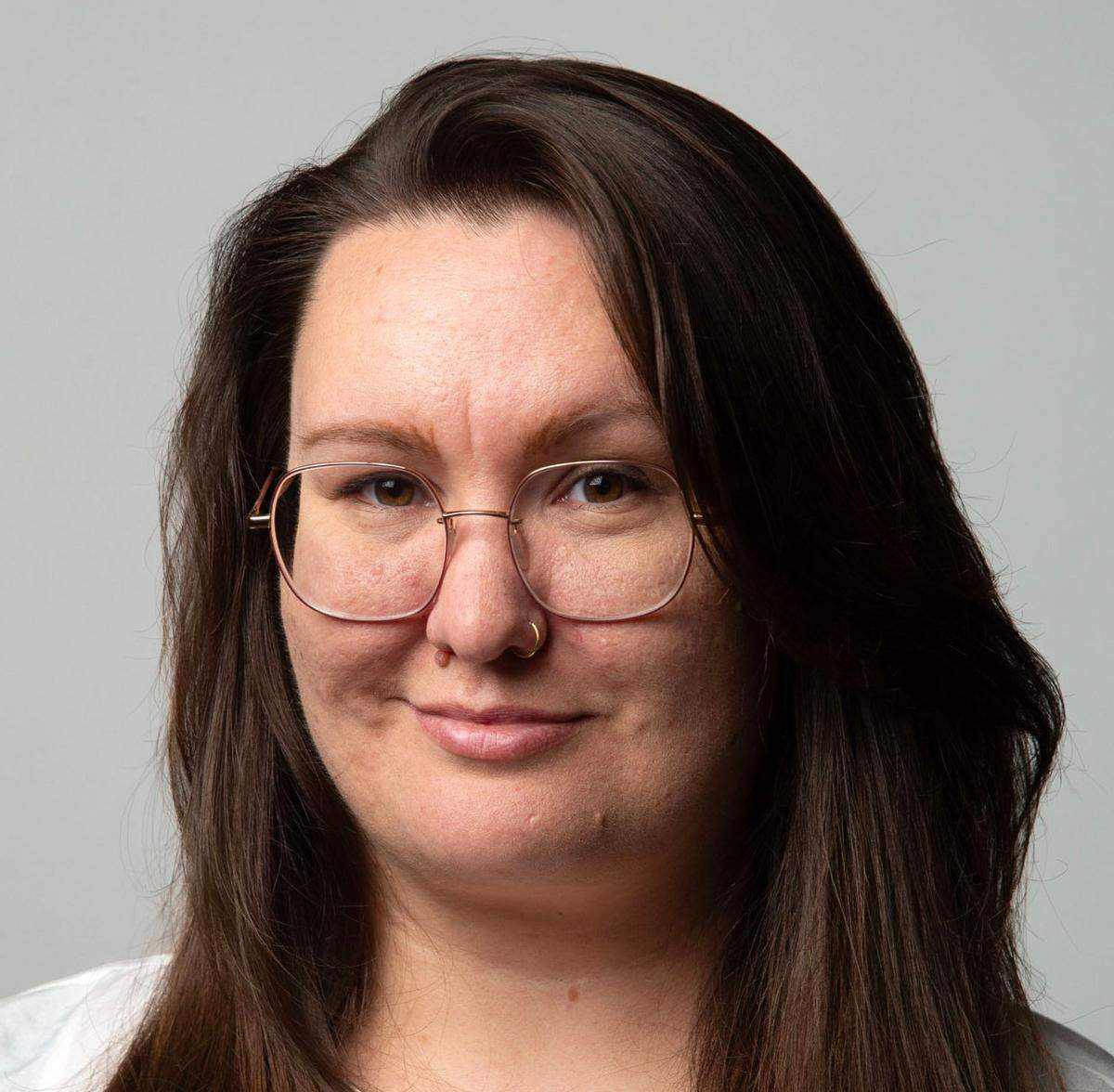
And before you rush to look at my picture — to judge if I qualify as “fat” — let me just say you don’t need to know how much I weigh, how much I exercise, what I eat or how much I eat. Because nothing will convince you of a person’s worth if you’ve already judged them on the way they look.
Instead, know that I will love my body because I endeavor to love myself. I will love every curve, every stray hair, gray hair and pimple. I will love every bump and lump, ounce and pound.
I will love myself because I am constantly told I am not pretty enough, not skinny enough, not smart enough, not active enough — not enough. Loving my body is a radical act in a world that hates me and wants me to hate myself too.
What Keyes said isn’t the problem, it’s that so many people see nothing wrong with it.