
In ‘green’ California, plastic bags have made a comeback. It’s time for a new ban | Opinion
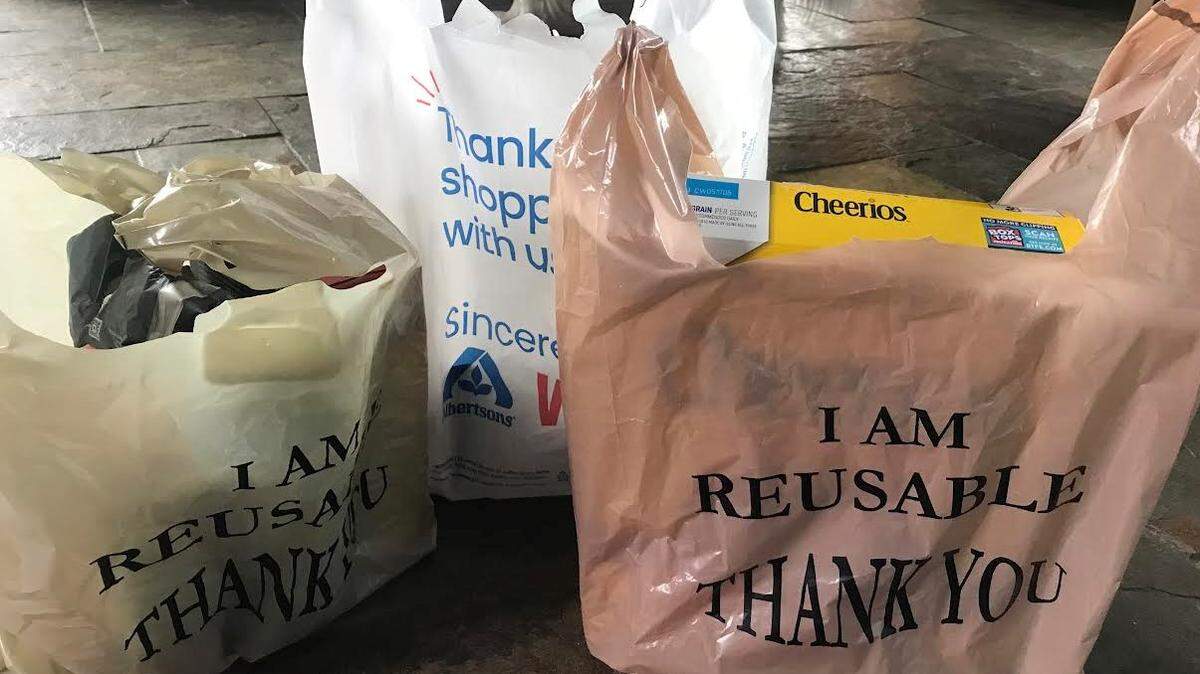
It’s been more than six years since California voters approved a statewide ban on plastic bags — yet you’d never know it today, judging by the checkout lines at places like Target, Vons and Albertsons.
Plastic bags are back with a vengeance — nearly 158,000 million per year are used just in San Luis Obispo County, according to an estimate by the local chapter of the Surfrider Foundation.
Confused? So were we.
Here’s the skinny: While “single-use” plastic bags are still banned, the new generation of product is not. These bags are stronger, thicker and designed to last much longer; to meet state regulations, they must be reusable at least 125 times.
They also are more expensive — 10 cents each. Back in the day, they were free.
Still, the price is so insignificant that many shoppers don’t even hesitate to request them. When you’re spending $100 on a few bags of groceries, what’s another 30 cents going to matter?
And let’s face it, sturdy plastic bags are handy.
They’re practically essential when you’re cleaning the cat box. In a pinch, they can serve as a tote bag if you’re headed to the beach or the park. They’re good for lining wastebaskets. And they aren’t prone to break like paper bags.
But it’s highly doubtful that families will lovingly care for and clean these “reusable” plastic bags again and again. Most of us already have drawers full of totes that are much more substantial — if we would only remember to use them every time we go grocery shopping.
After two or maybe three uses, most plastic bags wind up in the trash and, ultimately, in our landfills; the EPA estimates that only 10% of plastic bags are recycled, though estimates from other organizations are even lower.
Attorney general investigates
Under California law, the new generation of plastic grocery bags must be recyclable, but that’s easier said than done.
You can’t stick them in the curbside recycling bin because they get tangled up in the machinery. Some waste management agencies have named them the No. 1 “troublemaker” in the waste stream.
You can return them to the store to be recycled, but that can be a hassle and not all stores accept them — in fact, some bag manufacturers admit as much.
“Recycling program for this bag may not exist in your area,” a disclosure printed on some of the bags reads.
That’s not how the law was supposed to work — the sturdier bags were supposed to be “recyclable in the state.”
Last November, Attorney General Rob Bonta announced the launch of an investigation into whether plastic bag manufacturers were meeting that requirement.
“In order for materials like plastic bags to be recycled, there must be working collection systems, processing infrastructure, and markets to support their recycling,” he said in a statement. “To date, plastics manufacturers have not made efforts to ensure these components exist.
Letters demanding validation of the claim were sent to six manufacturers.
That earned Bonta a lot of good press, but more than six months later, the investigation is still underway. The Attorney General’s Office told us it has received responses from all six manufacturers, but it cannot comment any further on the investigation.
California’s questionable leadership
Even if the manufacturers are abiding by all the rules, this so-called bag ban amounts to little more than greenwashing by the state of California — the term used when companies make false or questionable environmental claims about their products.
Common sense tells us the vast majority of these bags are not being reused or recycled. They are simply being tossed away — a waste of materials and the energy it takes to produce and transport them.
Given the threat posed by plastic pollution, California — which prides itself on environmental leadership — should close the loophole that allows this to happen.
The SLO County chapter of the Surfrider Foundation is calling for a comprehensive ban on plastic carry-out bags, saying the current one is not effective.
Here’s another idea: Raise the price. Charging 50 or 75 cents, would be an incentive for shoppers to stick to paper bags or, even better, remember to bring their reusable totes to the store.
This story was originally published May 23, 2023 at 5:30 AM with the headline "In ‘green’ California, plastic bags have made a comeback. It’s time for a new ban | Opinion."