
What does California-style justice look like in the case of this Charles Manson cult killer? | Opinion
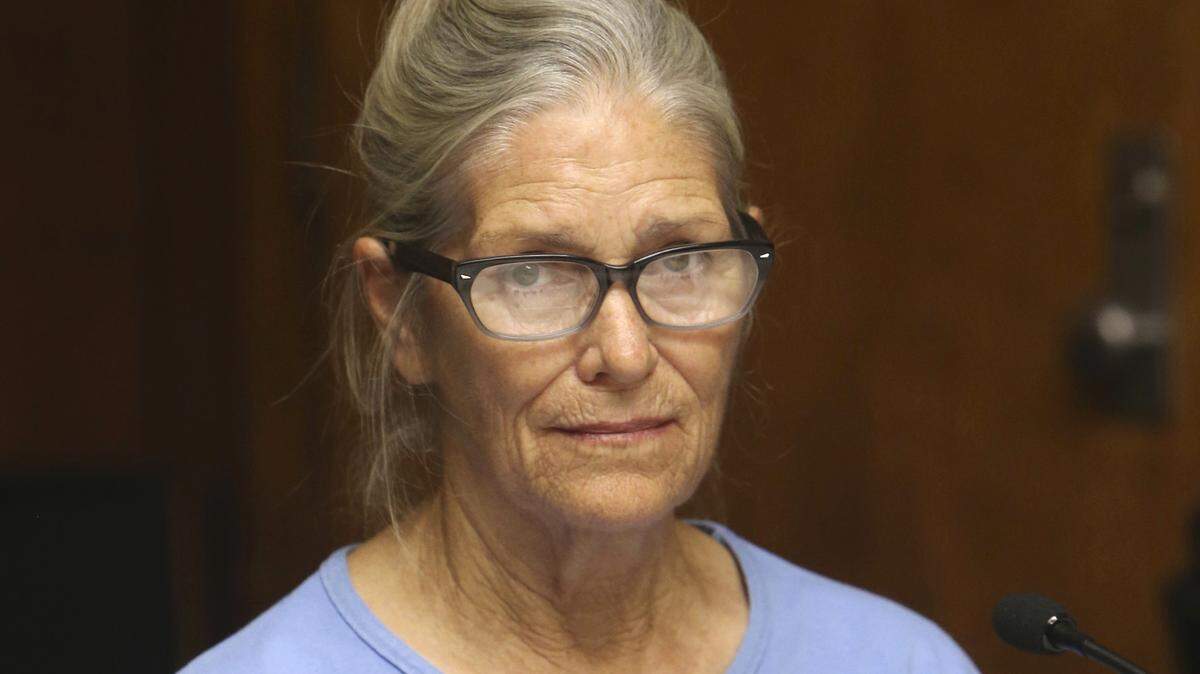
In California, while a gruesome murder is forever, the punishment isn’t necessarily. That appears to be just the way we want it.
Our awkward wheels of justice normally churn away quietly behind the scenes, only to come to the forefront when someone like Leslie Van Houten comes along. Her case has received public attention because of the collective fascination with how a Southern California cheerleader ended up in a murderous cult. It’s the cases that don’t get such attention that seem most vulnerable to injustices.
Californians want justice for murder to be, in part, a political act. In 1988, a majority of voters passed a measure that gives the standing governor a role with any murder convict up for parole.
“The Governor may only affirm, modify or reverse the decision of the parole authority on the basis of the same factors which the parole authority is required to consider,” the measure reads.
The two big factors, in the Van Houten genre of cases, completely contradict one another.
A factor against parole is whether “the commitment offense was committed in an especially heinous, atrocious or cruel manner.” It is hard to argue that Van Houten’s acts of violence one night in Los Angeles don’t fit this description.
On the other hand, a factor for parole is institutional behavior that “indicates an enhanced ability to function within the law upon release.” Her impeccable behavior in prison is not in dispute. Age is also on the 73-year-old Van Houten’s side.
All the system’s checks and balances have come into recent play.
There was first the “professional” stage of review, which happens within the California Department of Corrections and Rehabilitation’s Board of Parole. The board has been on Van Houten’s side five reviews in a row.
Second was the political stage of review, by the governor. He weighed the severity of the crime over all else.
“While I commend Ms. Van Houten for her efforts at rehabilitation and acknowledge her youth at the time of the crimes, I am concerned about her role in these killings and her potential for future violence,” Gov. Gavin Newsom wrote on March 29.
Third was the state Court of Appeals. Its second district evaluated Newsom’s reversal and came back on Van Houten’s side on May 30.
“We review the governor’s decision under the highly deferential ‘some evidence’ standard, in which even a modicum of evidence is sufficient to uphold the reversal,” two of the justices wrote. “Even so, we hold on this record, there is no evidence to support the governor’s conclusions.”
This, frankly, feels to be the weakest link in this system of checks and balances. To suggest that the governor had absolutely no evidence to reverse the parole board’s decision seems weak at best — even worthy of appeal.
This system is designed to come to different conclusions at different times. The older Van Houten gets, the less recidivism is of concern. The heinous nature of the crime should never change in the system’s judgment, and neither should consideration to the victims and their family members. Yet, if there wasn’t ever to be a periodic re-balancing for parole decisions, California would not have this elaborate system.
The release of Van Houten would be forever. All she would have to do is behave.
That would be justice, California style.