
Sacramento PD has a racial profiling problem, but there is hope for real reforms | Opinion
Sacramento’s City Council, its police department and its city watchdog successfully confronted some troubling findings from a new audit. Despite previous investigations and calls for reform, compelling evidence continues to show that Latino and Black Sacramentans are more likely to be stopped or searched by police than residents who are white.
The efforts to build community trust through the best possible police training and policies remain a work in progress. But there is reason to be hopeful. There is a path for the council, the department and the Office of Public Safety Accountability (OPSA) to work together. And now there is a verbal commitment for that to happen.
OPSA has existed and reported to the mayor and City Council since 1999. Its powers have expanded over the years, most notably with the hiring of its first-ever inspector general in 2021 to conduct independent investigations into police misconduct.
Its improved capacity to review and analyze police activity led to this new audit. It is the first in OPSA’s history and a true city milestone. As detailed in The Bee, the audit uncovered instances of police officers violating the spirit of the Fourth Amendment by instigating traffic stops where motorists of color were pulled over for “improper window tint” on their cars.
The initial window tint concern appeared to be a “pretext to initiate an unrelated investigation,” the audit found.
“The traffic stop can become unlawful if it is unnecessarily prolonged for an unrelated matter that has nothing to do with the purpose of the stop, even if an officer’s initial traffic stop of the citizen was lawful,” the audit said. “During this review period, every complaint regarding the conduct of traffic stops for illegal window tint was filed by a Black or Latino driver. In most cases, the officers did not investigate or question the driver about the window tint.”
In addition, there were instances where officers routinely patted down citizens as an automatic police practice. This violated the spirit of Terry v Ohio, a landmark U.S. Supreme Court case that requires officers to articulate that a citizen was frisked for appearing to be armed and dangerous or was suspected of being in the process of committing a crime.
Police Chief Kathy Lester’s written response to the audit sought to put the findings in a broader perspective. By her math, the department and OPSA agreed on complaints 99% of the time. Prior to its release, “It should be noted that SPD and OPSA met only one time briefly and the details of this audit were not discussed in depth,” Lester wrote.
OPSA Director Dr. LaTesha Watson fired back in response to Lester.
“OPSA asserts that SPD’s statistics regarding complaints and their respective allegations of misconduct are routinely incorrect,” Watson wrote. In a breach of protocol, “Chief Lester made the decision to release her written response to the media rather than adhere to standard Auditing processes.”
The stage was clearly set for a long, ugly, and counterproductive Tuesday night at City Hall. Instead, there was a tough but constructive conversation. Credit goes to all involved.
The audit’s findings were eerily similar to those from the California Department of Justice back in 2020. It too found patterns of racial disparities in Sacramento policing and deficiencies in policies and training. In 2008, city leaders hired an outside consultant that found that Black motorists were pulled over more frequently by Sacramento Police than any other group.
“I want to offer a very sincere and heartfelt apology to those that have suffered from the profiling that has been done,” then-Mayor Heather Fargo said in 2008. “I want to apologize to those citizens who feel they haven’t received equal treatment or protection.”
Profiling of Black and brown citizens is a problem statewide, according to the data collected annually by California’s Racial and Identity Profiling Advisory Board.
Mayor Darrell Steinberg saw this new city audit as an opportunity to develop new policies to better guide police stops and searches.
“We want to make sure we are working together, you in the lead,” Steinberg said to Lester, “where we are bringing these policies forward. Is that what we are going to be doing?”
“I can absolutely commit to that,” Lester responded.
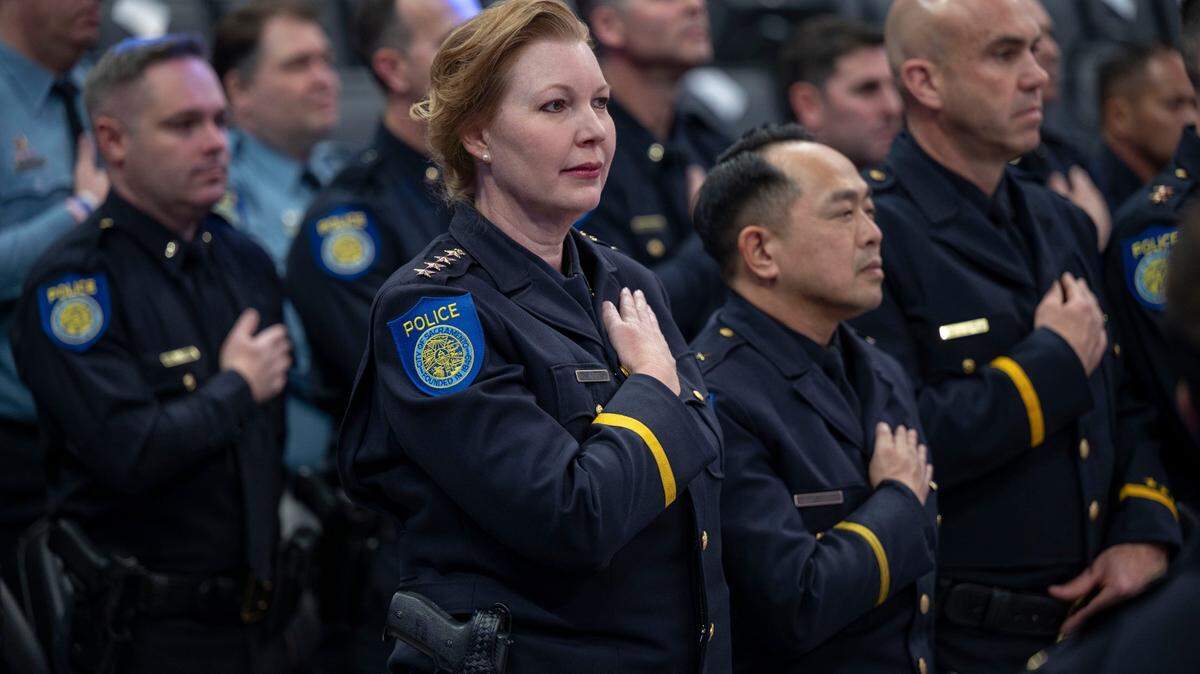
A member of the department for 29 years, its chief since 2022 and the department’s first-ever female leader, Lester is pledging to form the kind of partnership with the council that her predecessors have too often shunned. If all sides follow through, future council meetings could include discussions on improved police practices and outcomes. We shall see because years of studies have pointed toward a stubborn pattern of racial profiling within the ranks of Sacramento Police.
There is going to be inherent tension between the department and its watchdog, OPSA. Some fence-mending needs to happen, and a stronger partnership needs to grow. It is entirely doable. In the end, both institutions need the other to succeed.
“Sunshine is our friend, transparency and accountability,” said Councilwoman Caity Maple during Tuesday night’s meeting. She’s right.
The way for Sacramento Police to develop trust in the community is for future audits to reveal fewer instances of racial profiling.
BEHIND THE STORY
MOREWhat are editorials, and who writes them?
Editorials represent the collective opinion of The Sacramento Bee Editorial Board.
They do not reflect the individual opinions of board members or the views of Bee reporters in the news section. Bee reporters do not participate in editorial board deliberations or weigh in on board decisions. The same rules apply to our sister publications, The Modesto Bee, Fresno Bee, Merced Sun-Star and San Luis Obispo Tribune.
In Sacramento, our board includes Bee Executive Editor Colleen McCain Nelson, McClatchy California Opinion Editor Marcos Breton, opinion writers Robin Epley, Tom Philp, LeBron Antonio Hill and op-ed editor Hannah Holzer.
In Fresno and Merced, the board includes Central Valley Executive Editor Don Blount, Senior Editor Christopher Kirkpatrick, Opinion Editor Juan Esparza Loera, and opinion writer Tad Weber.
In Modesto, the board includes Senior Editor Carlos Virgen and in San Luis Obispo, it includes Opinion Editor Stephanie Finucane.
We base our opinions on reporting by our colleagues in the news section, and our own reporting and interviews. Our members attend public meetings, call people and follow-up on story ideas from readers just as news reporters do. Unlike objective reporters, we share our judgments and state clearly what we think should happen based on our knowledge.
Read more by clicking the arrow in the upper right.
Tell us what you think
You may or may not agree with our perspective. We believe disagreement is healthy and necessary for a functioning democracy. If you would like to share your own views on events important to the Sacramento region, you may write a letter to the editor (150 words or less) using this form, or email an op-ed (650-750 words) to opinion@sacbee.com. Due to a high volume of submissions, we are not able to publish everything we receive.
Support The Sacramento Bee
These conversations are important for our community. Keep the conversation going by supporting The Sacramento Bee. Subscribe here.