
Climate change is threatening the future of AM radio in the automobile | Opinion
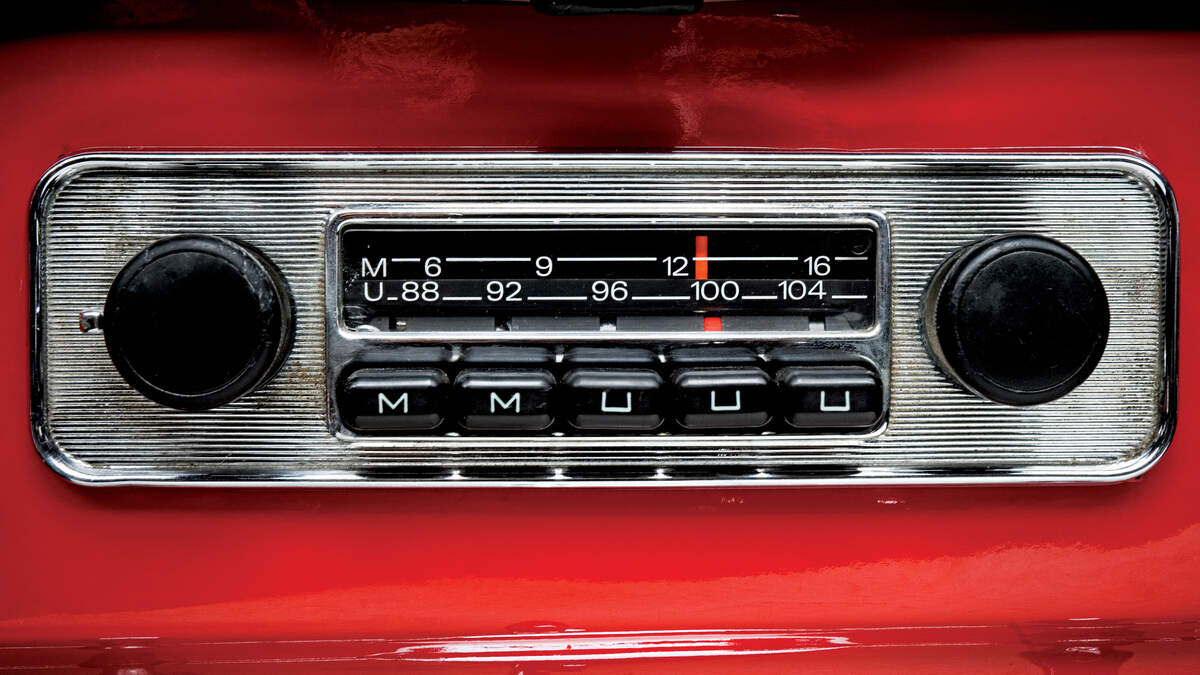
My favorite California drive is into the redwoods of Sonoma County. Heading westbound on River Road after leaving the impeccable rows of vineyards and winding into that first ridge of rolling hills, the cell phone loses its signal, cutting off any ability to stream music. It is time to turn on the AM radio, with all its crackling imperfections, to get a dose of Bay Area sports.
But my beloved ritual is at long-term risk. Climate change is threatening the future of AM radio in the automobile, which threatens the viability of the stations themselves. One electric car manufacturer after another is dropping the AM spectrum from its fleet.
It is far from trivial that the AM radio works in a car when the cellular system does not. It is a signal that emits far and wide in an emergency when electricity, the cell system and the Internet can all be rendered useless. The AM radio is a lifeline. And now some members of Congress are trying to keep AM radios in American cars despite the market preferences of the manufacturers.
When Senators Ted Cruz of Texas and Ed Markey of Massachusetts agree on a policy issue, you know something unusual is afoot. Both are sponsoring a bill to maintain the tradition of AM radios in our mobile moments.
AM is short for amplitude modulation (FM for frequency modulation), referring to patterns of electromagnetic waves that behave differently as they travel through the atmosphere after being beamed from the transmission tower. A steady wave creates that hissing noise of nothingness on the AM dial. The unique sounds of the human voice or of music causes the signal to modulate, or change. Inside the car is a small receiver that essentially interprets, or “demodulates,” the signal.
The resulting sound out of the speaker is an imperfect replica of the original. Meanwhile, the demodulator is an equal opportunity listener, translating whatever electromagnetic waves are present. The result is AM’s unique orchestra of background music. The technology has been around for more than a century. It basically hasn’t changed. And it has been a wonderful constant in our universe.
Some electric car makers, however, apparently want to market their vehicles in futuristic ways that leave out any gadgets that would remind anyone of Grandma.
Why? The drivetrains in electric vehicles produce a form of electronic interference. Some manufacturers claim this makes the AM listening experience too unpleasant in their vehicles. The automakers phasing out AM radio include Tesla, Audi, Volvo, BMW and Porsche.
It’s a completely bogus rationale. Automakers such as General Motors and Ford continue to produce electric vehicles with functioning AM radios. It’s not rocket science to shield the parts in cars that produce the interference, it just appears to be matters of money and marketing.
There are conspiracy theories that the car makers are part of a vast left-wing conspiracy to kill talk radio, one of the mainstays of the spectrum. That Tesla’s Elon Musk would be a full-fledged participant in such a conspiracy seems beyond unlikely. This feels like an industry preference to differentiate the electric vehicle from one with an internal combustion engine, with no regard for AM radio’s indispensable role in emergencies.
In a true emergency when Musk’s Twitter and the rest of the Internet is down, AM radio is still up and running. It takes just 77 AM radio stations located throughout the country to reach 90% of America through the Emergency Alert System, a backbone of the nation’s public warning infrastructure. It is the most reliable way that a president can speak to the country within 10 minutes if necessary.
Fortunately, Congress may come to the rescue.
Senate Bill 1669, introduced on May 17, is named the “AM Radio for Every Vehicle Act of 2023.” It would require that the federal Department of Transportation promulgate a rule that would “require all such vehicles to have devices that can receive signals and play content transmitted by AM broadcast stations or digital audio AM broadcast stations installed as standard equipment.”
The bill awaits action.
Sometimes in American politics, more regulation truly is the answer.