
Sacramento’s outdoor dining scene boomed during the pandemic. What happened? | Opinion
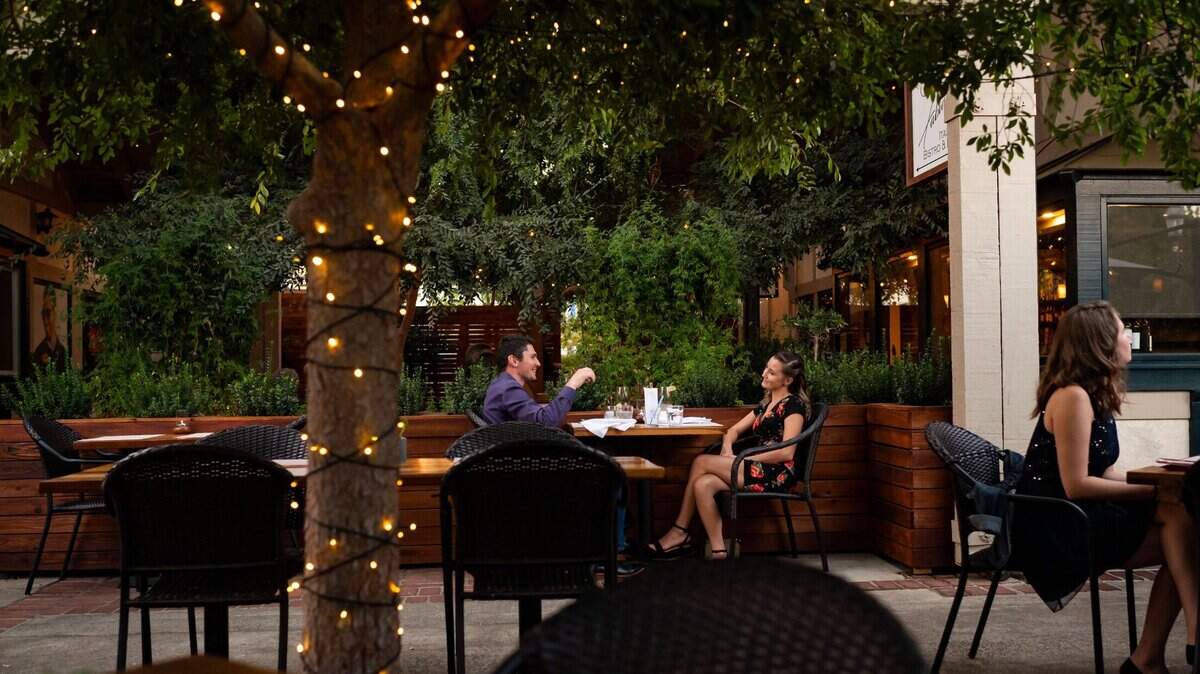
Two years ago, Sacramento witnessed a pedestrian renaissance: Parking was repurposed for outdoor eating, allowing people to help restaurants mitigate the devastating impacts of the pandemic. Closed streets and temporary outdoor dining spaces allowed pedestrians to enjoy Sacramento’s restaurants and sunny weather. Instead of loud vehicles racing past city restaurants, diners were able to enjoy their food in peace.
Last summer, this temporary outdoor dining renaissance evaporated. In its place is a permanent outdoor dining structure program dubbed “Al Fresco.” The program, managed by the City of Sacramento’s Parking Division, intends to “make outdoor dining permanent,” as per a report to the Active Transportation Commission. But more than a year after this program was rolled out, only one new outdoor dining structure (or “parklet”) has been built.
Since the program went live, Sacramento has lost memorable outdoor spaces along the R Street Corridor, the Ice Blocks, Lavender Heights, the Handle District and more.
“No way are we asking anybody to take down their outdoor dining,” Matt Eierman, who heads Sacramento’s Al Fresco program, told KCRA. Yet unfortunately, this has been the main impact of Al Fresco to date.
On July 1, 2022, the formalized Al Fresco dining program went into effect. Four months later, it started receiving applications from restaurants seeking permanent outdoor dining. But as of March 15 of this year, no parklet permits have been issued under the new outdoor dining program, according to email correspondence with Eierman.
Fast forward 14 months after the program’s roll out, and only one parklet has been completed so far, according to Al Fresco spokesperson Gabby Miller.
Why is it so hard to build parklets in Sacramento?
Sacramento’s permitting process for Al Fresco requires extensive collaboration between businesses and city officials. While the program offers pre-approved layouts, they are effectively useless because the city must review every detail of a restaurant’s proposed parklet design. The Al Fresco application mentions: “designs referencing one of the city’s pre-approved layouts must still provide a site and utility plan meeting (other listed) criteria.”
Design review is necessary as it ensures parklets are built in compliance with disability access laws. But it just shouldn’t take this long.
Meanwhile, Al Fresco is requesting an additional full-time employee in the 2023 Sacramento City budget to alleviate this bottleneck. Given the current turnaround time for completed parklets, I’m dubious about the effect this new employee will have.
In addition to the delays, recurring parklet fees will take a big bite out of restaurants wallets. A parklet that takes up just two parking spots in Sacramento costs a whopping $500 per month, according to the city. In San Francisco, the same parklet permit costs a business nothing (according to San Francisco’s Shared Spaces permitting website, all permit fees for parklets approved before June 2024 are being waived).
Before San Francisco waived fees, outdoor parklet permits cost as low as $166 per month for small restaurants. San Francisco launched its parklet program in June 2020, which has yielded 704 approved parklet permits to date, as per San Francisco County public records.
Sacramento’s high barriers to entry could be a reason why many restaurants are losing interest in the program. According to Al Fresco spokesperson Miller, 99 restaurants submitted initial interest forms online. To date, only 34 of the 99 interested parties have submitted applications. The Al Fresco program should work to identify why this is. If fees are too high, they should be lowered. If restaurants are having trouble communicating with the program or getting bogged down by red tape, Al Fresco needs to address this.
Cities with parklets create safe spaces for people to enjoy a city’s natural beauty all while helping restaurants attract diners. Sacramento’s abundance of sunlight, walk-able neighborhoods and excellent tree canopy should be at the forefront of its culture. The Al Fresco program was given the opportunity to capitalize on this, but it’s thus far squandered it.
By failing to build parklets, Sacramento leaders send a clear message that they don’t care about safe spaces for people, or helping businesses attract customers.