Who holds the power in Sacramento? It’s hard to tell after this bizarre meeting | Opinion
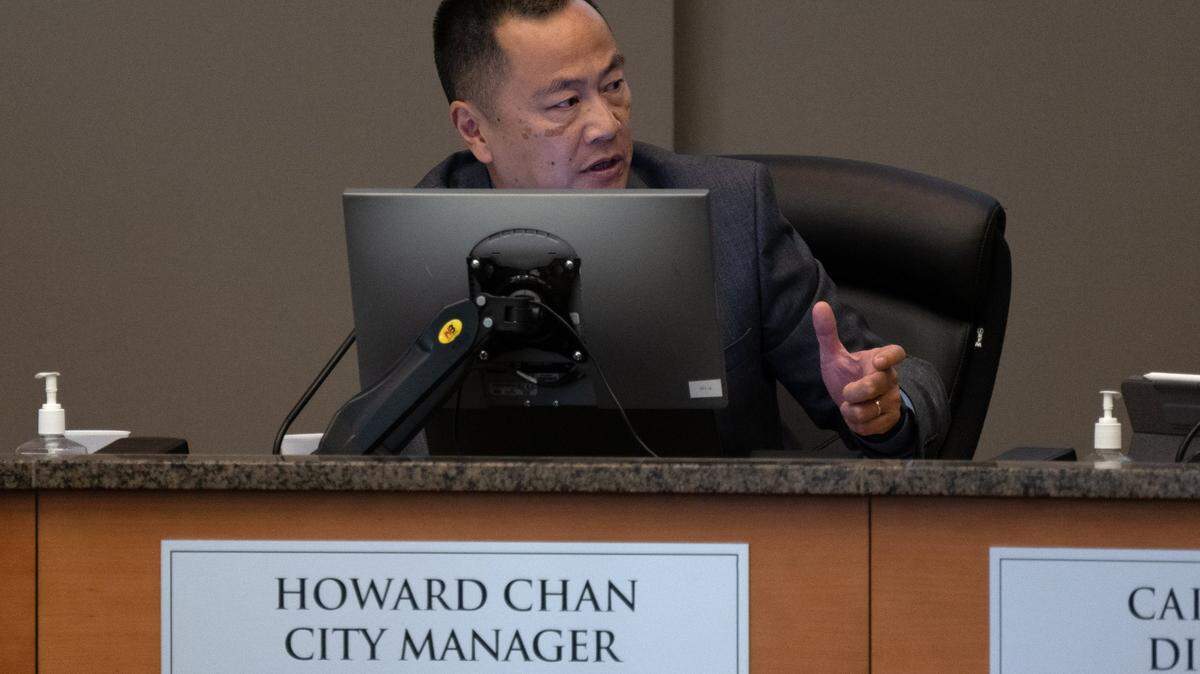
I’ve been to hundreds of local government meetings in my career, but I can think of none quite as strange as the Sacramento City Council Meeting I attended on Tuesday afternoon: Outgoing Mayor Darrell Steinberg and City Manager Howard Chan played a very public game of tug of war over who will be the ultimate authority, with the power to create and implement policies for the city of Sacramento.
The whole afternoon underscored the pressing and unresolved question of who really controls power in city hall. Voters have repeatedly rejected a strong mayor form of governance, where the mayor has the ultimate authority to hire and fire top staffers. But that doesn’t mean voters want the city manager to wield all the power; they expect a united, strong council that sets the direction.
Chan took the council this past Tuesday off-site, to a bleak room in the SAFE Convention Center. He said he wanted the event to feel “informal” and said some council members have complained about feeling removed from the audience and how they cannot easily see each other on the council dais.
But that didn’t make sense. The city hall council dais, for example, is purpose-built to allow the council members to see each other. And why claim it’s an informal event if the room was set up just like a regular council meeting, with the members at a long table in the front and the audience removed and not allowed to interact with them? With no video streaming at the convention center location, the interested public had to attend or be kept in the dark.
Chan tasked the mayor and council to give him three — and only three — top priorities. The mayor and the council pushed back, and now, who’s really in charge now seems less clear than ever.
The entire event was a perfect example of the underlying issues at city hall: Chan and Steinberg at times talked past each other and over the moderator. The public was all but cut out of the process. And Chan used yet another incomprehensibly convoluted process to confuse and evade council direction on anything he personally disagrees with.
Chan, the best-paid city manager in the state, said he wanted to hold the meeting to identify the council’s “priority” issues, but it’s clear that direction will be used to force the council into a box on any other issue.
Those “top three” priorities were identified as homelessness, housing and public safety, to the detriment of others such as diversity, equity and inclusion; climate; economic development; and deferred city maintenance. Chan said his city staff would discuss the priorities at an upcoming retreat, and it’s the city staff, at that point, who will identify and implement policies around those issues.
But that’s not how our city government is supposed to work.
“I did not run for office to just sit on the dais and approve contracts and then leave every Tuesday, I ran because I wanted to be a part of making policies and solutions,” said District 4 Councilwoman Katie Valenzuela after the meeting. “I do not advocate leaving the policy making to the City Manager, that’s not in our charter and that’s not what voters voted for on their ballot.”
And as Police Review Commissioner Keyan Bliss put it in his public comment to the council: “Is the City Manager the strategist designing the collective vision … or is he the administrator tasked with executing the vision designed by the community’s elected representatives?”
I asked Chan after the meeting to explain how he expects to be held accountable to his goals. Chan said his staff would identify a metric they felt comfortable achieving and, after city input, would periodically report their progress on that metric — a process that seems overly ripe for misuse.
Sacramento’s city council is, admittedly, a nine-headed hydra headed in different directions at any given time, but that’s because nearly every issue is intersectional with one another. You cannot pin down a few priority areas to the detriment of others. This display only proved Chan expects more authority on creating policies and less council and public oversight on their implementation.
Nothing about this meeting made sense, except for one fact: That Chan has clearly forgotten that the council doesn’t work for him, he works for the council.