
More people are moving to Sacramento than any other U.S. city. But there’s a catch | Opinion
People are moving to the Sacramento region more than any other place in the country. This is both good and bad news.
The national real estate firm Redfin estimates that in October, 5,000 more homeowners were looking to buy in Sacramento than had left the region. The closest to Sacramento in popularity were Las Vegas (4,000), Orlando (3,700) and Myrtle Beach in South Carolina (3,700).
The migration out of California’s other major urban centers is only getting worse. In the Bay Area, more than 25,700 homeowners moved away as opposed to those who moved in. In Los Angeles, it was 23,700 want-to-be migrants. In October of 2022, 6,500 more homeowners moved to San Diego than left. This October, it was precisely the opposite, with 2,100 more San Diegans interested in leaving than coming.
“It’s something that says something really good about the Sacramento region,” said Stephen Levy, director and senior economist at the Palo Alto-based Center for the Continuing Study of the California Economy.
It’s our moment in the sun. Even the New York Times is joining the bandwagon, recently writing about Sacramento as a “great restaurant city.”
There is a price, however, for popularity. And that price may make some existing problems even worse, particularly homelessness.
“The downside is that the existing residents are likely to see an increase in home prices from newcomers,” Levy said. Sure enough, those looking to move here are coming from some expensive places.
Not surprisingly, the Bay Area is the number one source of newcomers to Sacramento, followed by Los Angeles and San Diego. The New York metropolitan region and Chicago are distant fourth and fifth on the list of those interested in coming here.
“It’s nice from my perspective that people in San Francisco can stay within what is now the broader Bay Area by moving to Sacramento,” Levy said.
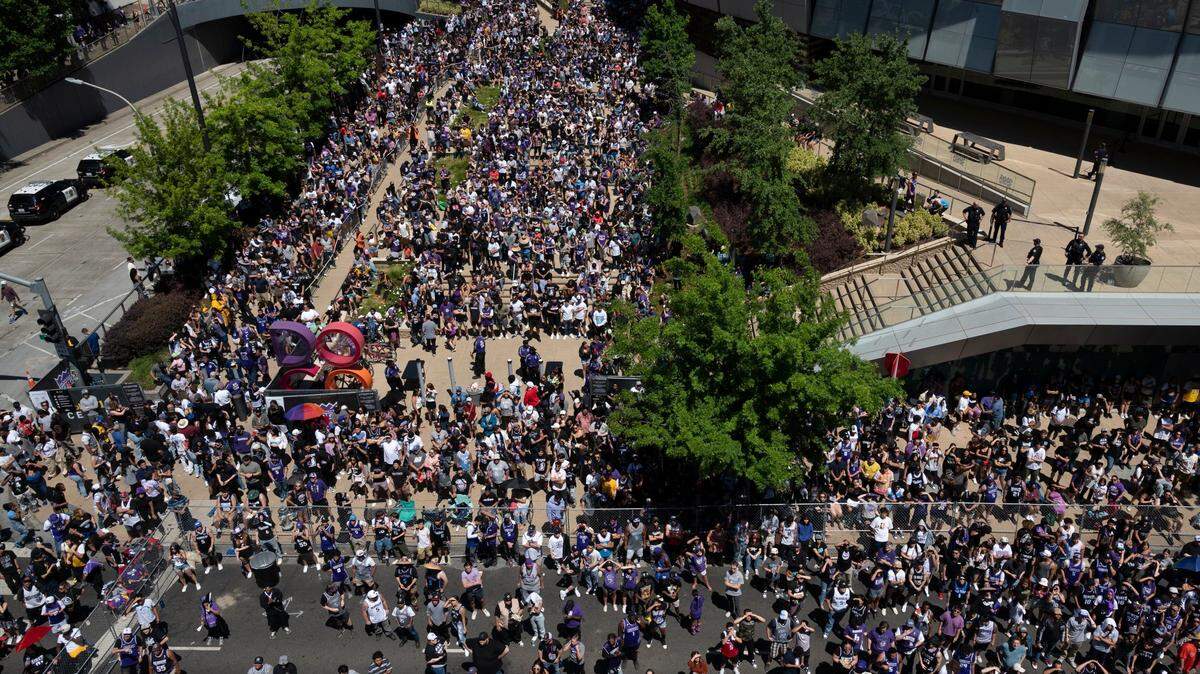
A lot of Sacramentans may not think of themselves as related to that cooler clime to the West. But when the Golden State Warriors come to town to play the Sacramento Kings — in what has become a passionate rivalry within the National Basketball Association — the divided allegiances among fans can make it hard to discern which is the home team.
These Bay migrants “have lots of cash and find Sacramento both close and affordable,” Levy said. Redfin, for example, said a typical Bay Area home in October sold for $1.5 million as opposed to $578,000 in the Sacramento region.
Redfin follows home-buying. But many want to rent. “It’s cheaper to rent now with the high-interest rates,” Levy said.
All this means upward price pressures uniquely on Sacramento among California urban regions.
High housing costs and low incomes for some Californians have resulted in homelessness. The state has half of the nation’s unsheltered homeless, with some 172,000 displaced residents in all by the latest estimate.
The California Department of Finance, in its latest population projections, has forecast a decline in local population growth in the coming years compared to earlier estimates. Regardless, this is a trend worth watching. It reinforces why building housing for low-income Sacramentans and housing for the “missing middle” (new developments aimed at mid-range incomes) is so important.
If we don’t, as Sacramento becomes part of a broader Bay Area, we risk pricing ourselves out of a future that works for all our residents.