
Community activists are taking charge in Folsom to solve the city’s budget problem | Opinion
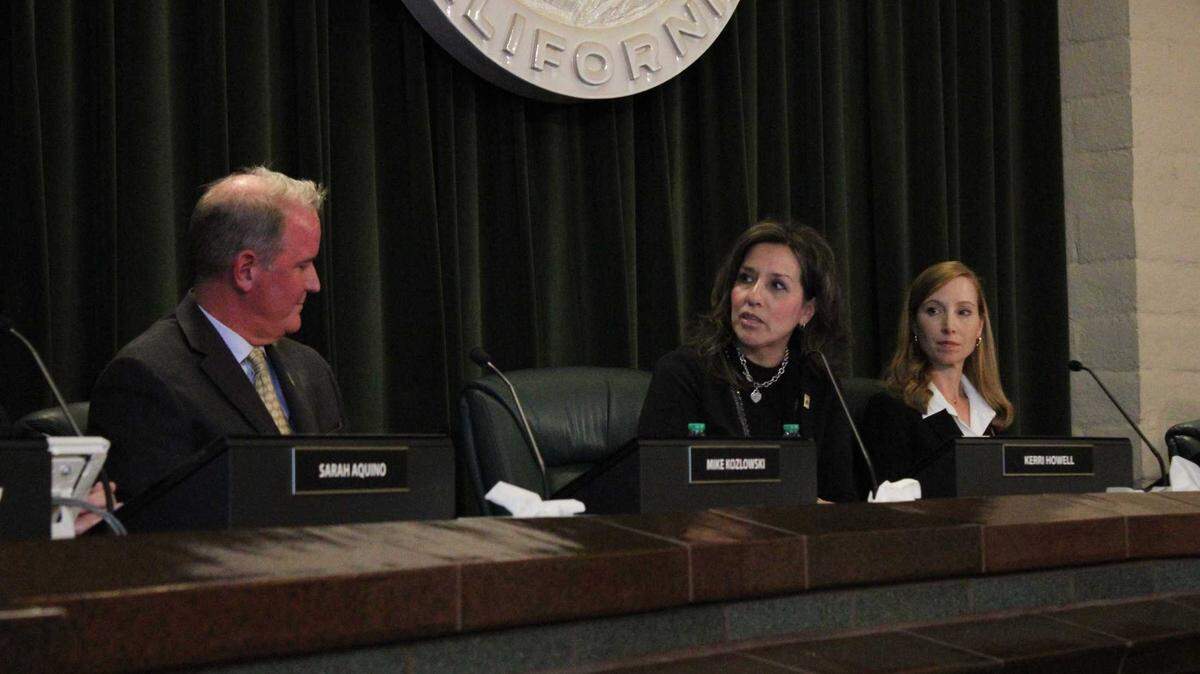
Because a majority of the Folsom City Council seems incapable of resolving the city’s looming structural budget deficit, some long-standing citizens are circulating a solution - a “special” one-cent sales tax initiative.
There is nothing particularly special about Folsom’s financial predicament. It is a version of the same challenge that many cities in the region have already confronted and addressed with a local sales tax increase. It is Folsom’s unique political ecosystem, one that both distrusts funding government while loving its community, that is generating a very Folsom solution.
Any sales tax proposal that happens to make it on the fall ballot would be a great local investment. There is a structural fiscal problem, inadequate future revenues to pay for future costs, that is begging for a solution.
Inaction would be a self-inflicted wound for one of California’s premiere exurbs.
That the city council doesn’t appear to have the votes to do anything achievable demonstrates political dysfunction on the council and the wall of questions about any new tax in fiscally conservative Folsom.
“The general sentiment is that we just don’t want to give government more money,” said Robert Goss, the former director of the city’s parks and recreation department who is among the leaders of the sales tax drive. “But the same residents are willing to pay for more service or better service.”
So how does Folsom somehow sustain the city’s services without giving the government more discretionary money?
A “special” sales tax.
This is going to take some explanation. It involves Howard Jarvis and cannabis.
In California, a “special tax” tells voters exactly how the money will be spent. Thanks to the tax crusader Jarvis and his infamous Proposition 13 initiative of 1978, a special tax proposed by government has been hard to pass, long requiring a two-thirds supermajority.
A “general tax” allows the government to spend the money however it wants. Paradoxically, this has been easier to pass, only a bare majority is required.
Many cities in the region have proposed general sales tax increases in recent years to help meet local needs and succeeded. They include Galt, Elk Grove, Rancho Cordova, Sacramento and Roseville as noted examples. Their respective city councils all described the need. And the voters responded.
And then there is Folsom.
A city council supermajority placed a half-cent sales tax on the ballot in 2018. And then it went down to a spectacular defeat.
“It didn’t have a campaign budget,” Goss said.
Translation: City leadership failed to make a case.
To this day, a general sales tax increase in Folsom, the tried and true way to raise local revenues everywhere else, has all the local appeal of a communicable disease.
The solution? A special tax that is now easier to pass.
Why easier? Some upstart cannabis businesses in the Southern California city of Upland a few years back wanted to tax themselves to get licenses. The tax was approved by a bare majority. The businesses argued to the State Supreme Court that a bare majority was enough under all of California’s anti-tax laws. Howard Jarvis back in 1978 was specifically targeting taxes proposed by governments. This cannabis tax was proposed by “citizens” via the initiative process.
The high court agreed with the weed businesses. Ever since private interests have enjoyed a powerful new tool to get a local tax passed.
Meanwhile, at Folsom City Hall, which has failed to grapple with the structural budget problem since that 2018 sales tax failure, the Council does not appear to have the votes to do anything.
At a notable October meeting, Councilwoman Anna Rohrbough summed it up best.
“Throwing money at a problem will make us feel good for a while, but it doesn’t solve the bigger issue,” she said near the beginning of lengthy comments. Later, she said, “I’m not a denier that we don’t need more revenue….not just the police department, not just the fire department, every single department.”
It was an argument perfectly suited for a general sales tax increase.
Which she opposes.
The City Council is scheduled to discuss sales tax proposals Tuesday. It would take four of the five council members to put any proposal on the ballot in November. Only three of them in October could agree on how to discuss the matter this month. The math looks bleak for a breakthrough.
Meanwhile, Goss and his fellow Folsom long-timers have organized through a group known as Folsom Takes Action. It drafted a one-cent sales tax proposal. At Red Bus Brewing Company on a mid-December night, they and 150 supporters launched a signature-gathering campaign that must enlist by April a tenth of the city’s voters, about 5,500 valid signatures in all.
The special tax directs that all new revenues be spent on six popular categories, including police, fire and economic development. None can be spent on greater pensions for city employees.
However, if a citizen’s initiative were passed, it would come with an ironic twist because of the limitations on how the money could be spent. Ultimately, increasing the number of police and firefighters is the responsibility of the same city council that won’t lead on this issue.
The sales tax would generate an estimated $29 million towards a general fund budget that is now about $108 million. The council will have full discretion to spend the overwhelming majority of city funds. Citizens would have done the heavy lifting of getting an initiative passed and dealing with the politics of a tax increase in a town opposed to them. But once passed, in charge is the same council majority (I see at least one leader in this crowd).
Folsom is an inviting community for a reason - this council’s predecessors got things more right than wrong. Investing in Folsom’s future shouldn’t be this hard.
This story was originally published January 8, 2024 at 5:00 AM.