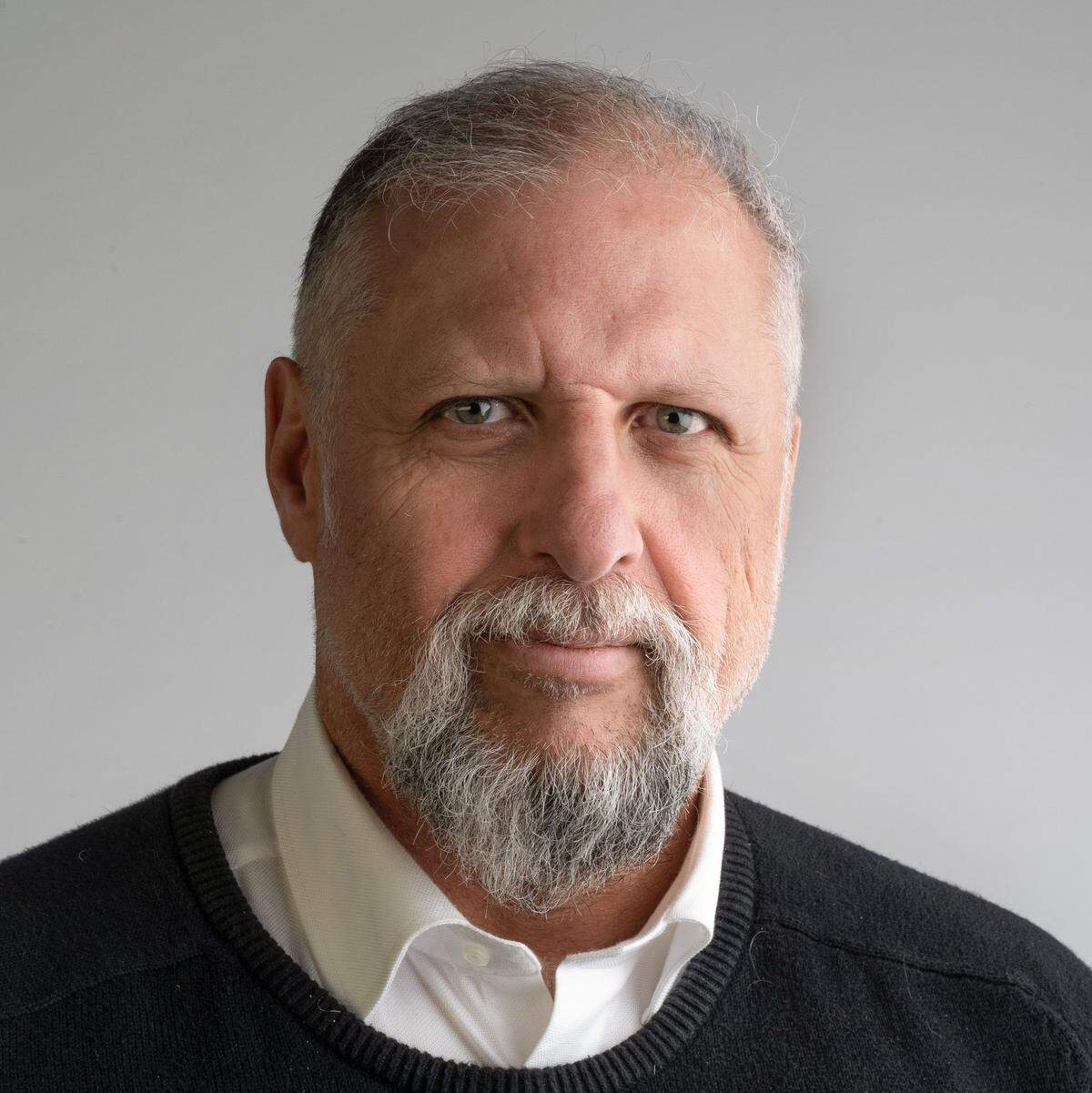
Who is Flojaune Cofer? Perhaps the first Black woman elected mayor of Sacramento | Opinion
Editors note: This is the first of four profiles of the main candidates running for mayor of Sacramento that will be published ahead of a mayoral forum The Bee Editorial board will co-host with KVIE on January 31. There, the hopefuls will be questioned about their qualifications, among other topics. The four contenders will also meet individually with the Bee Editorial board, where the focus will be their positions on issues important to voters. In this profile and the three that follow, the goal is to give readers a stronger sense of who the candidates are as people. These profiles are not endorsements but personal stories detailing the work the candidates have done in Sacramento and what drove them to run for mayor. Ultimately, our board will endorse one candidate on February 5, the day ballots are mailed to voters.
The race for mayor of Sacramento is like no other in recent memory. The city faces serious economic constraints and has been overwhelmed by homelessness to the point where many in the public are frustrated and fed up. Outgoing Mayor Darrell Steinberg is far more politically accomplished than any of the four main candidates running to succeed him and yet Steinberg has often been frustrated in a job where the unelected city manager has more authority than the mayor.
Will the next leader of Sacramento have the political skills needed to be effective in a city government where power is split among factions, and key interest groups often at odds with each other?
Right now, I can’t answer that question. This is a wide-open field at a pivotal time for the city.
All four of the candidates are smart and successful but also have a long way to go to persuade voters ahead of the California primary on March 5. They are epidemiologist Flojaune Cofer; former Sacramento City Councilman Steve Hansen; Assemblyman Kevin McCarty and former state Sen. Richard Pan.
In this election, Cofer stands apart in several ways. Among the four leading candidates, Cofer is the only woman, and she is vying to be the first Black woman elected mayor in city history. At 41, Cofer is the youngest candidate.
She also is the only one in the field who has not previously been elected to office. City voters backed a first-time candidate when they elected former NBA star Kevin Johnson as mayor in 2008. Cofer doesn’t have Johnson’s celebrity or personal resources, but she does have a record of taking political positions and challenging current elected leaders based on beliefs that have been central to who she is as a person.
In a sense, running for mayor fits into her life’s mission.
Cofer is the daughter of public school teachers who grew up in Pittsburgh, Pa. On her campaign website, she features family photos of herself as a child with her parents, and the smiles in those photos project warmth and closeness.
Sadly, Cofer’s father Raymond is no longer here to feel the immense pride any dad would feel if his daughter was running for mayor. He died at 47 of congestive heart failure in 1994 when Cofer was only 11.
Raymond “Butch” Griffin taught eighth-grade math and coached girls basketball at Prospect Middle School in Pittsburgh.
“He was a big champion of women,” Cofer said of the father who filled her with the belief that she could be anything she wanted to be in life. “His death was one of the roughest times of my life.”
From that pain, Cofer found a purpose in life. She pursued a career in public health because she believed the public health system had failed her father and many other people. Butch Griffin was a smoker, and he lived in a time before the major tobacco companies were forced by a barrage of lawsuits to curtail their deceptive marketing campaigns that concealed the dangers of cigarette smoking. Black and brown communities like the one Cofer grew up in were target-rich environments for tobacco giants searching for customers.
“My dad was failed by policies that didn’t exist to protect him,” Cofer said. “I wanted to better understand public health, what made people healthy and what made them sick.” That search first brought her to Sacramento in 2006, when she was selected for the California Epidemiological Investigation Service Fellowship Program run by the California Department of Public Health. After completing her education, she settled in Sacramento for good in 2010.
Cofer is now the senior director of policy for Public Health Advocates, a Sacramento nonprofit. She is also one of many transplants who have moved to Sacramento as adults and found a city where there is room to flourish professionally and personally.
“I always felt that Sacramento opened a warm pair of arms to me,” Cofer said. “I really liked the people here. I wanted to stay. In Sacramento, you are welcomed. People are encouraging and inviting.”
“It was the community surrounding Cofer who encouraged her to run. “The idea didn’t come to me.”
The encouragement kept growing. People were telling her, ‘This is what you’re destined to do.’” She didn’t buy the idea and said so to her therapist, who asked her not to reject the idea because others had suggested it to her. Cofer created a list of ideas of why she should run and when it stretched to 16 pages, she was convinced.
Cofer had already chaired a citizens committee to recommend how the funds from Measure U, a sales tax increase approved by city voters, should be distributed. She challenged Steinberg and others to invest more of the sales tax money in communities.
“People in this community wanted to make sure that there was money set aside for kids,” Cofer said to Steinberg at a Measure U meeting in 2020. “All people are asking for is that we do right with this money.”
Cofer believes the current council has been too deferential in budgeting to the city police department, that city cops get too big a portion of the budget, and that elected leaders should question budget practices that put too much emphasis on crime enforcement and not enough on crime prevention.
“Militarized vehicles deployed by police departments cause trauma in communities, particularly in communities of color. I know this from personal experience,” she wrote in The Bee last year. Cofer believes the city has spent too much time crafting ordinances dictating where homeless people can’t be and not enough time on where they can live safely.
All of these beliefs are rooted in challenging systems, be they public health or a city government, to create better outcomes for all people, especially for underserved communities.
“Right now, people who are the least impacted by homelessness are driving the discussion of it in our community,” Cofer said. “My empathy goes to people most affected by it, people who are desperate and living with it (on city streets).”
Cofer has surprised a lot of people with her ability to raise money. As The Bee Editorial Board wrote last year, “Cofer reported receiving $158,738 in the first six months of (2023).” Political consultant Steve Maviglio filed a complaint against Cofer accusing her of exceeding campaign limits mandated by the city code. However, the Sacramento Ethics Commission found that there was insufficient evidence to support this claim.
Once the dust had settled on that issue, it was clear Cofer was a candidate to be reckoned with.
She may come from outside the mainstream of Sacramento election politics, but Cofer has overcome far more daunting obstacles in a life that would make her dad proud.
This story was originally published January 8, 2024 at 4:00 AM.